The quick answer
Start with your pet: size the tank to their daily food (4–6L for most cats and small dogs, 11–12L for large dogs) and check that your kibble fits. Then decide how many meals a day you need, whether you want a camera and two-way audio, which Wi-Fi band your router uses, and whether you need backup power for outages.
1. Start with your pet: dog or cat, one or two
Cats and small dogs eat modest portions, so a compact feeder is usually enough. Large dogs eat several cups a day and need a big tank. Two cats sharing one feeder is a different problem again: you want two bowls, so each cat gets its own portion.
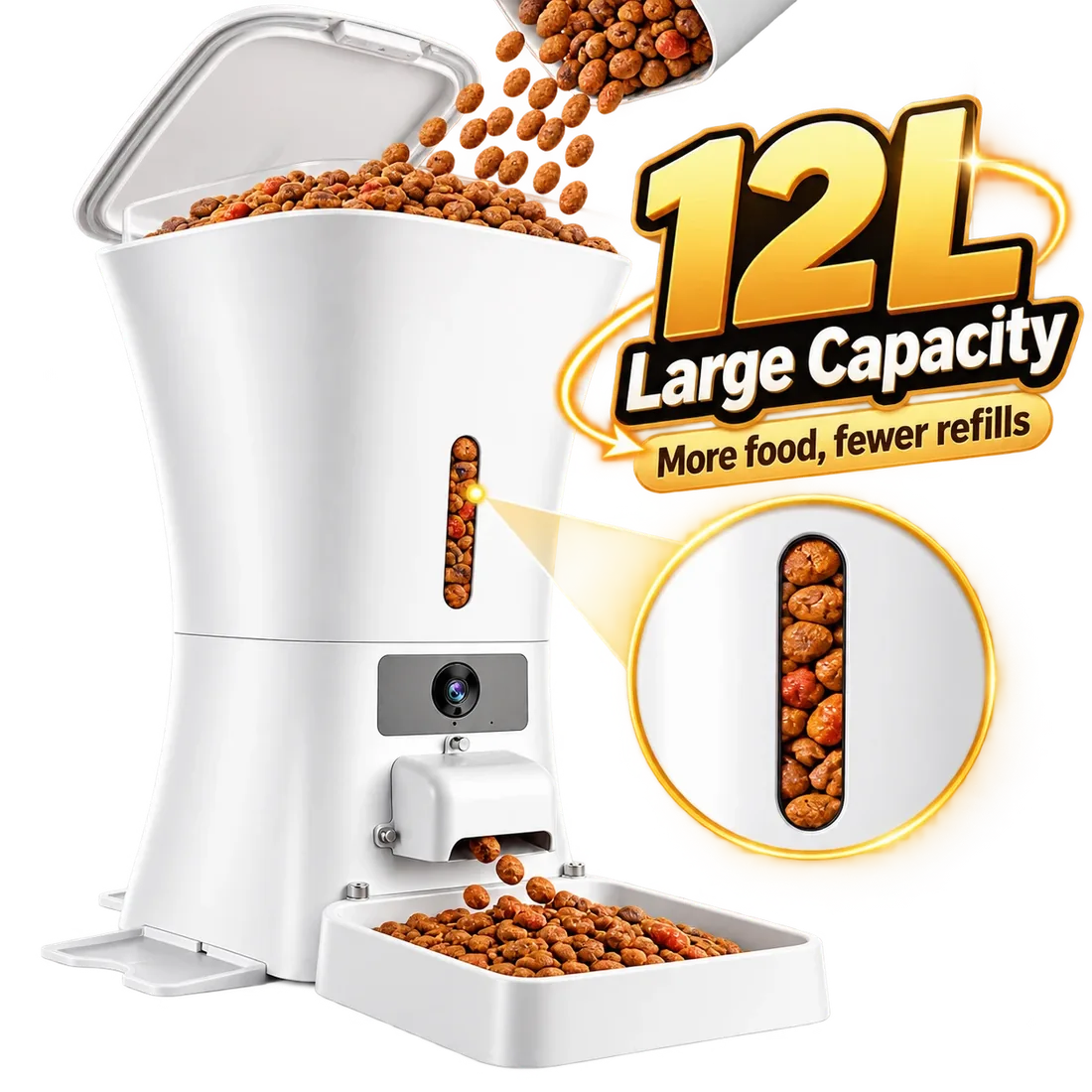
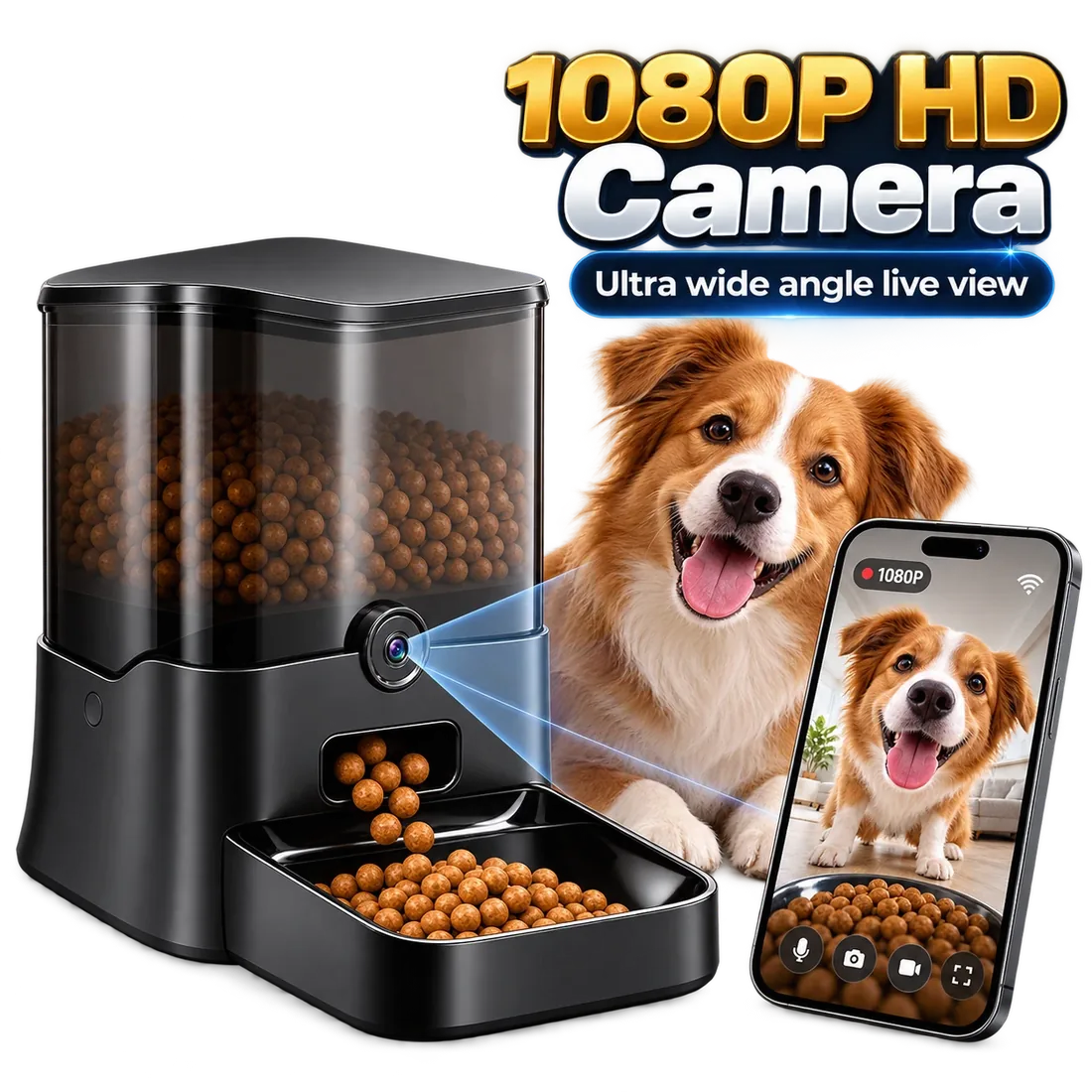
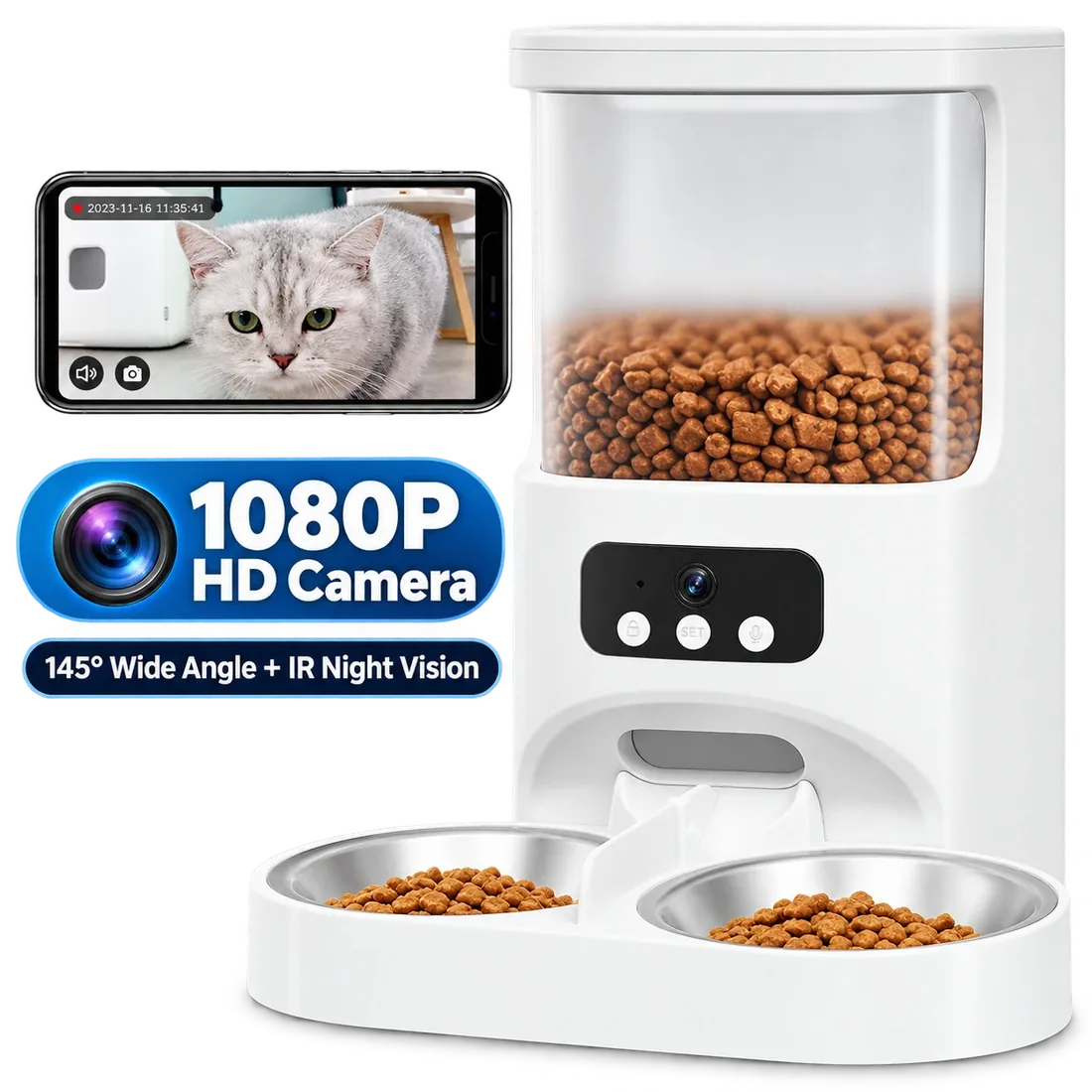
Parveja Twin fills two stainless-steel bowls at once for two cats or small pets. Keeper (6L) suits one cat or small dog. Ranger (11L) and Titan (12L) are made for medium and large dogs.
2. Size the tank to the food, not the trip
One liter holds roughly 4.2 cups of dry kibble. Divide the tank’s capacity in cups by your pet’s daily amount to see how many days it lasts. A bigger tank means fewer refills, but food also stays in the tank longer, so freshness matters too.
See our feeder size chart for worked examples.
3. Check that your kibble fits
Every dispenser has a maximum kibble size. Very large or oddly shaped pieces can jam, and wet food isn’t supported by these feeders at all. Measure a few pieces of your pet’s food before you buy, and if you’re unsure, email store@parveja.com and we’ll help you check.
4. Meals per day and portion control
Kittens and pets on a weight plan often do best with several small meals; many adult dogs eat twice a day. Look at how many meals a feeder can schedule and how finely you can set each portion.
Twin schedules up to 8 meals a day with 1–20 portions each, and Keeper up to 15 meals a day with custom portions. Ranger and Titan schedule meals with custom portions too, and every model has Feed now in the app for an extra snack.
5. Decide if you want a camera and two-way audio
A camera lets you see that the meal landed and your pet ate it, which is the main worry with any automatic feeder. Night vision matters for early breakfasts and late dinners. Two-way audio lets you call your pet over or reassure them.
Every Parveja feeder has a 1080p camera with night vision. Twin, Keeper and Titan add two-way audio and motion alerts, and Titan warns you when food runs low.
6. Match the Wi-Fi band to your router
Many smart feeders only join 2.4GHz Wi-Fi. Most routers broadcast 2.4GHz alongside 5GHz, but it’s worth checking. Twin and Titan connect to 5GHz or 2.4GHz, and Ranger uses 2.4GHz. Set the feeder up where the signal is strong.
7. Plan for power cuts
If meals matter while you’re out, choose a feeder with a battery backup. Twin and Titan take 3 D batteries, and Ranger has a backup battery port; batteries aren’t included. On battery they keep feeding, while the camera and app need plug-in power. Read more in what happens in a power or Wi-Fi outage.
8. Think about cleaning and freshness
Removable stainless-steel bowls are easy to wash. A sealed tank, a covered outlet or desiccant packs help keep kibble fresh between refills. See how to keep dry food fresh.
Quick match: which feeder fits?
| Your situation | Look for | Parveja match |
|---|---|---|
| Two cats or small pets | Two bowls, split portions | Twin · 4L · $199 |
| One cat or small dog, smart home | 6L, many meals, voice control | Keeper · 6L · $279 |
| Medium or large dog | 11L+, sealed tank, battery backup | Ranger · 11L · $399 |
| Large breed, longest between refills | 12L, two-way audio, low-food alerts | Titan · 12L · $449 |
Which Parveja feeder fits?
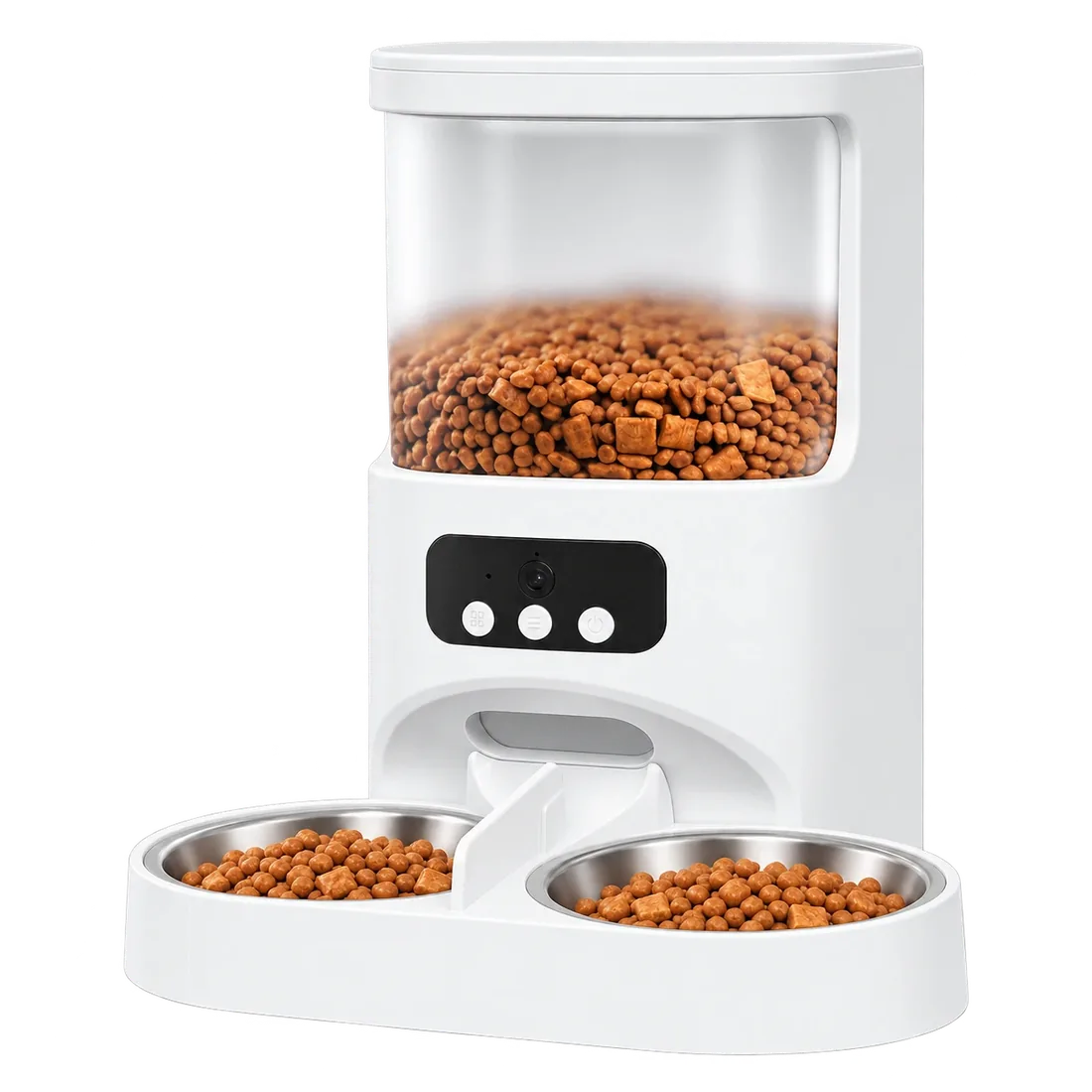 Twin · 4L · $199Two bowls for two cats, up to 8 meals a day, 1080p night vision. $199.→
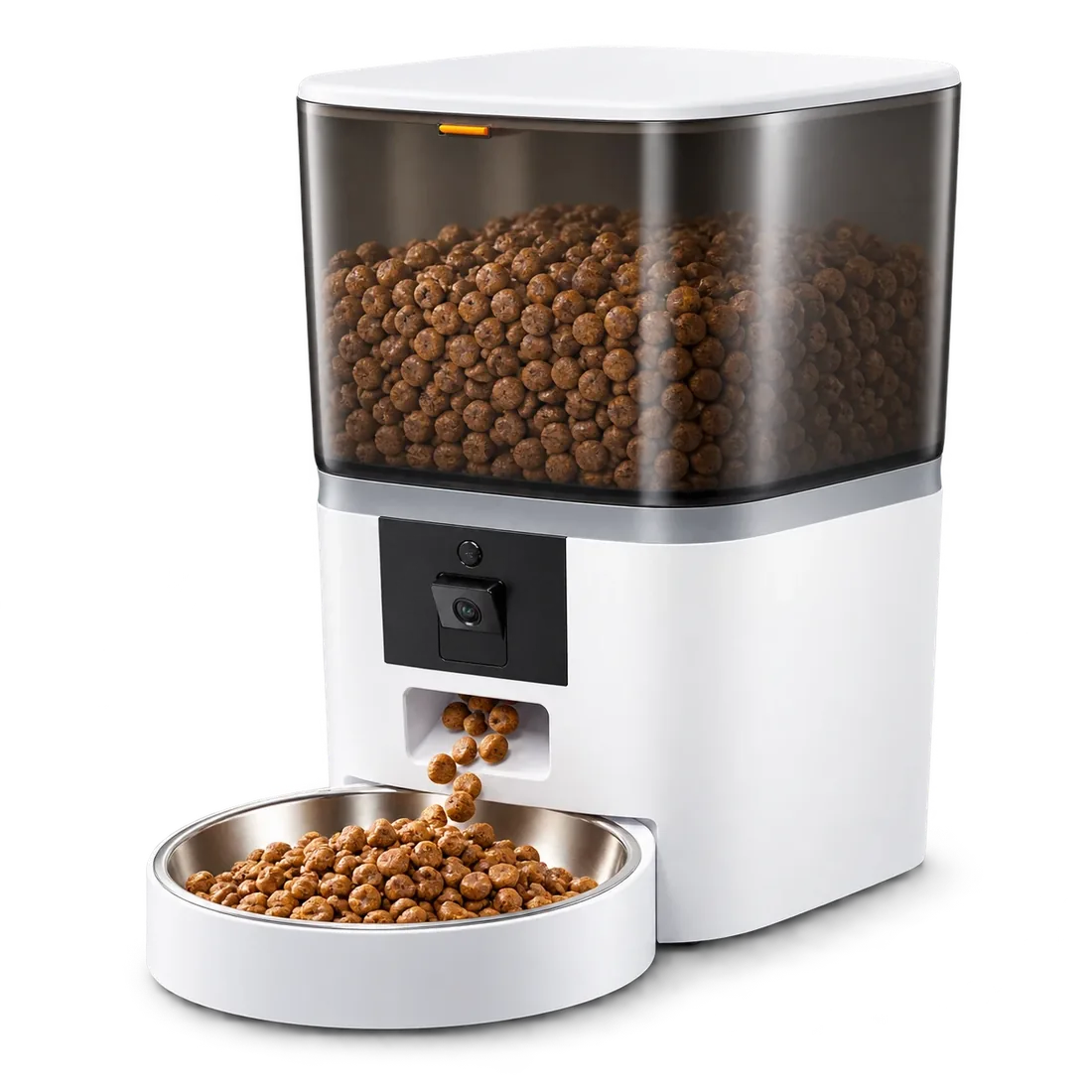 Keeper · 6L · $2796L, up to 15 meals a day, two-way audio, works with Alexa and Google Home. $279.→
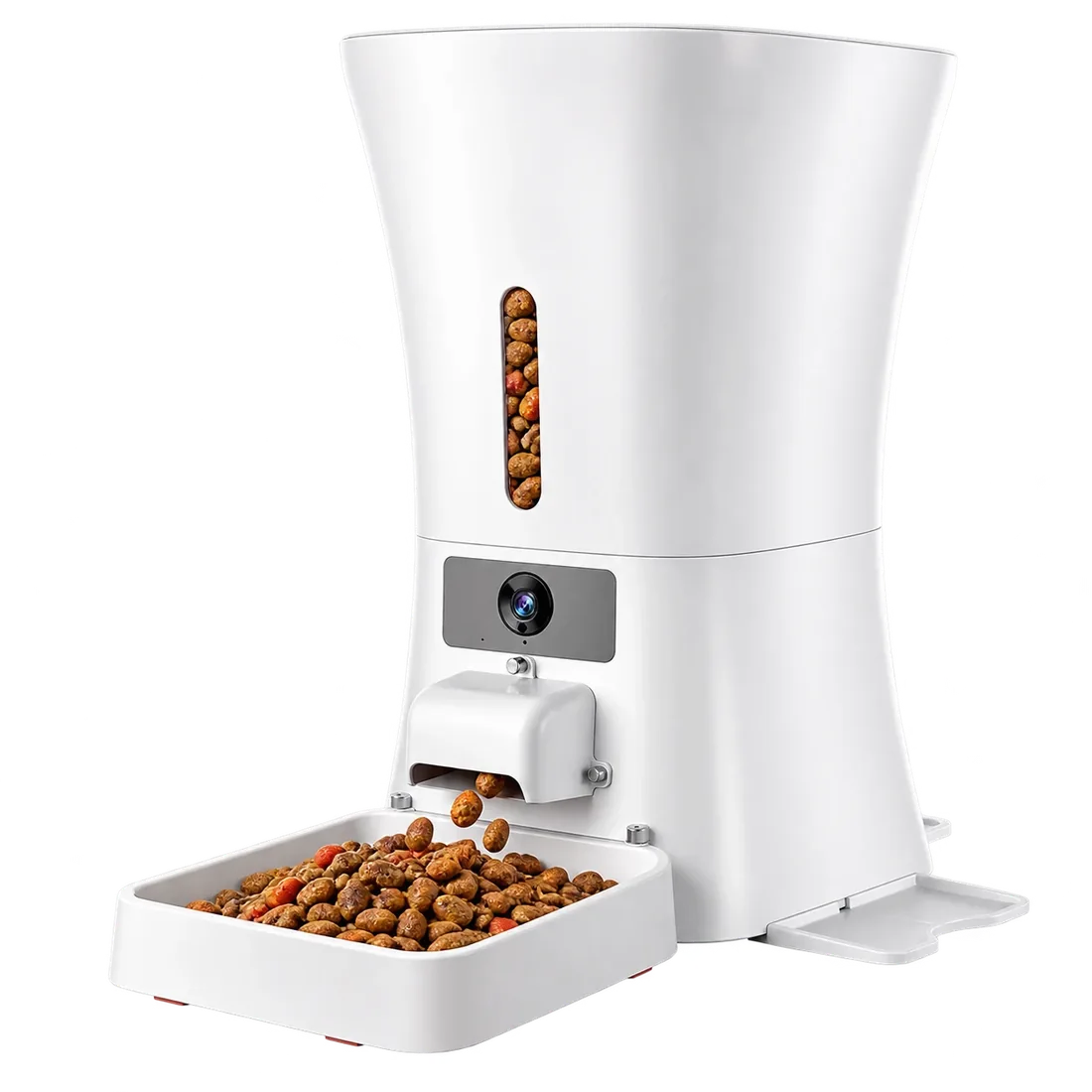 Titan · 12L · $44912L for large dogs, two-way audio and low-food alerts. $449.→
Browse all automatic dog feeders, or compare all four feeders side by side.