The quick answer
Look for a 1080p camera with night vision, a Wi-Fi connection your router supports (some feeders need 2.4GHz), two-way audio if you want to talk to your cat, a backup power option and a reservoir sized to your cat’s daily portion. Then check how easy the bowl and tank are to clean.
Why get an automatic cat feeder with a camera?
A standard automatic feeder serves meals on schedule, and most apps log each feeding. A camera adds something a log can’t: you see the bowl. That’s useful if you work long days, travel for a night, or have a cat whose appetite you want to keep an eye on.
It’s also reassuring when you’re new to automatic feeding. In the first week you can watch whether your cat is comfortable with the feeder, whether portions look right, and whether food is coming out the way you expect.
A camera doesn’t replace a person checking in. It can’t refill water, scoop a litter box or notice that your cat is unwell. Think of it as peace of mind between check-ins, not a substitute for them.
Video quality: is 1080p enough?
For watching a bowl a few feet from the lens, 1080p HD is a practical standard. It’s sharp enough to see kibble in the bowl and recognize which cat is eating, without the heavier data use of higher resolutions.
Field of view matters as much as resolution. A wide-angle lens shows the bowl and the area around it; an ultra-wide lens takes in more of the room, which helps if your cat likes to eat and wander, or if you have more than one pet.
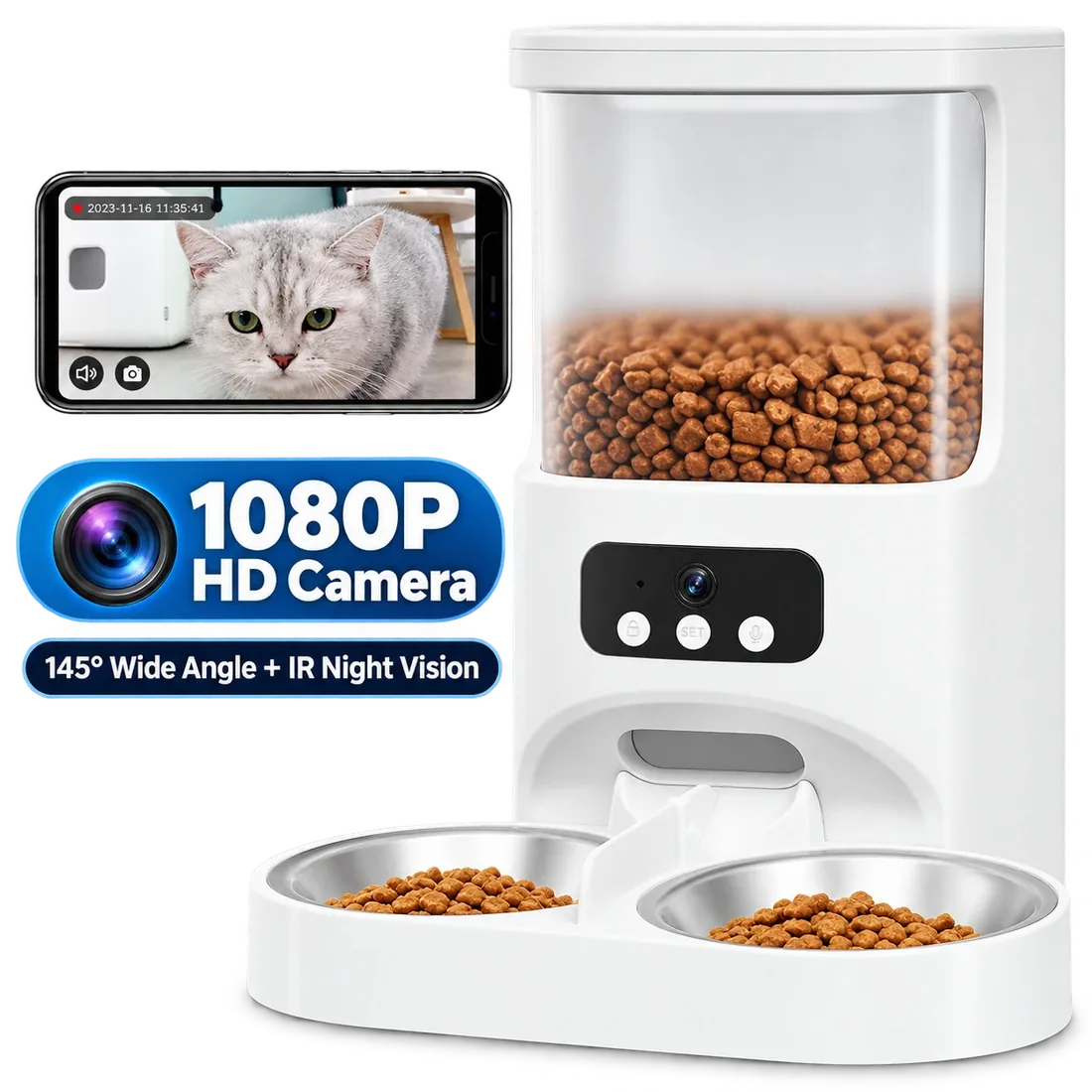
- Parveja Twin: 1080p HD camera with a 145° wide-angle lens that covers both bowls.
- Parveja Keeper and Titan: 1080p HD cameras with night vision and motion alerts.
- Parveja Ranger: 1080p HD camera with an ultra-wide-angle lens.
Night vision for early and late meals
Cats often eat at dawn and dusk, exactly when rooms are darkest. Night vision lets you check those meals without leaving a light on. If your schedule includes an early-morning or late-evening feeding, treat night vision as essential rather than a bonus.
All four Parveja feeders, Twin, Keeper, Ranger and Titan, have a 1080p camera with night vision.
Wi-Fi: check your router before you buy
Live video and remote app features need a working Wi-Fi connection. Many smart pet devices connect only to 2.4GHz networks, not 5GHz. Most home routers broadcast both, but some combine them under one network name, which can make setup harder.
Parveja Twin and Titan connect to both 5GHz and 2.4GHz Wi-Fi. Ranger uses 2.4GHz; confirm Keeper’s WiFi band before ordering. Whichever you choose, check that the signal reaches the spot where the feeder will sit.
Backup power: what still works in an outage?
Power cuts are where feeders differ most. Some keep serving meals on battery; fewer keep the camera running. Read the details carefully, because ‘battery backup’ usually means feeding only.
- Parveja Twin and Titan take 3 D batteries as a backup (batteries not included).
- Parveja Ranger has a backup battery port (battery sold separately); battery mode supports feeding only.
- On every model, the camera and app need plug-in power and Wi-Fi.
Capacity: how much food does one cat need?
Bigger isn’t automatically better for a single cat. A smaller reservoir means food sits for less time before you refill, which helps freshness. A larger one means fewer refills. Divide the reservoir by your cat’s daily portion to see how many days a full tank lasts, then choose the size that matches how often you want to refill.
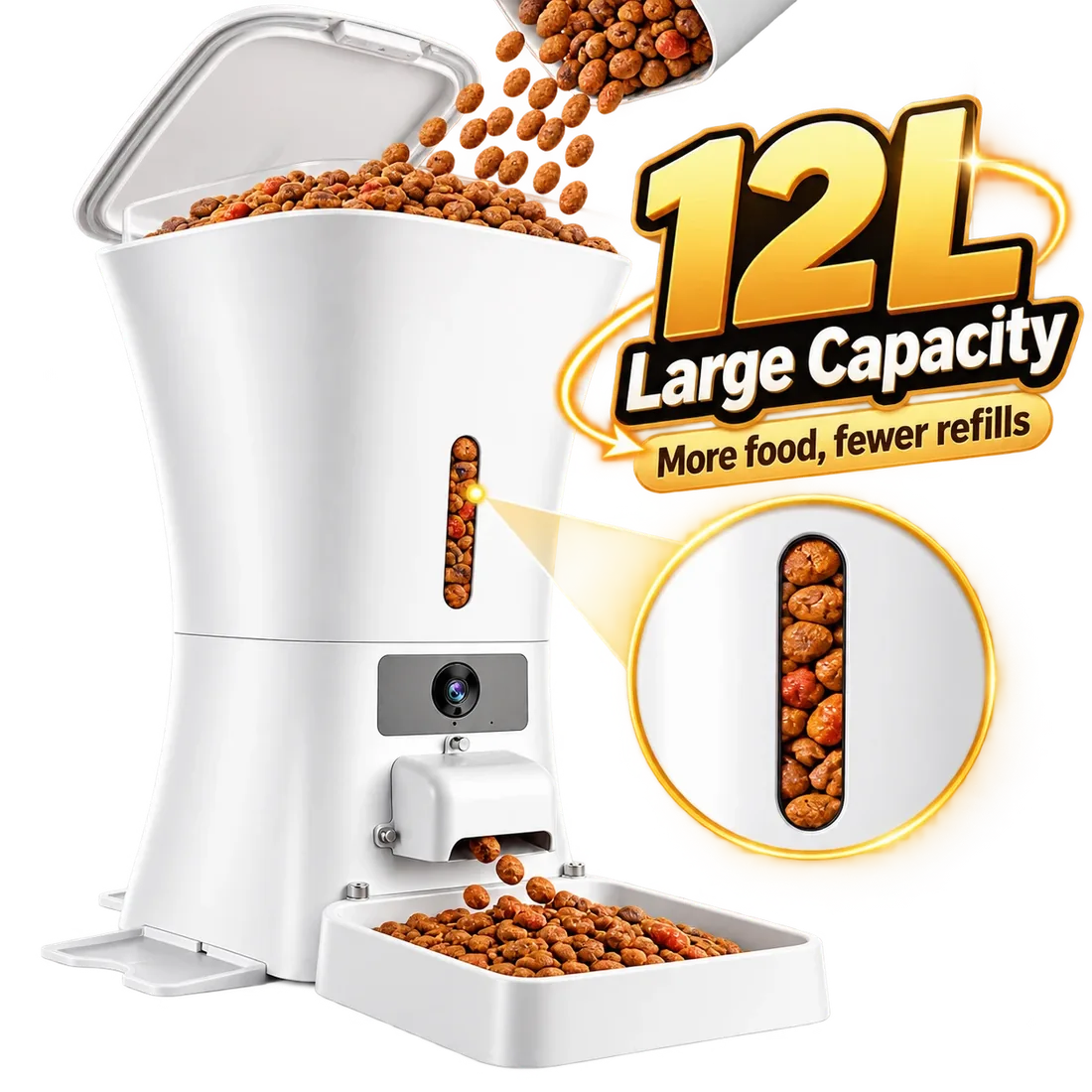
Parveja Twin holds 4L and feeds two cats from two bowls. Keeper holds 6L, a comfortable size for one cat. Ranger (11L) and Titan (12L) suit bigger appetites or multi-pet homes. Our guide to choosing a feeder size includes a refill table.
Kibble size and food type
Automatic feeders dispense dry food, and every model is designed for a range of kibble sizes. Very small or very large, oddly shaped or oily kibble can jam some mechanisms. Measure a few pieces of your cat’s food and compare them with the feeder’s specification.
Parveja feeders are designed for dry food only, not wet food. If you’re unsure whether your cat’s kibble will dispense cleanly, contact us before ordering and we’ll help you check.
Scheduling, portions and extras
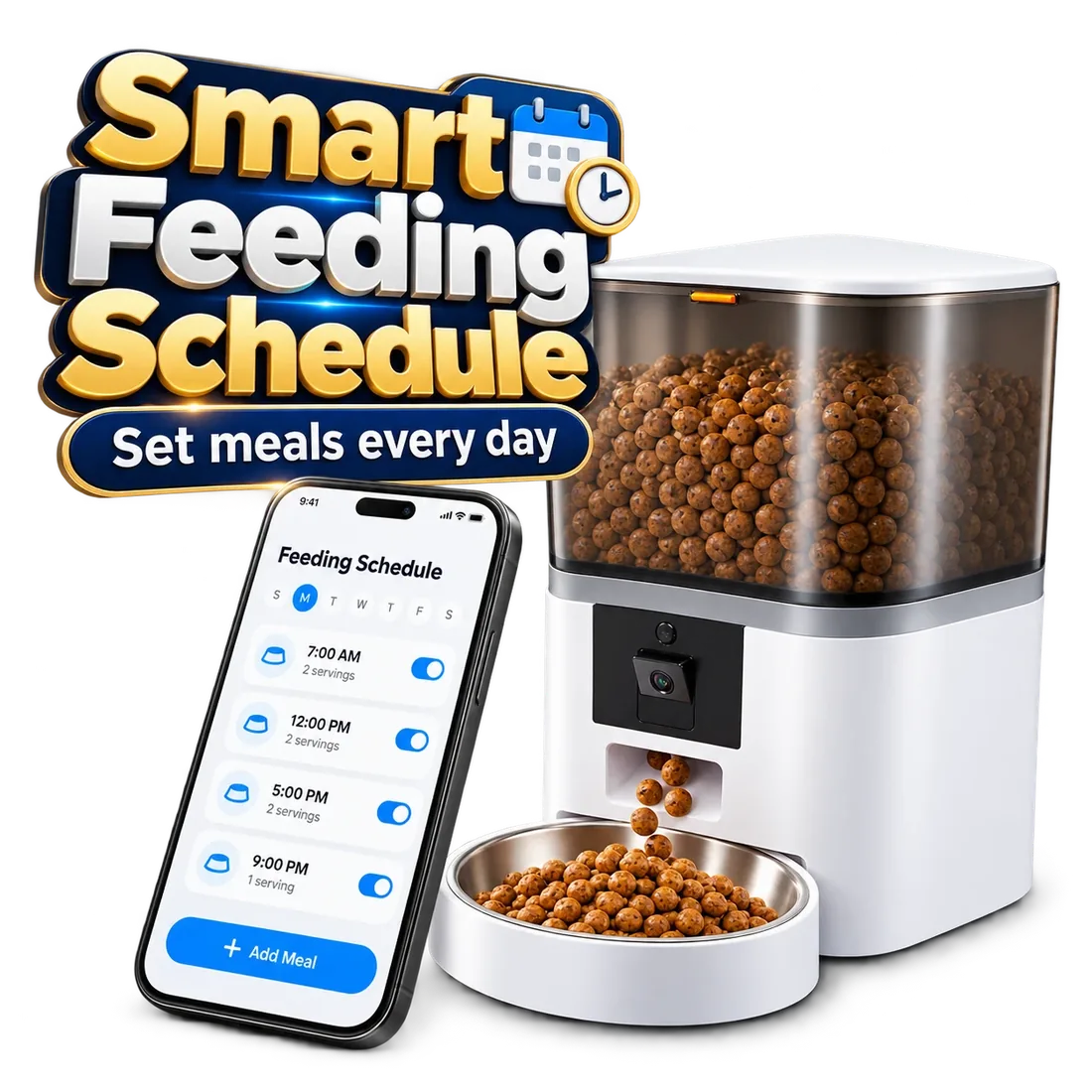
Every Parveja feeder schedules meals and portions from a mobile app. Beyond that, look at the extras that fit your routine.
- Two-way audio: Twin, Keeper and Titan let you talk to your cat and hear them back.
- Meal call: Twin plays a 10-second recording of your voice at feeding time; Keeper and Titan play recorded messages too.
- Alerts: Twin, Keeper and Titan send motion alerts, and Titan also warns you when food is running low.
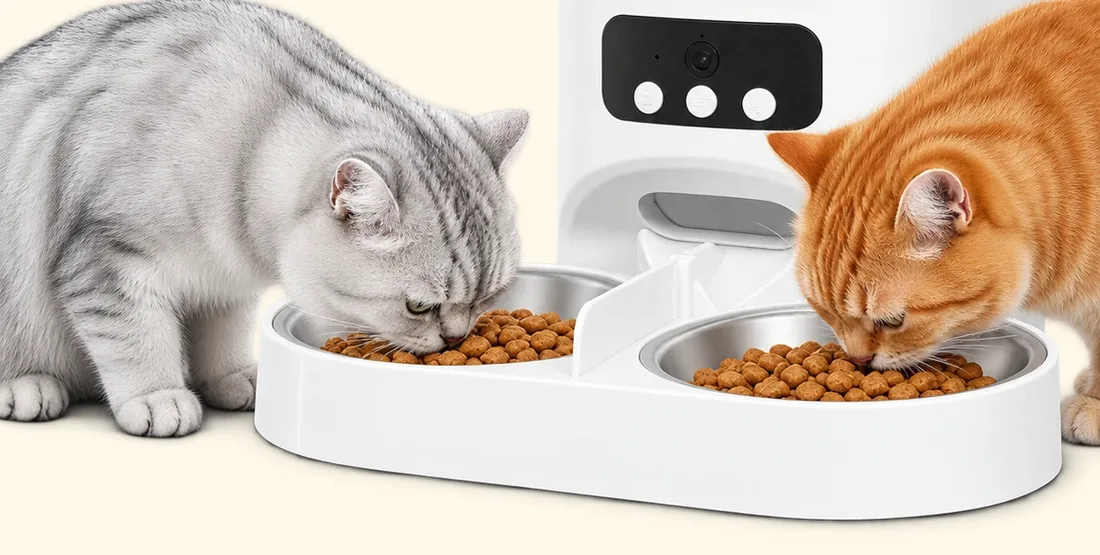
- Two cats: Twin fills two bowls at once with an adjustable splitter.
Cleaning and everyday care
Kibble oils build up on bowls and chutes over time, so plan to clean regularly. Removable parts make that much easier. Keeper’s stainless-steel bowl lifts out, and Ranger’s food tank detaches. Follow the care guide supplied with your feeder for each part.
Privacy basics for any pet camera
A pet camera is a connected camera in your home, so treat it like one. Use a strong, unique password for the app account, keep the app updated, and position the feeder so the camera faces the feeding area rather than private spaces.
Which Parveja feeder fits?
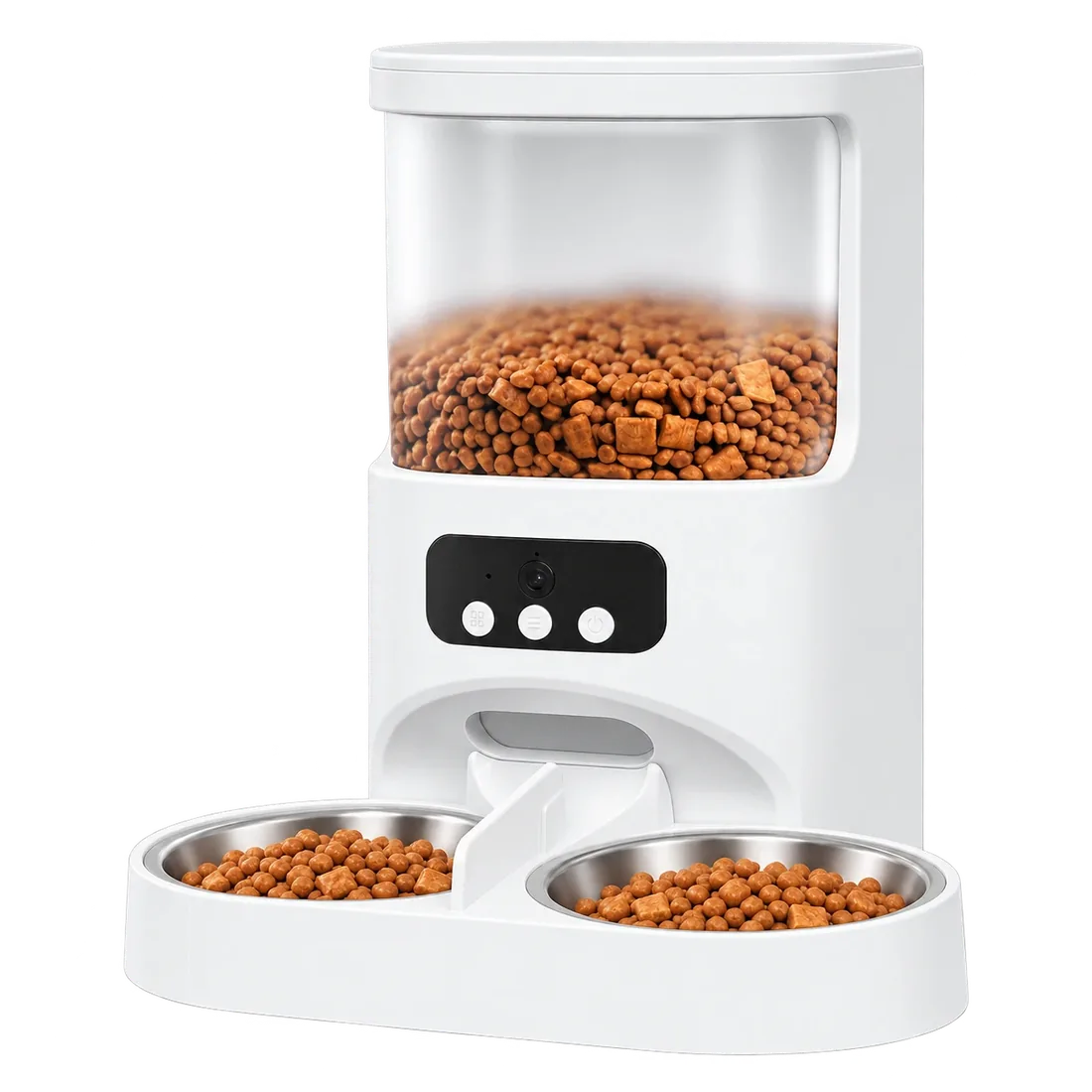 Twin · 4L · $199Two bowls for two cats, a 145° 1080p camera with night vision, two-way audio and a 10-second meal call. $199.→
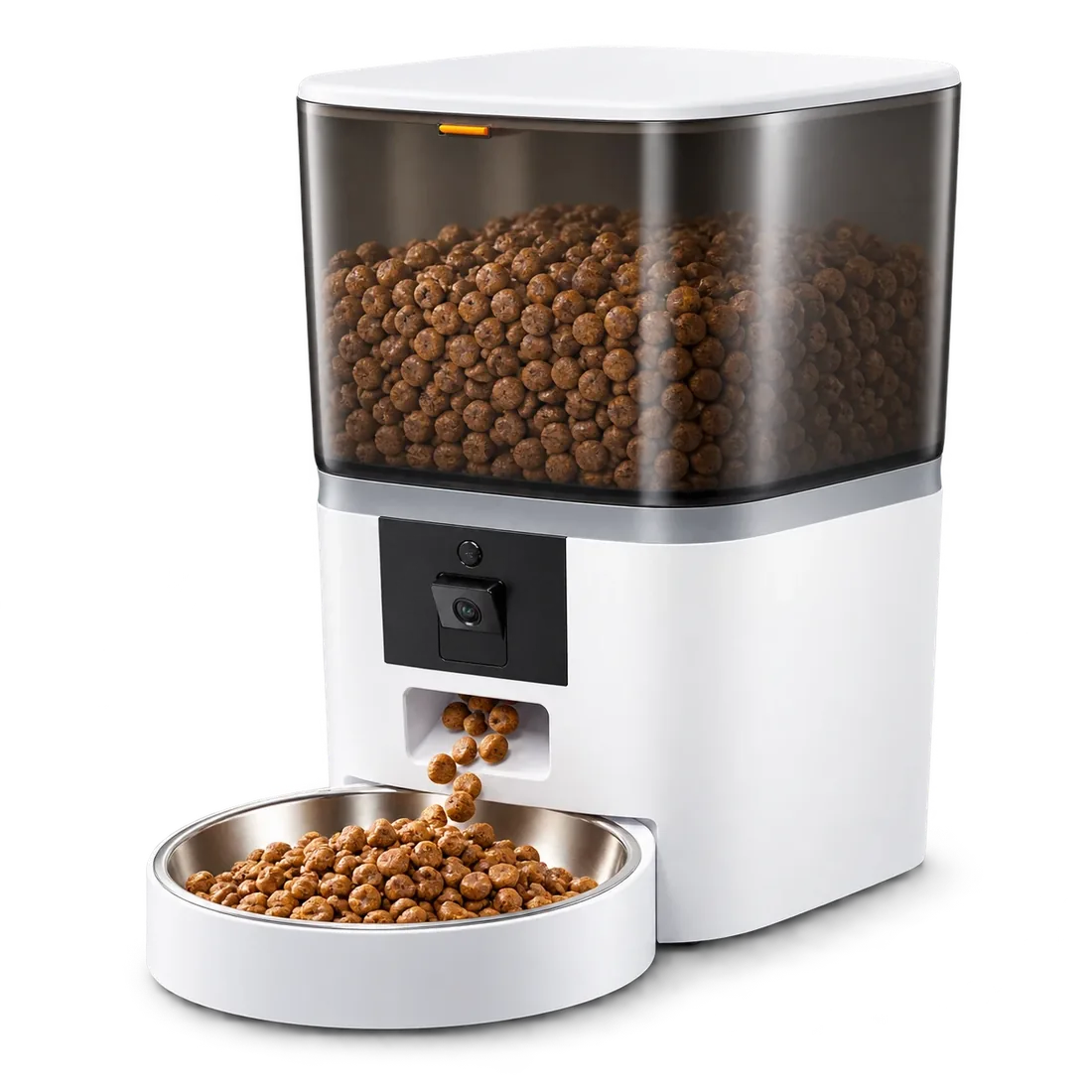 Keeper · 6L · $2796L with a 1080p night-vision camera, motion alerts, two-way audio and up to 15 meals a day. $279.→
Browse all pet feeders with camera, or compare all four feeders side by side.