The quick answer
Use a feeder with a sealed or covered container, keep it away from heat and humidity, add only as much food as your pet will eat in a reasonable time, and clean the bowl and reservoir regularly. A desiccant pack adds extra protection in humid homes.
Why kibble goes stale
Dry pet food contains fats that react with oxygen over time. Humidity can soften kibble and encourage clumping. Warmth speeds both up. The result is food that smells and tastes different, which some pets refuse to eat.
Choose sealed storage
An open hopper exposes food to room air all day. A closed container limits that exposure between meals.
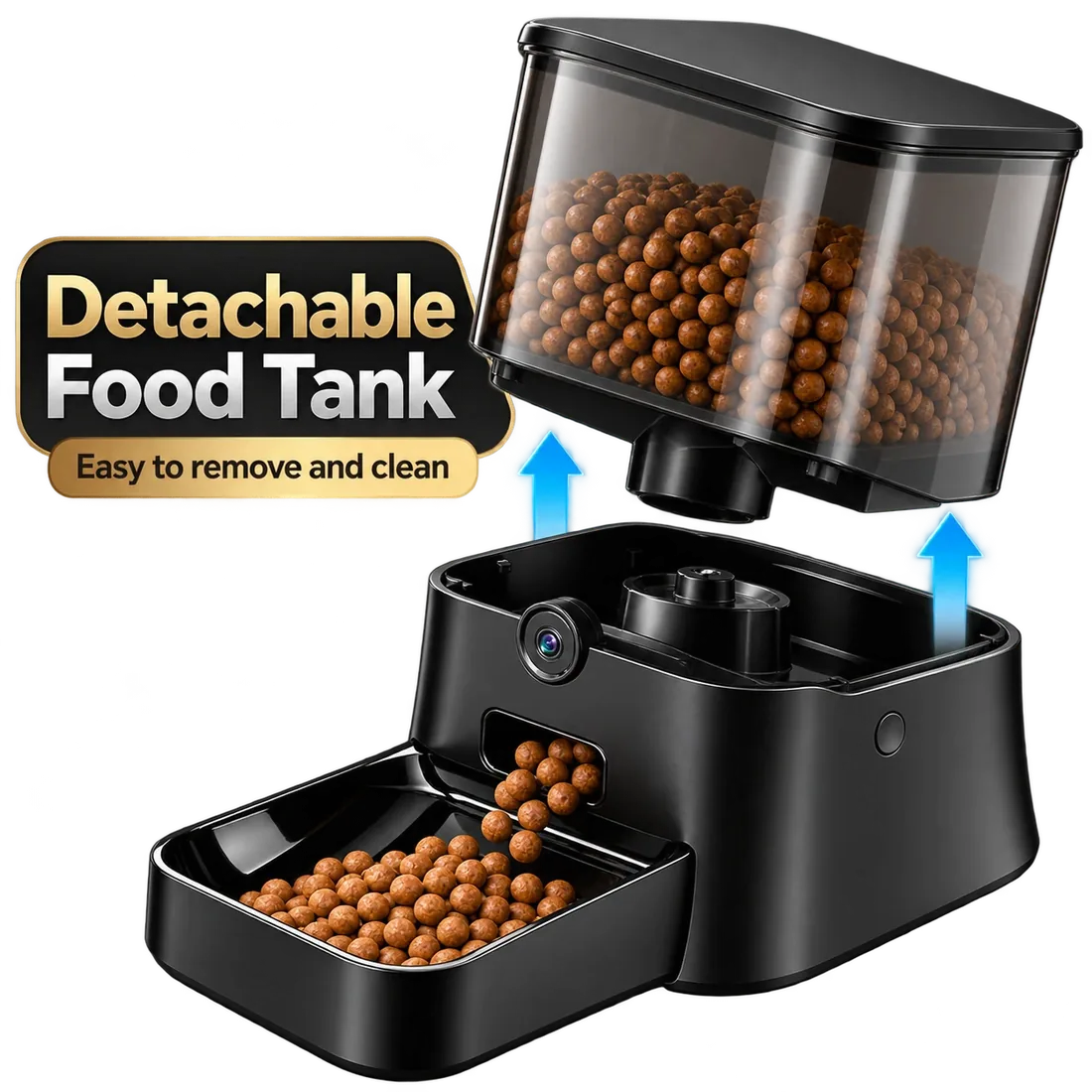
- Ranger: a sealed, detachable 11L tank that keeps kibble dry and stops snack thieves.
- Titan: a covered outlet that closes between meals.
- Keeper: a tinted container that helps shield food from light.
- Twin: a clear 4L container with desiccant packs included.
Keep the outlet covered
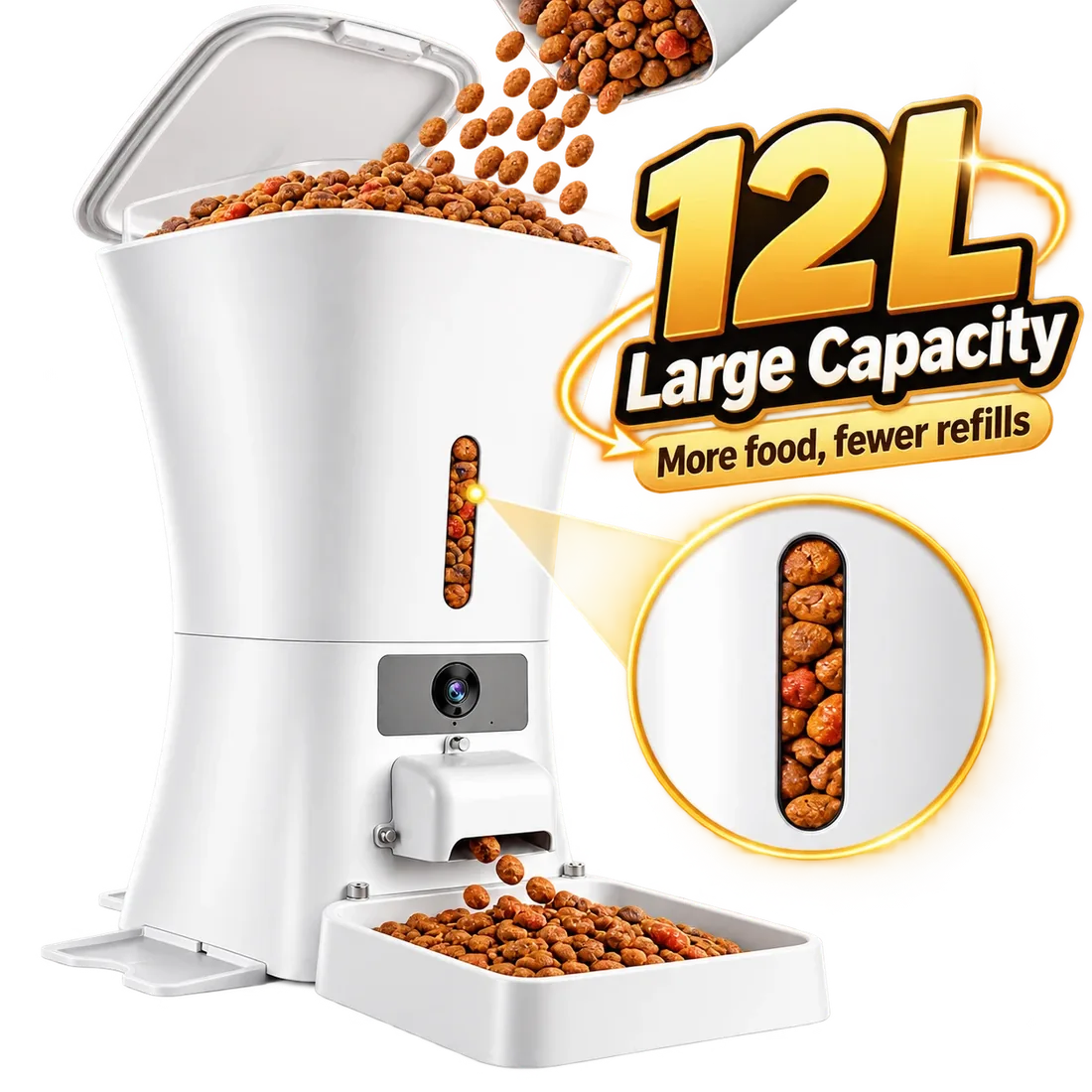
Food can also go stale at the bottom, where it waits in the chute. A covered outlet, like the one on Titan, closes between meals so less air reaches the next portion and curious noses can’t get in.
A good container helps, but it doesn’t replace good food handling. Keep following your pet food’s own storage guidance.
Use a desiccant
A food-safe desiccant pack absorbs moisture inside the reservoir. It’s especially useful in humid climates. Twin comes with desiccant packs. Replace desiccants as their manufacturer recommends.
Refill habits that help
How you refill matters as much as the container:
- Add only as much food as your pet will eat in a reasonable time, rather than filling to the top every time.
- Let the reservoir run low before refilling, so old kibble doesn’t sit under new.
- Keep the original bag sealed between refills.
- Check the ‘best by’ date on the bag.
Where to put the feeder
Avoid direct sun, radiators, heating vents and steamy spots such as next to a dishwasher or in a laundry room. A cool, dry, stable spot keeps food fresher and is kinder to the feeder’s electronics.
Clean regularly
Kibble oils build up on bowls, chutes and reservoir walls. Clean the bowl frequently and the reservoir whenever you empty it, following your feeder’s care guide. Stainless-steel bowls, like those on Twin and Keeper, are easy to wash, and Ranger’s tank lifts off. Make sure every part is completely dry before refilling.
Which Parveja feeder fits?
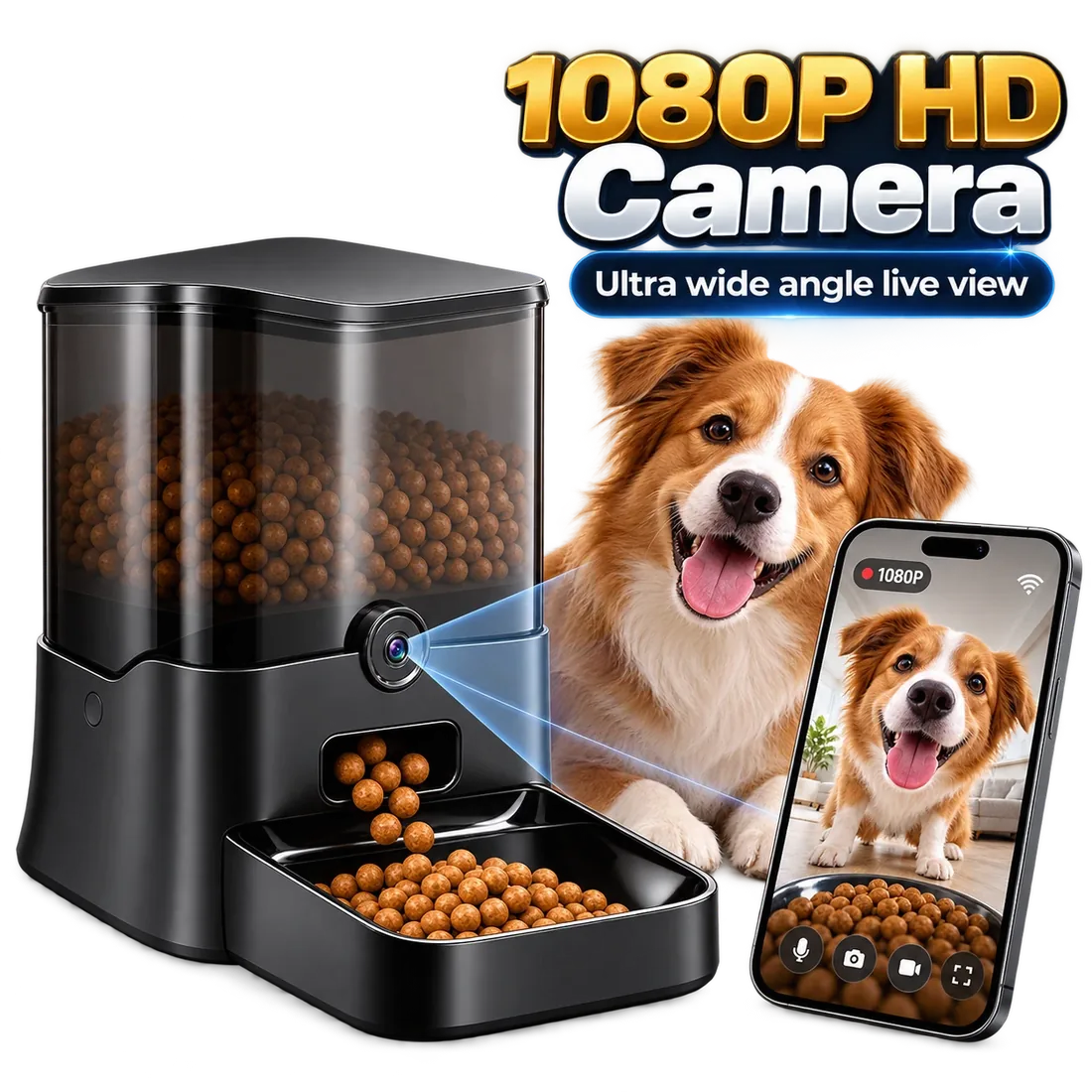
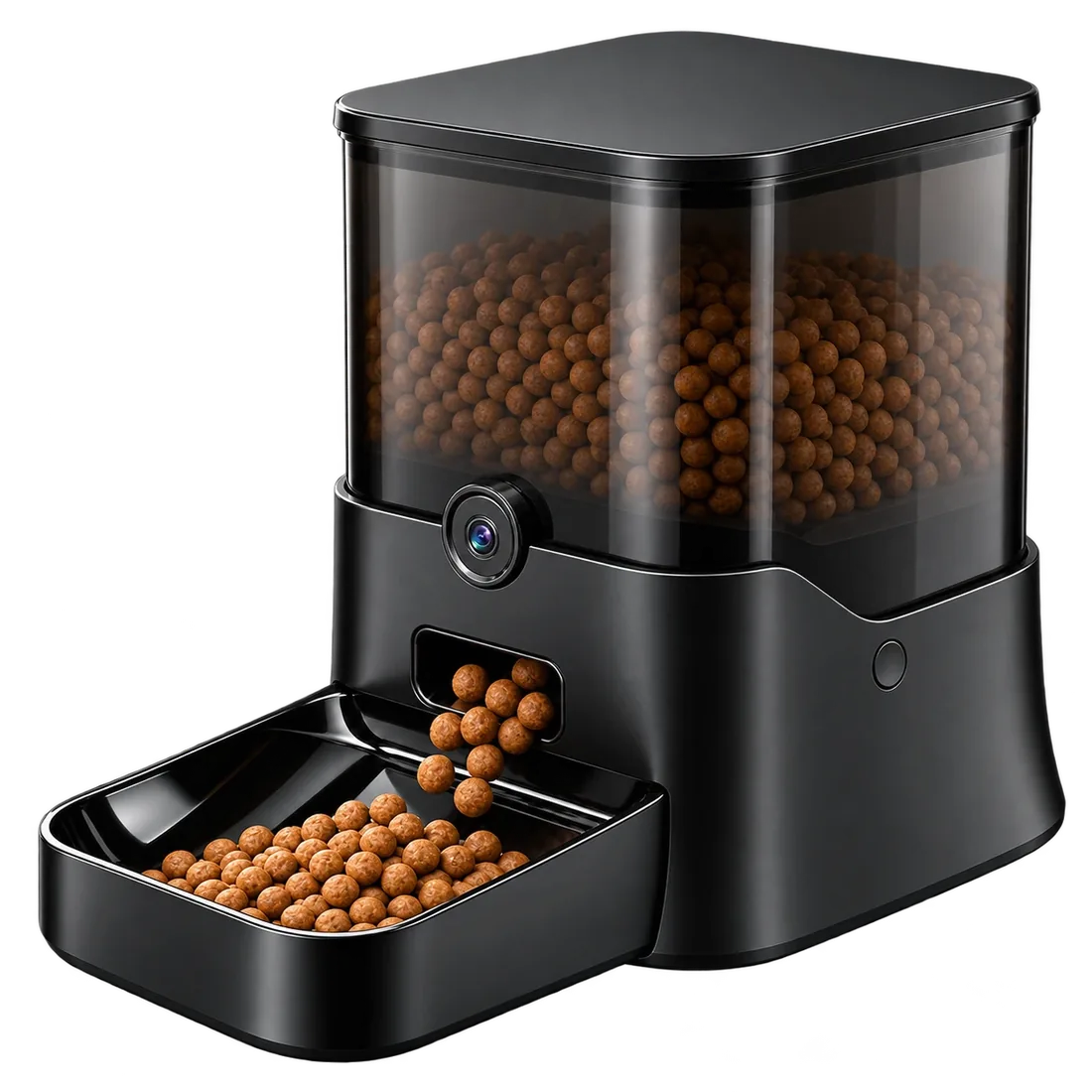 Ranger · 11L · $399A sealed, detachable 11L tank that keeps kibble fresh and dry. $399.→
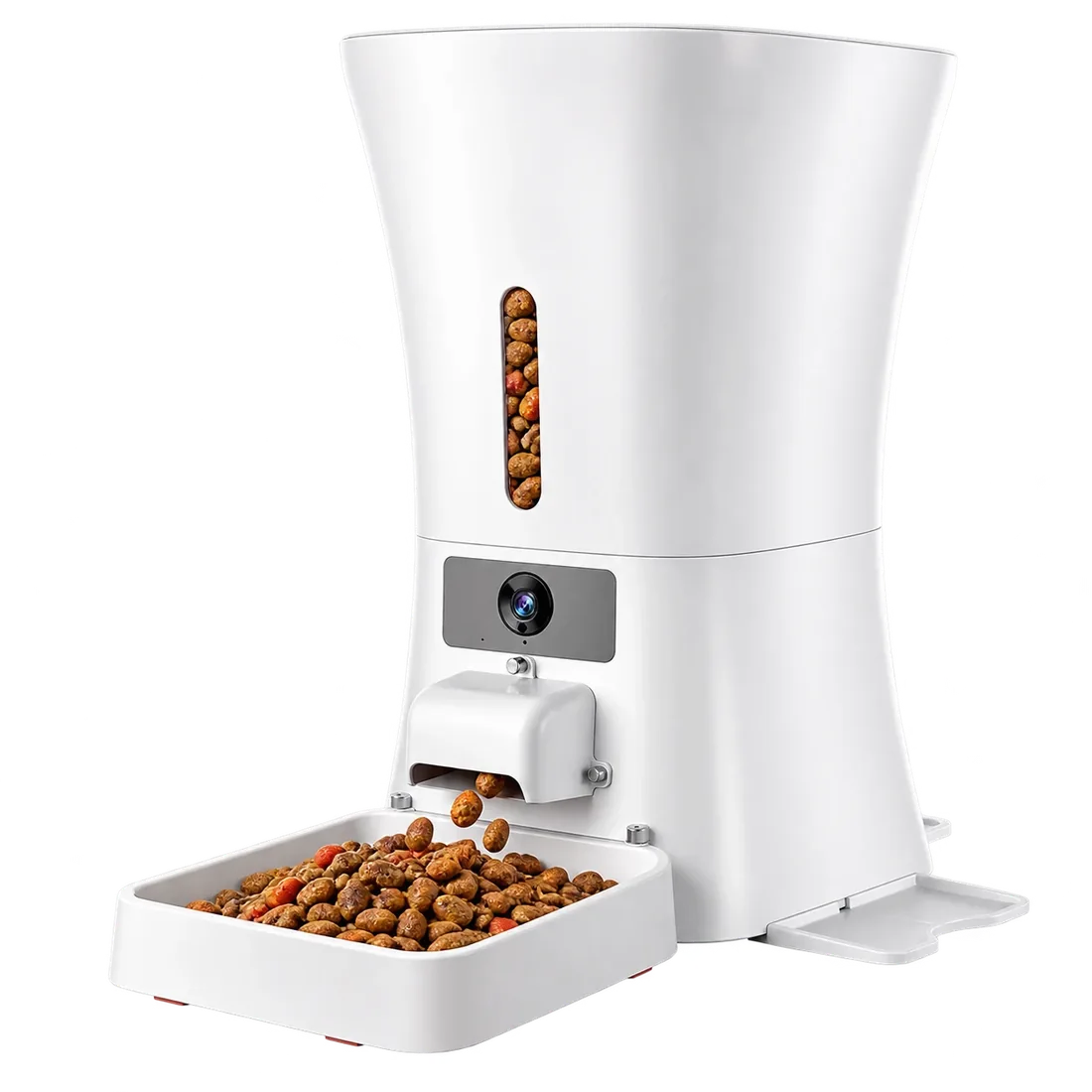 Titan · 12L · $449A covered outlet that closes between meals, plus low-food alerts. $449.→
Browse all large-capacity feeders, or compare all four feeders side by side.