Most cats warm up to an automatic feeder quickly, but some are suspicious of a new machine that whirs and drops food. The trick is to make the feeder boring and predictable before it becomes their main source of meals. This seven-day plan gets most cats there without stress.
The quick answer
Put the feeder where your cat already eats, let them explore it switched off, then feed by hand from its bowl for a day or two. Next, trigger small meals while you’re nearby so they learn the sound means food, and move to the full schedule over about a week.
Why some cats are wary of a new feeder
Cats like routine, and a feeder changes three things at once: a new object in their space, a new sound, and food arriving without you. Wary cats usually aren’t refusing the food, they’re unsure about the sudden noise. Going step by step lets your cat connect the sound with something good.
The 7-day plan
- Place the feeder switched off next to the old bowl. Let your cat sniff and explore.
- Serve meals by hand into the feeder’s bowl, so it becomes the place food appears.
- Stay nearby and trigger a small meal with Feed now. Praise calmly when they eat.
- Schedule one meal a day from the feeder; hand-feed the rest as usual.
- Schedule half of the day’s meals from the feeder.
- Schedule all meals, but watch each one, in person or on camera.
- Full schedule. Remove the old bowl once your cat eats confidently.
Slower is fine. If your cat hesitates, repeat the previous day until they’re relaxed.
Where to put the feeder
Put the feeder in the spot your cat already uses for meals, on a flat, stable floor, away from the litter box and away from loud appliances. A quiet corner helps nervous cats. Keep fresh water nearby, but not so close that splashes reach the dispenser.

Getting used to the dispensing sound
The first time food drops, some cats jump back. That’s normal. Trigger small meals while you sit close by, so your cat learns the noise always comes with food. Within a few days the sound usually becomes a dinner bell.
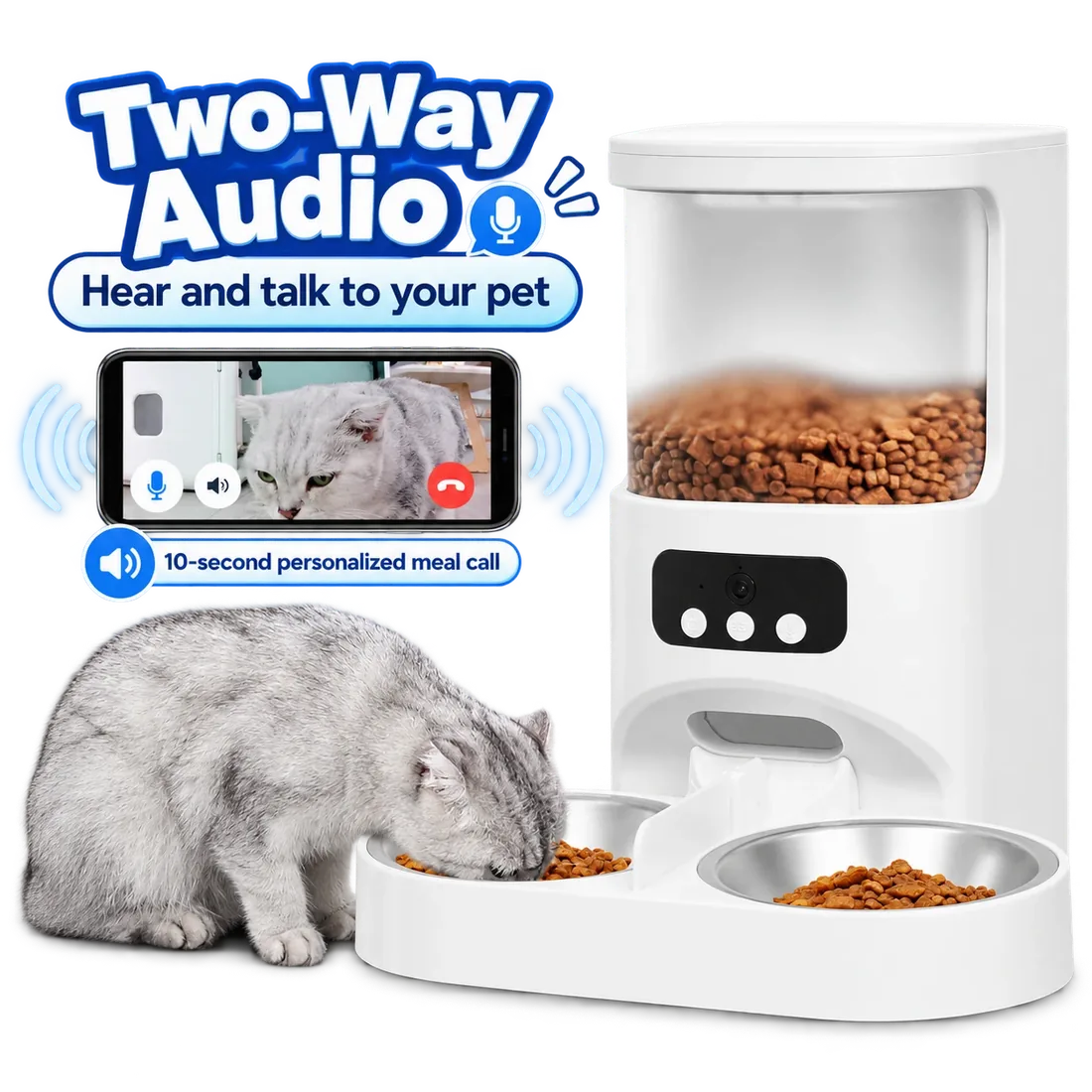
Feeders with a recorded meal call can help here. Twin plays a 10-second meal call in your own voice at feeding time, and Keeper and Titan also let you record a voice message for meals.
Watch the first meals on camera
Once meals run on schedule, check that your cat actually eats them. Every Parveja feeder has a 1080p camera with night vision, so you can watch breakfast from work and see the bowl empty. If a meal is ignored, go back a step in the plan for a day or two.
- Go back a step
Return to hand-feeding from the feeder’s bowl for a couple of days.
- Check the food flows
Make sure the kibble dispenses smoothly and the portion is the size your cat expects.
- Move it
Try a quieter spot, or nearer to where your cat already eats.
- Ask your vet
If your cat skips meals altogether or seems unwell, contact your veterinarian promptly.
When to call it done
Your cat is trained when they come to the feeder at meal times without hesitating, eat the full portion, and don’t seem bothered by the sound. Keep watching occasionally on camera, and read our full guide on getting your cat used to an automatic feeder for more tips.
Which Parveja feeder fits?
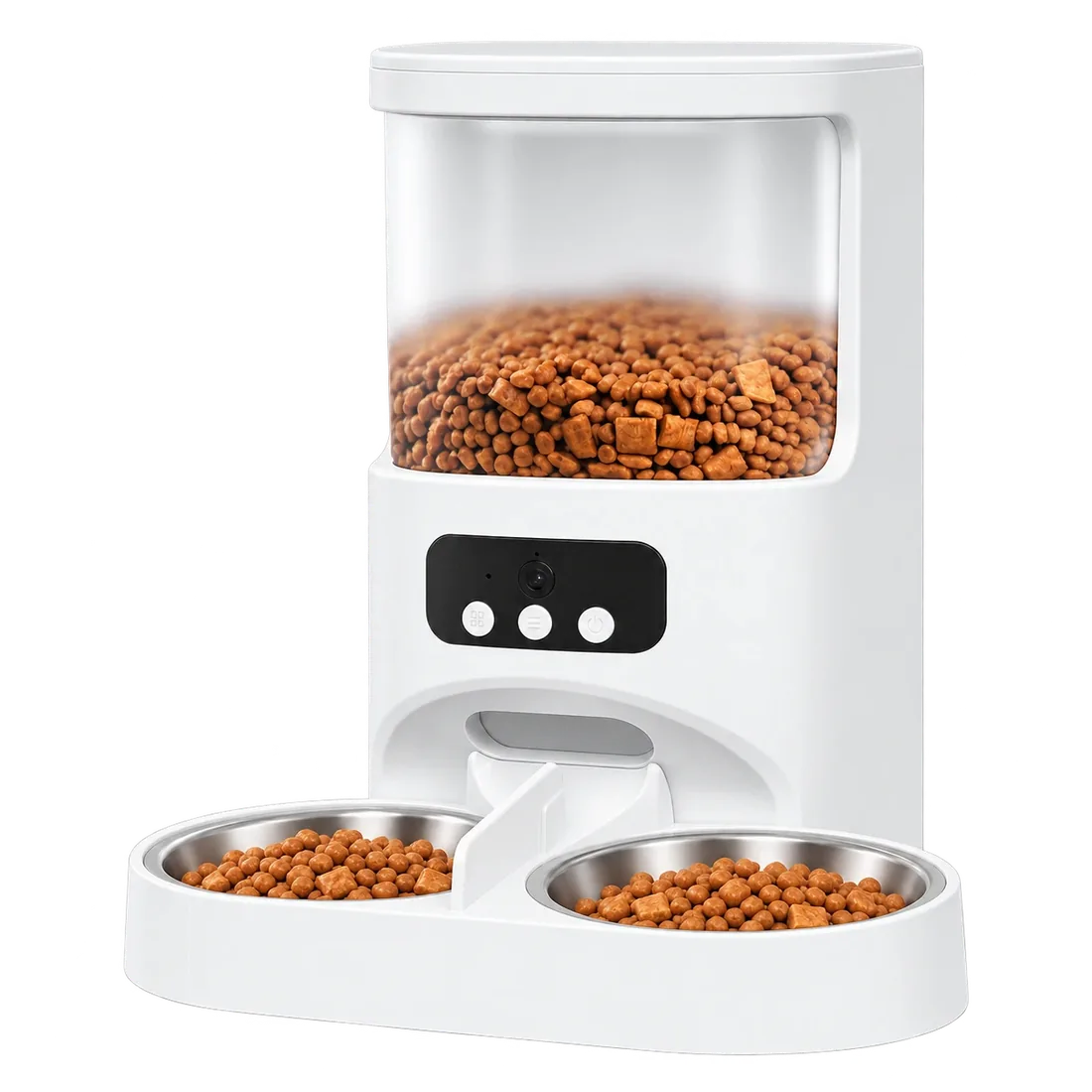 Twin · 4L · $199Two stainless-steel bowls for two cats, up to 8 meals a day and a 1080p night-vision camera. $199.→
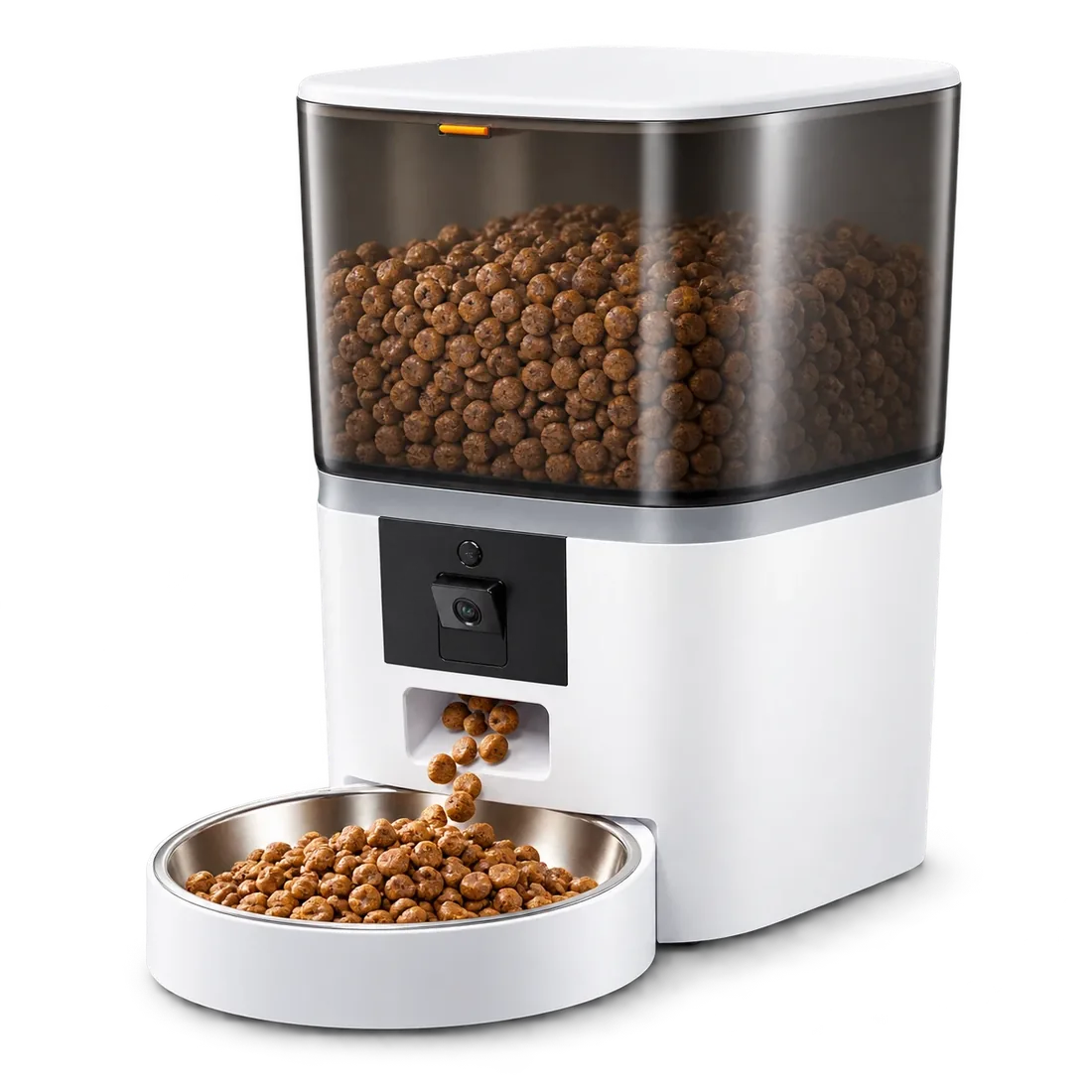 Keeper · 6L · $2796L, up to 15 meals a day, two-way audio, motion alerts and Alexa or Google Home. $279.→
Not sure yet? Compare all four feeders side by side.