In many two-cat homes, one cat finishes first and then helps itself to the other’s bowl. Over time one cat gains weight and the other goes hungry or stressed. The fix is rarely one trick; it’s a combination of set meals, separate spaces and a bit of supervision.
The quick answer
Switch to set meals so food isn’t left out, give each cat its own bowl in a separate spot, and supervise until the habit stops. A feeder with two bowls serves both cats at the same moment, so neither waits; for determined thieves, feed in different rooms.
Why one cat steals the other’s food
Some cats are simply faster eaters. Others are more food-motivated or more confident. When food is left out, the bolder cat learns that the other bowl is fair game. Stress around food can also make shy cats eat less, which you may not notice until their weight changes.
Step 1: stop free feeding
When bowls sit full all day, you can’t control who eats what. Switching to measured meals at set times is the foundation for everything else. Read free feeding vs. scheduled meals for a gradual way to switch.
Step 2: separate bowls, same time
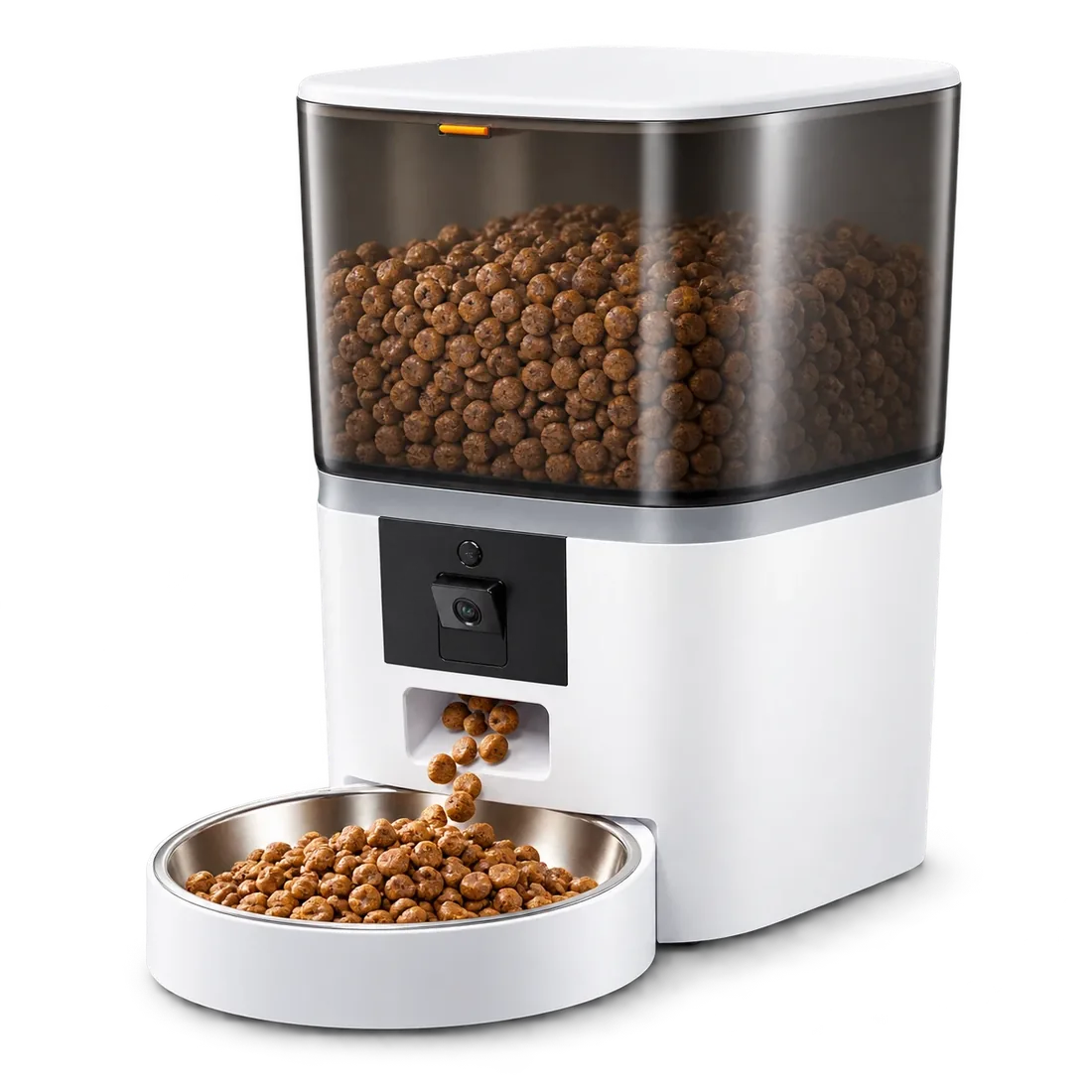
Serving both cats at the same moment, in separate bowls, removes the moment when one cat waits and the other pounces. Twin fills two stainless-steel bowls at once, and its adjustable splitter can share each meal evenly or give one bowl more.

Step 3: give them space
If one cat still muscles in, put more distance between the bowls, or feed in different rooms. Some households feed one cat on a raised surface the other can’t reach easily. Calm, separate spaces help shy eaters finish their meal.
- Set meals
- Two bowls at once
- Bowls a little apart
- Supervise a week
- Separate rooms
- Close doors at meals
- Pick up bowls after 20–30 minutes
- Ask your vet about weights
Step 4: supervise and adjust
Watch meals for a week, in person or on camera, and note who eats what. Twin’s 1080p camera with a 145° view covers both bowls, so you can see from your phone whether each cat finished its own portion.
Different diets? Different feeders
If your cats eat different foods, for example a prescription diet, one shared feeder won’t work. Feed them separately, ideally in different rooms, and talk to your vet about the safest setup. Our guide to feeders for multiple cats covers more options.
- Days 1–2
Measure each cat’s portion and serve at set times in separate bowls.
- Days 3–4
Move bowls further apart if one cat still wanders over.
- Days 5–6
Lift bowls after meals so nothing is left to steal.
- Day 7
Review: is each cat finishing its own portion? Adjust spacing or rooms.
Patience pays off. Most cats settle into a new routine within a week or two once food only appears at meal times and each cat has a bowl of its own.
Which Parveja feeder fits?
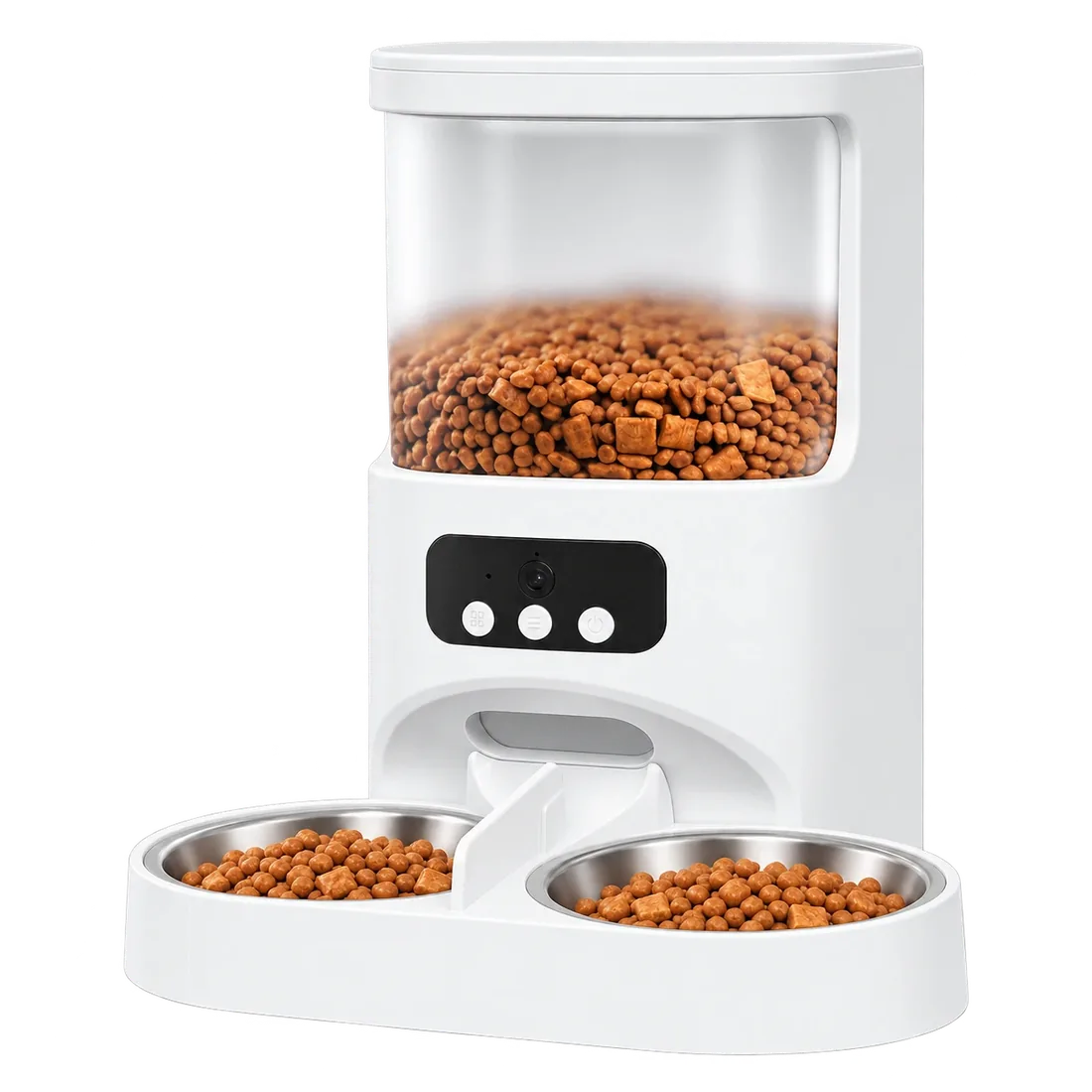 Twin · 4L · $199Two stainless-steel bowls for two cats, up to 8 meals a day and a 1080p night-vision camera. $199.→
 Keeper · 6L · $2796L, up to 15 meals a day, two-way audio, motion alerts and Alexa or Google Home. $279.→
Not sure yet? Compare all four feeders side by side.