Kittens need frequent, small meals, which makes an automatic feeder sound perfect. It can be, with a few checks first. Kittens grow quickly, their needs change month by month, and they’re still learning about food and routines. Here’s what to think about before you hand meal times to a machine.
The quick answer
An automatic feeder can help kittens get their frequent small meals on time, as long as it handles small portions and small kibble, sits at the right height, and you follow your vet’s plan for how much and how often. Supervise the first weeks and adjust as your kitten grows.
Start with your vet’s feeding plan
Kittens’ needs change fast during the first year. Ask your veterinarian how many meals a day and how much food your kitten should have now, and check back at each visit. The feeder simply delivers that plan reliably.
Check the feeder handles small portions
Kitten meals are small. Look for a feeder that lets you set small portions and enough meals per day. Keeper schedules up to 15 meals a day with custom portions, and Twin up to 8 meals a day with 1–20 portions each.
Check the kibble size
Kitten kibble is usually small and dispenses well, but always check. If the food is very fine or crumbly, watch the first few meals to make sure portions come out evenly.
Bowl height and access
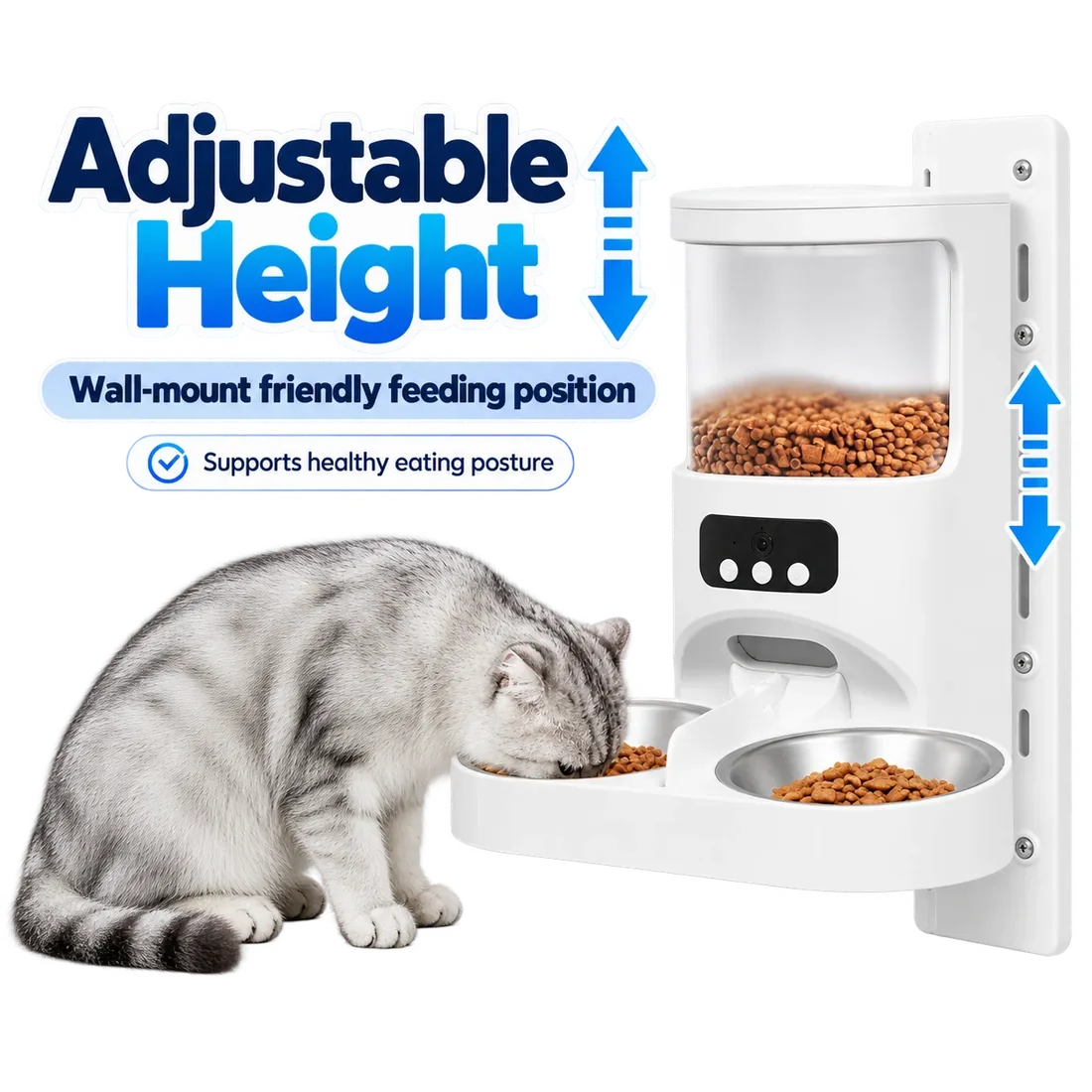
Kittens are small. Make sure they can reach the bowl comfortably and that the feeder is stable. Twin includes a wall bracket so you can set the bowl height to suit a kitten and raise it as they grow.
Supervise the first weeks
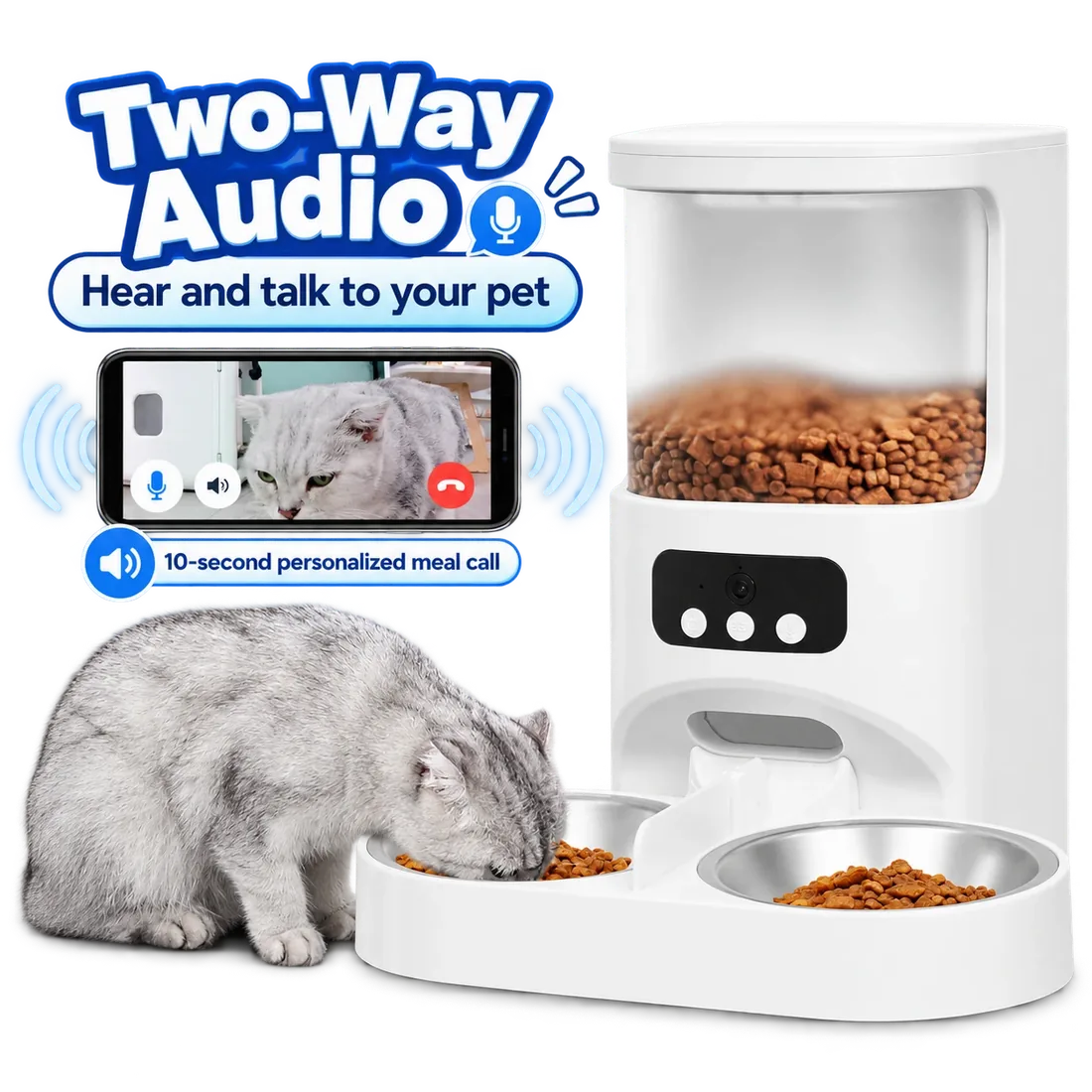
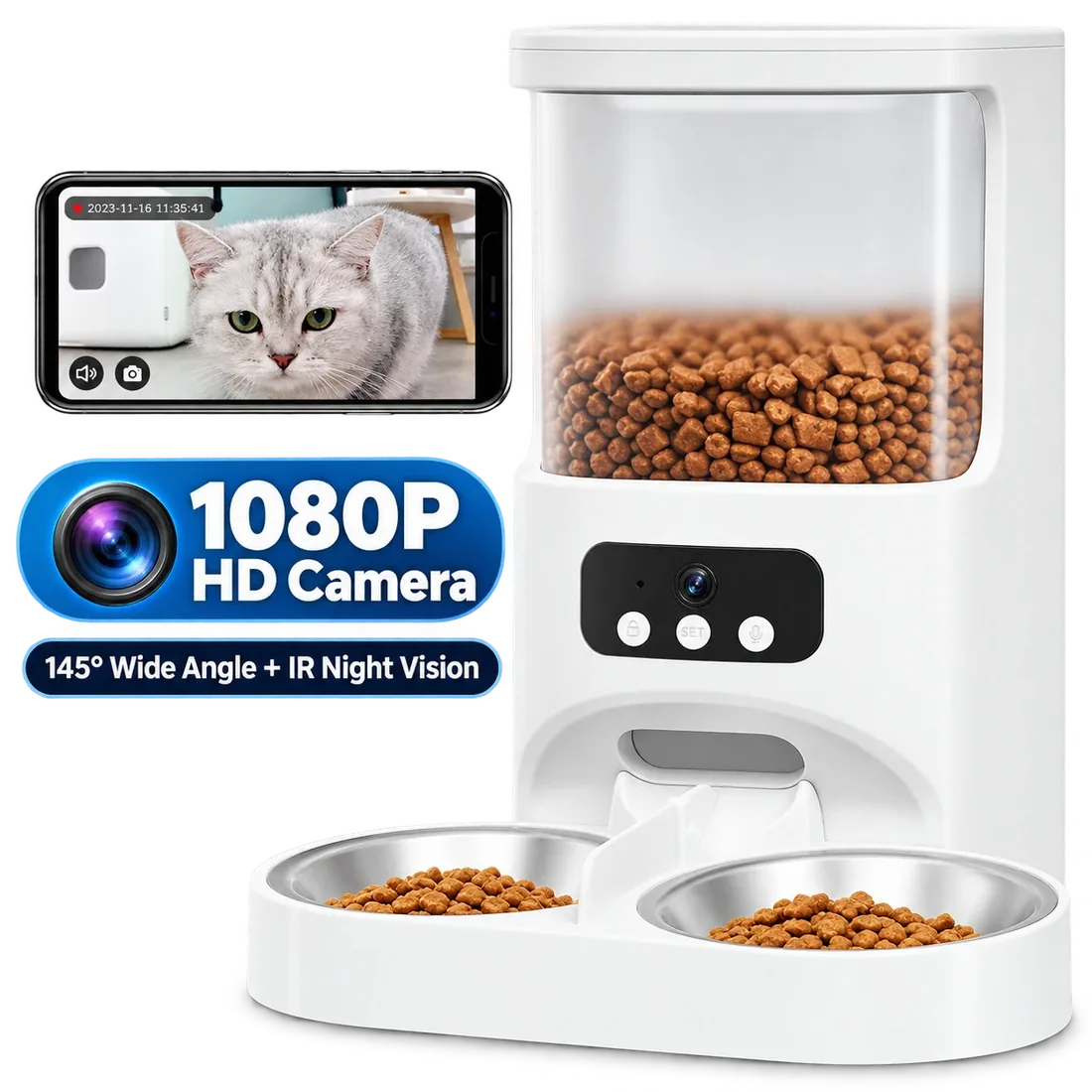
Watch your kitten eat from the feeder, in person or on camera, especially at first. Make sure they eat each meal and aren’t scared of the dispensing sound. Every Parveja feeder has a 1080p camera with night vision for check-ins while you’re out.
- Place it where they eat
Put the feeder in the usual eating spot, switched off at first.
- Feed by hand from its bowl
Let your kitten get used to the bowl before it dispenses.
- Trigger small meals nearby
Use Feed now while you’re close, so the sound means food.
- Move to the schedule
Hand over meals gradually over a week, watching each one.
What a feeder can’t do for a kitten
Kittens need lots of play, social contact and supervision. A feeder handles timing, not company. Young kittens shouldn’t be left alone for long, so plan check-ins and keep fresh water available at all times.
When your kitten grows up, the same feeder keeps working. Read our step-by-step guide to getting your cat used to an automatic feeder.
Which Parveja feeder fits?
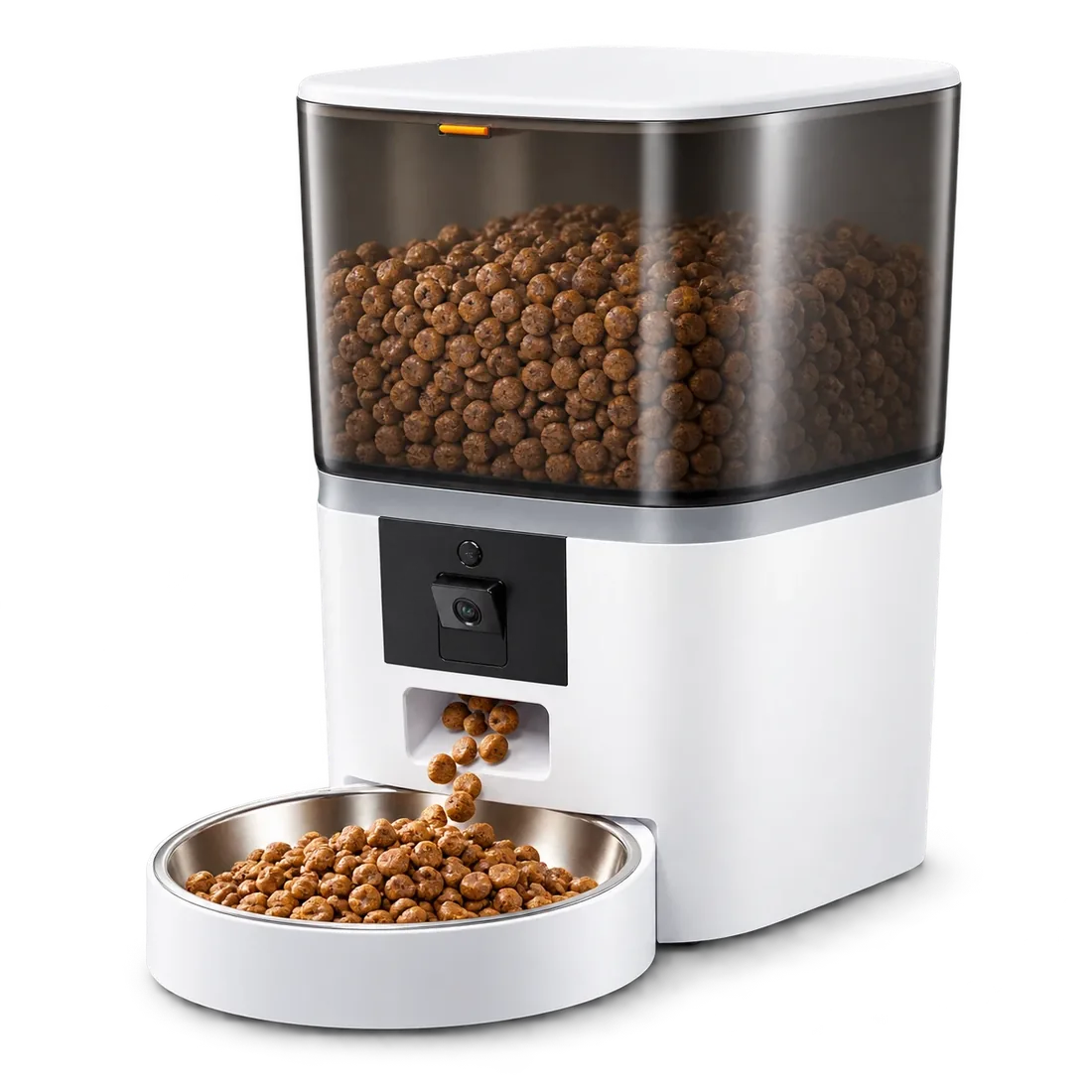 Keeper · 6L · $2796L, up to 15 meals a day, two-way audio, motion alerts and Alexa or Google Home. $279.→
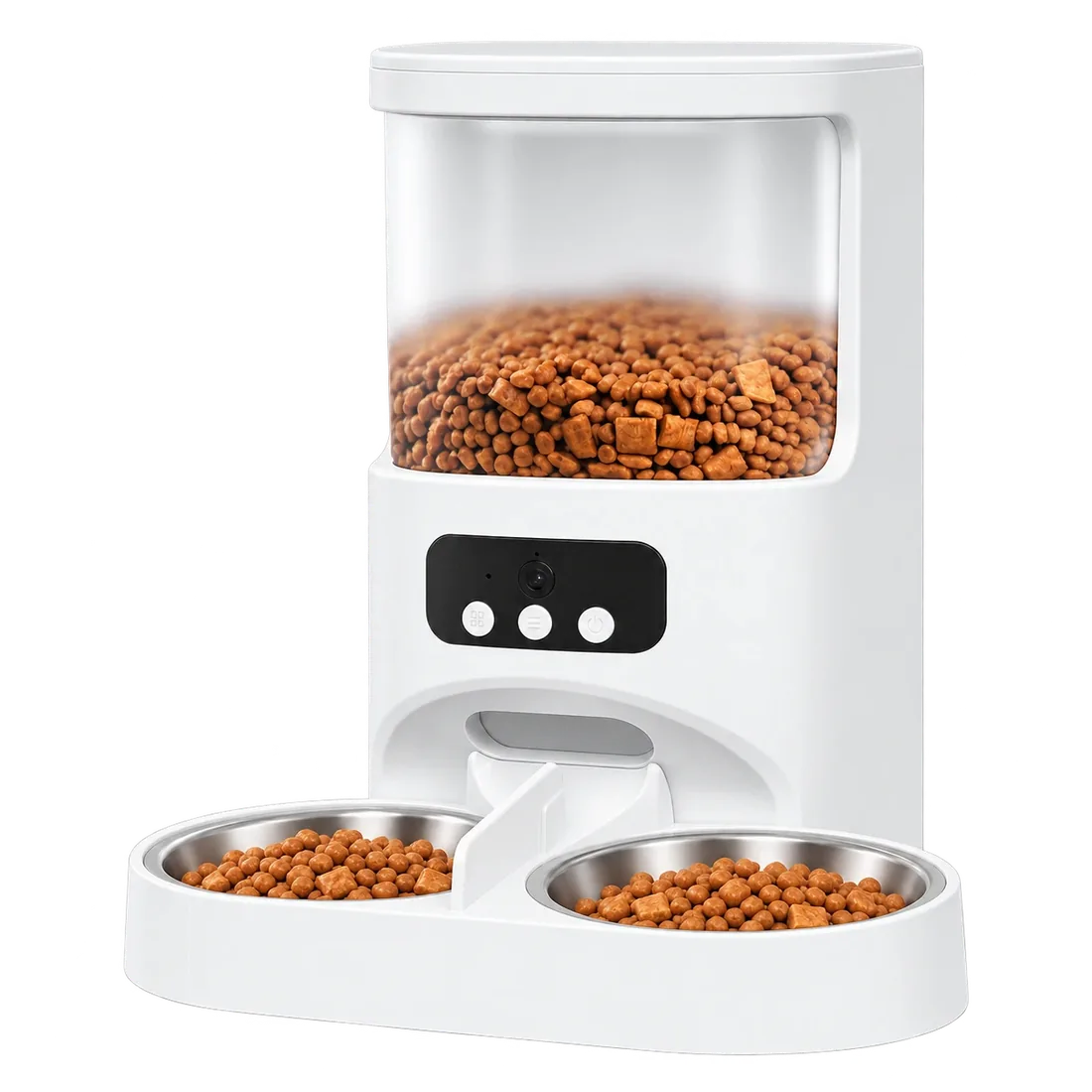 Twin · 4L · $199Two stainless-steel bowls for two cats, up to 8 meals a day and a 1080p night-vision camera. $199.→
Not sure yet? Compare all four feeders side by side.