
The quick answer
For two cats that eat calmly side by side, a two-bowl feeder like Parveja Twin serves both at once. If your cats compete, eat very different amounts or need special diets, use one feeder per cat in separate spots. Either way, watch the first week of meals on the camera to make sure each cat gets its share.
One shared feeder or one per cat?
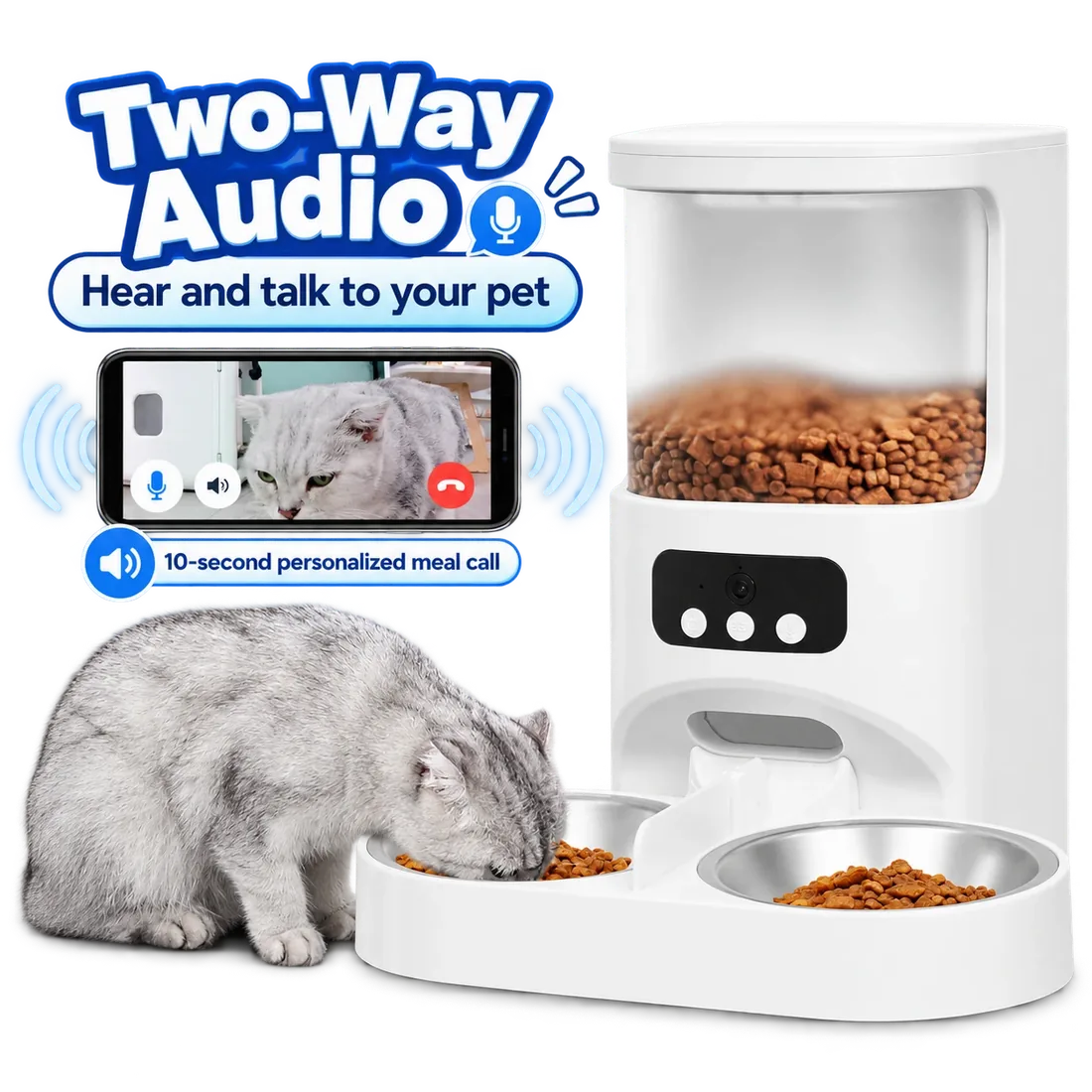
A two-bowl feeder works well when your cats eat similar amounts, eat calmly side by side and have no special diets. Parveja Twin fills two stainless-steel bowls at the same time, and its adjustable splitter can give both cats the same portion or more to the bigger eater.
If your cats compete for food or need different diets, one feeder per cat is easier to manage. Parveja feeders don’t identify individual pets (they have no microchip recognition), so they can’t stop one cat from eating from another’s bowl. Separate placement and a little supervision do that job.
Placement: give each cat its own space
Cats often prefer to eat without another cat watching. Put feeders in different rooms, or at least on opposite sides of a room, out of busy walkways and away from litter boxes. Keep each feeder near a power outlet and within good Wi-Fi range.
Schedule portions per cat
Set each cat’s daily amount, split into the meals your vet recommends. Many owners use several smaller meals rather than one or two big ones. Twin schedules up to 8 meals a day with 1–20 portions each, and Keeper up to 15; all four Parveja feeders schedule meals and portions in the app.
Serving both cats at the same time helps: each cat is busy with its own bowl, which reduces wandering over to the other one. Twin does this automatically by filling both bowls at once.
Dealing with food stealing
If one cat finishes fast and moves on to the other’s bowl:
- Move the feeders further apart or into separate rooms.
- Split meals into smaller portions so there’s less left to steal.
- Use a camera feeder to see who is eating from which bowl.
- Ask your vet if one cat is gaining weight or another is losing it.
Cats on special diets
If one of your cats eats a prescription or weight-management diet, an open automatic feeder can’t keep the other cat out. Feed that cat in a separate, closed room at mealtimes, or ask your vet about the best setup.
Choosing feeders for a multi-cat home
For two calm cats, one two-bowl feeder is the simplest setup. For cats that compete, two separate feeders work better. Every Parveja feeder has a camera, so you can check the routine from your phone.
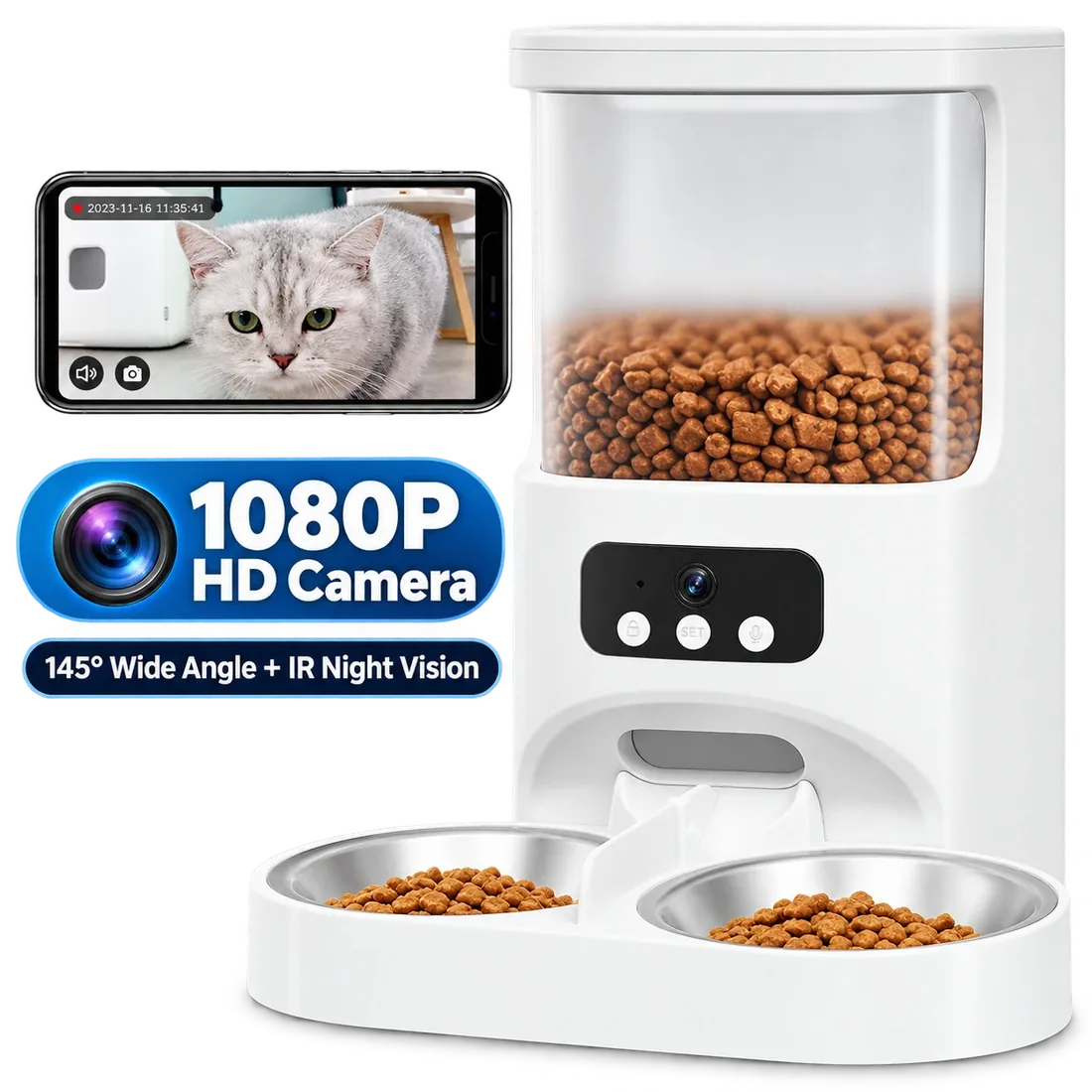
- Twin (4L, $199): two bowls at once with an adjustable splitter, a 145° camera and two-way audio.
- Keeper (6L, $279): a second station with up to 15 meals a day, motion alerts and two-way audio.
Which Parveja feeder fits?
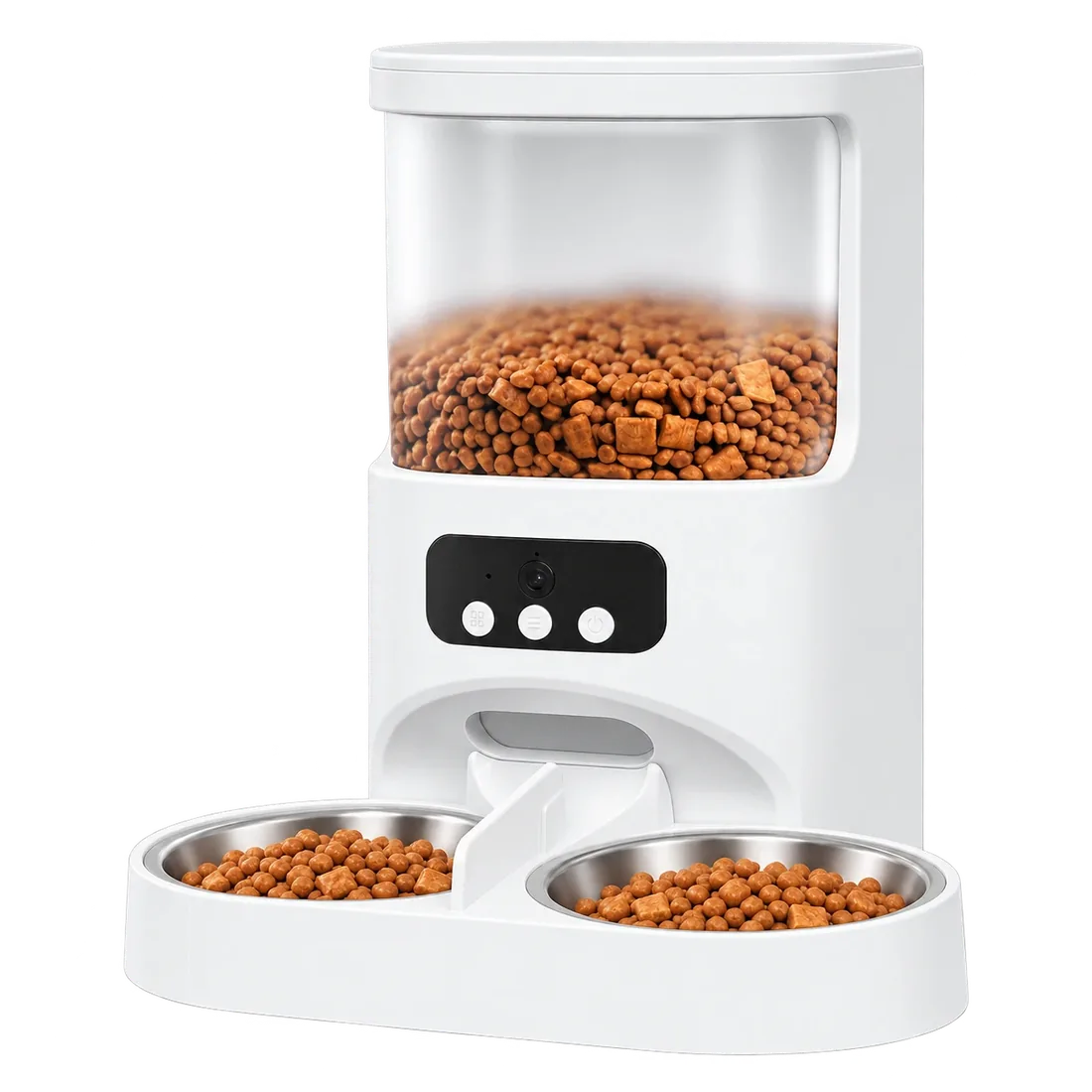 Twin · 4L · $199Feeds two cats at once from two bowls, with a camera that covers both. $199.→
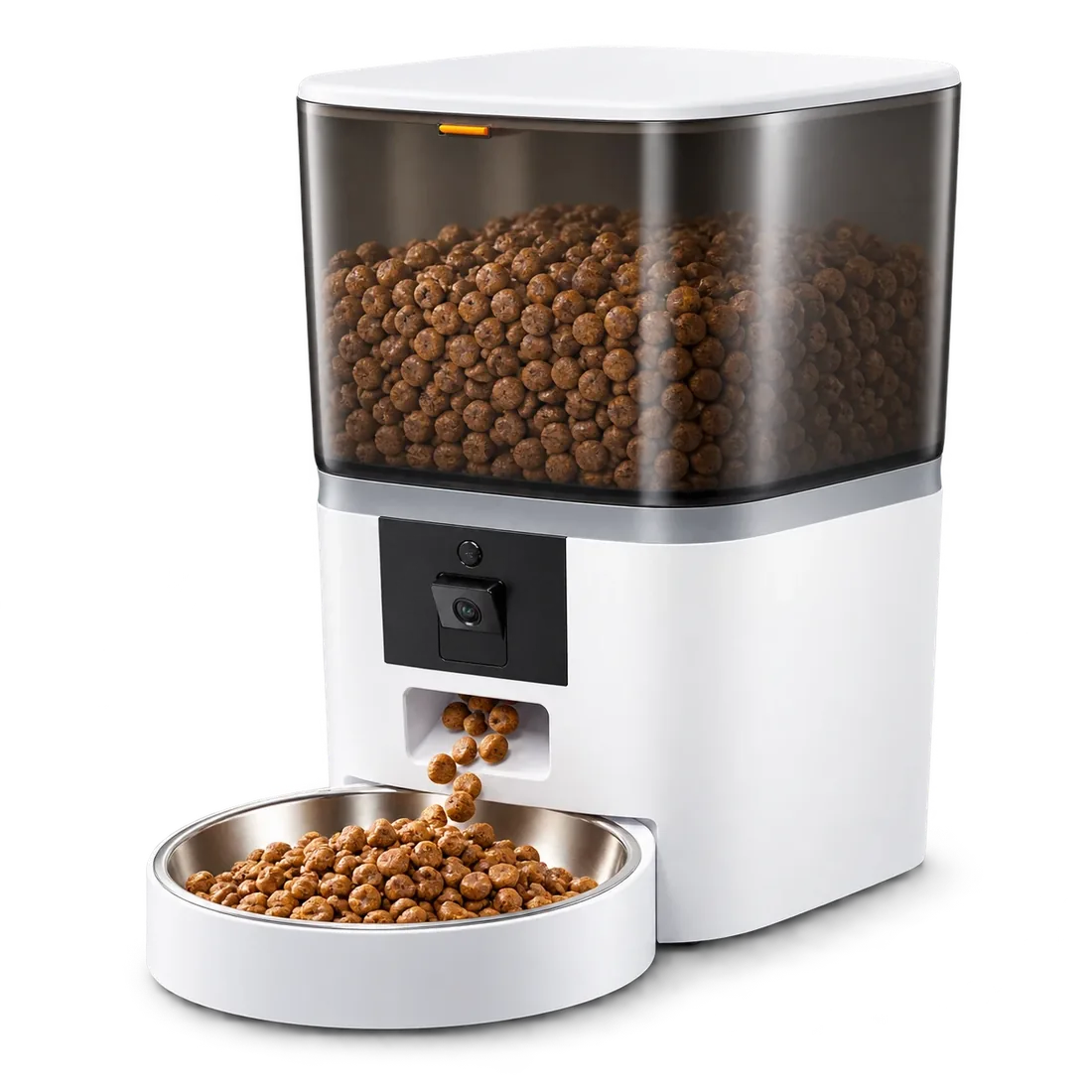 Keeper · 6L · $279A separate station for a cat that needs its own space, with motion alerts. $279.→
Browse all automatic cat feeders, or compare all four feeders side by side.