Dogs thrive on routine, and meal times are the backbone of it. But how many meals should your dog eat? It depends on age, size and health. Here’s a straightforward guide to building a feeding schedule with your vet, plus how a feeder keeps it on track.
The quick answer
Puppies usually eat three or more small meals a day, and most adult dogs do well on two meals spaced through the day. Some large breeds and seniors benefit from splitting food into more meals. Keep the daily amount the same, and ask your veterinarian what suits your dog.
Puppies
Puppies grow quickly and do best with several small meals spread through the day. Your vet will guide how often and how much, and the number of meals usually drops as your puppy gets older.
Adult dogs
For most healthy adult dogs, two meals a day, roughly morning and evening, is a reliable routine. It keeps hunger steady and makes it easier to spot changes in appetite.
Large breeds
Some large, deep-chested breeds are prone to serious digestive problems. Vets often suggest splitting food into more than one meal and taking care around exercise and meal times. Ask your veterinarian about the right plan for your breed.
Senior dogs
Older dogs may need changes in how much and how often they eat. Smaller meals can be easier for some seniors. Check in with your vet if weight, appetite or energy changes.
| Dog | Typical meals | Example times |
|---|---|---|
| Puppy | 3+ small meals | 7:00 · 12:00 · 17:00 |
| Adult | 2 meals | 7:00 · 18:00 |
| Large breed | 2–3 meals, per your vet | 7:00 · 13:00 · 19:00 |
| Senior | 2–3 smaller meals | 8:00 · 14:00 · 19:00 |
Your veterinarian’s advice comes first, especially for puppies, large breeds and seniors.
- Morning walk
- Breakfast from the feeder
- Evening walk
- Dinner from the feeder, same portion every day
Follow your vet’s advice on the gap between exercise and meals for your breed.
Let the feeder keep time
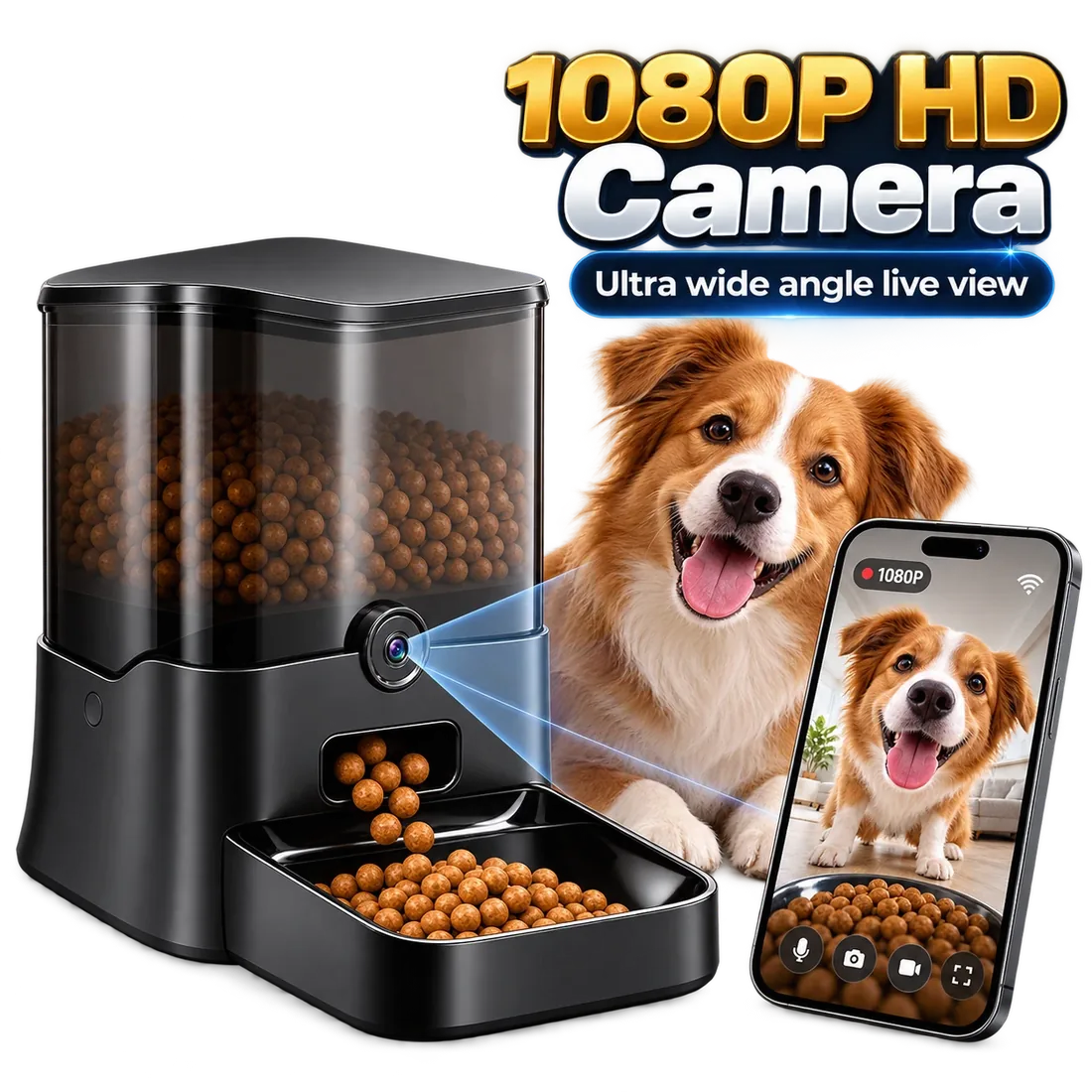
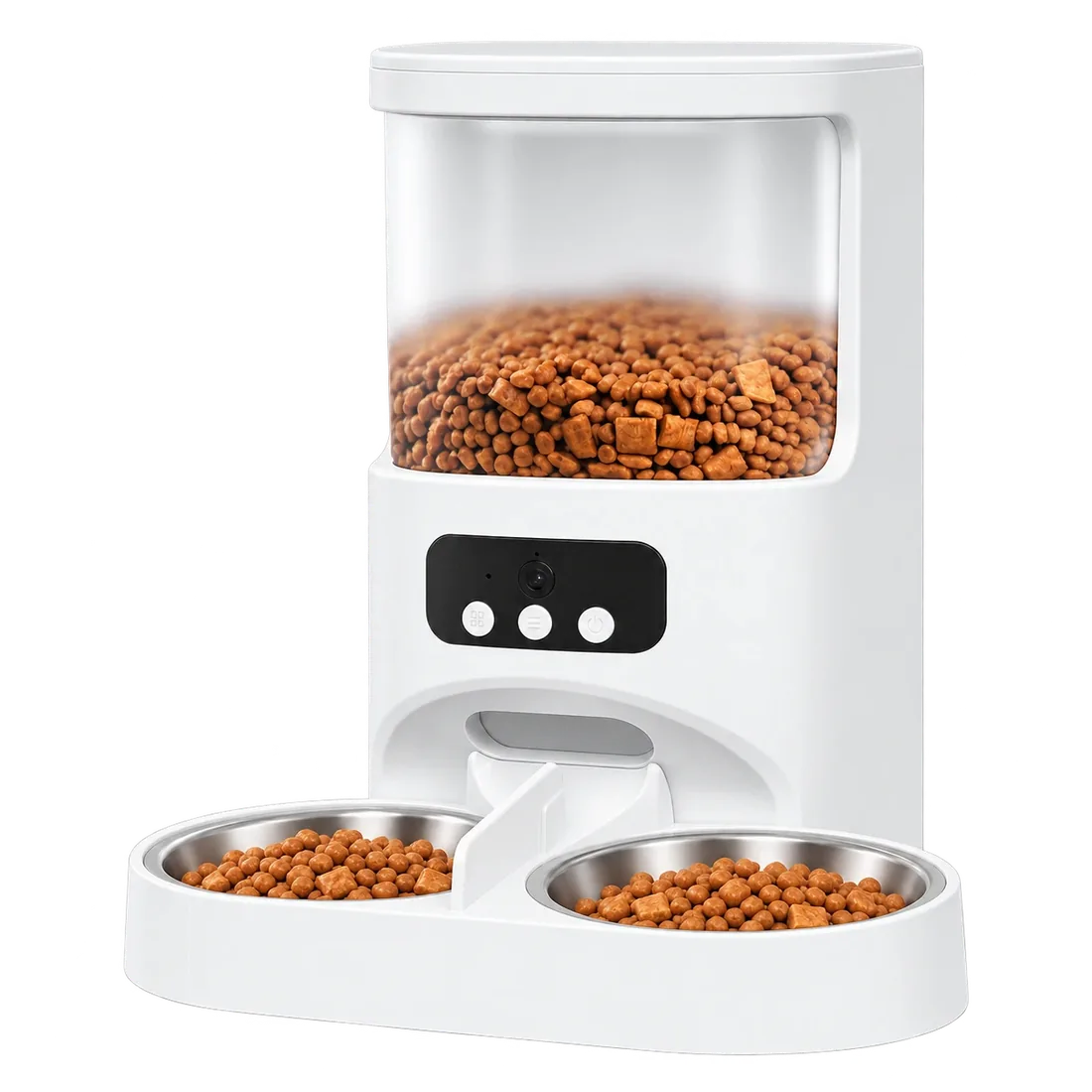
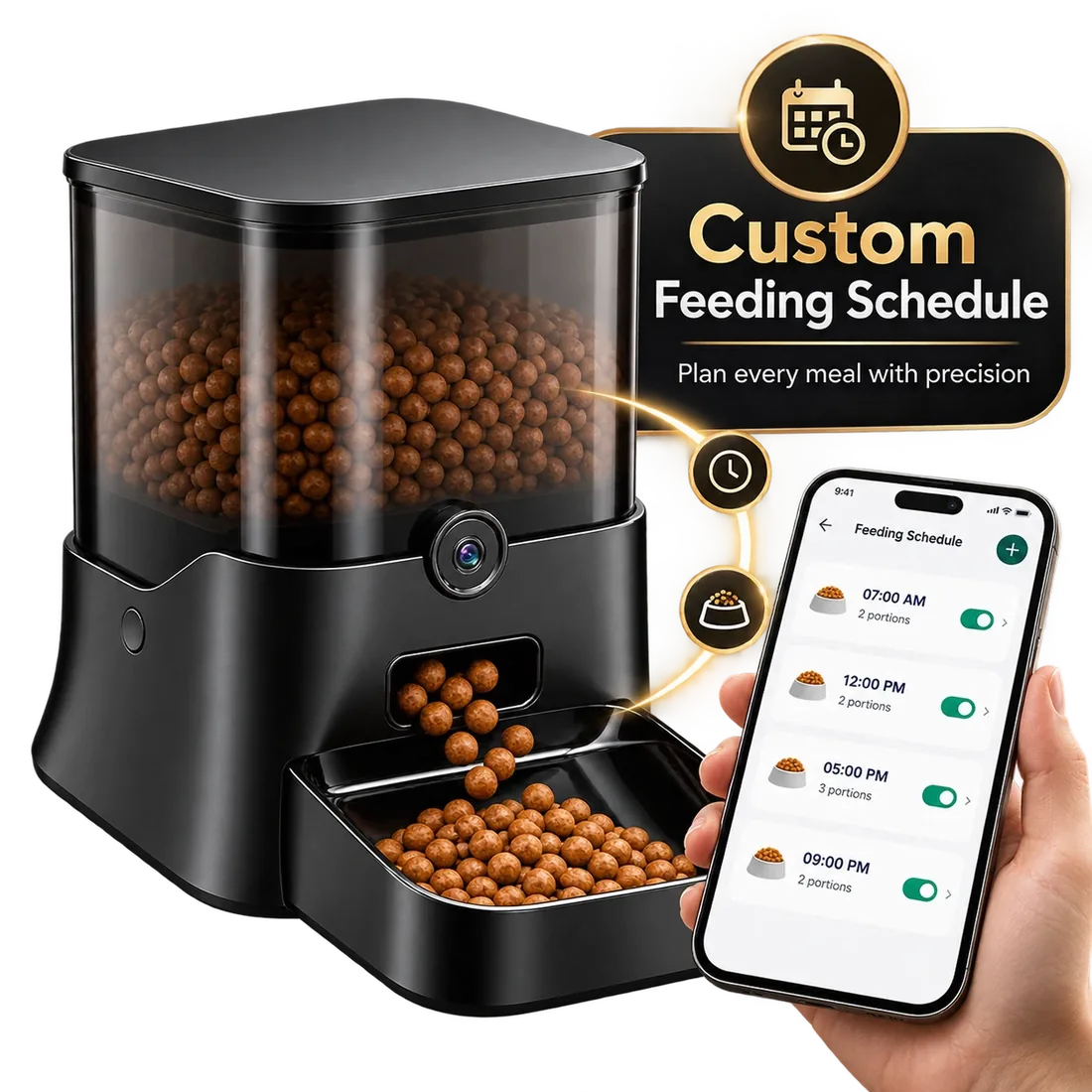
Busy days are when meal times slip. A scheduled feeder serves the same portion at the same time, whether you’re home, stuck in traffic or away for the night. Ranger holds 11L in a sealed tank, and Titan holds 12L with two-way audio, so you can call your dog to dinner from your phone.
Why a consistent schedule helps dogs
Dogs learn routines fast. When meals arrive at the same times every day, many dogs settle better, beg less and are easier to house-train, because bathroom breaks follow a predictable rhythm after meals. A steady schedule also makes it obvious when something is off: a dog that suddenly skips breakfast is easier to notice than one grazing from an always-full bowl.
Weekends count too. Try to keep meal times within about half an hour of your weekday routine, even when you sleep in. A scheduled feeder does this for you, and the app’s feeding record shows every meal that was served.
Common feeding mistakes
- Topping up the bowl whenever it looks empty, so nobody knows the real daily amount.
- Measuring with a random mug instead of a measuring cup or scale.
- Adding treats and table scraps on top of full meals without adjusting portions.
- Changing food suddenly instead of gradually over about a week.
Keep an eye on the basics
Measure food accurately, keep fresh water available, and check your dog’s weight and body shape regularly. For big dogs, see our large-dog buying guide.
Which Parveja feeder fits?
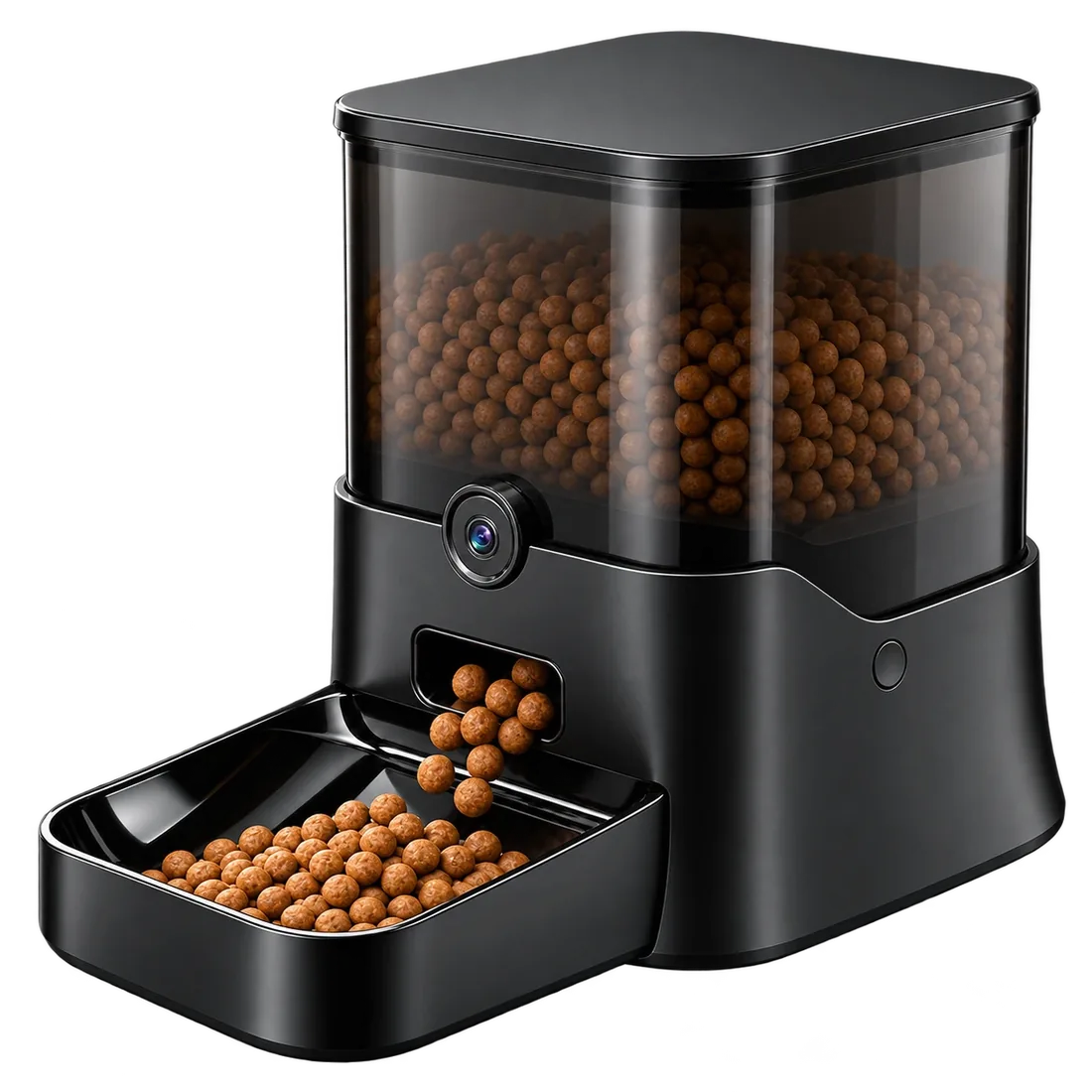 Ranger · 11L · $39911L sealed tank, ultra-wide 1080p night-vision camera and a backup battery port. $399.→
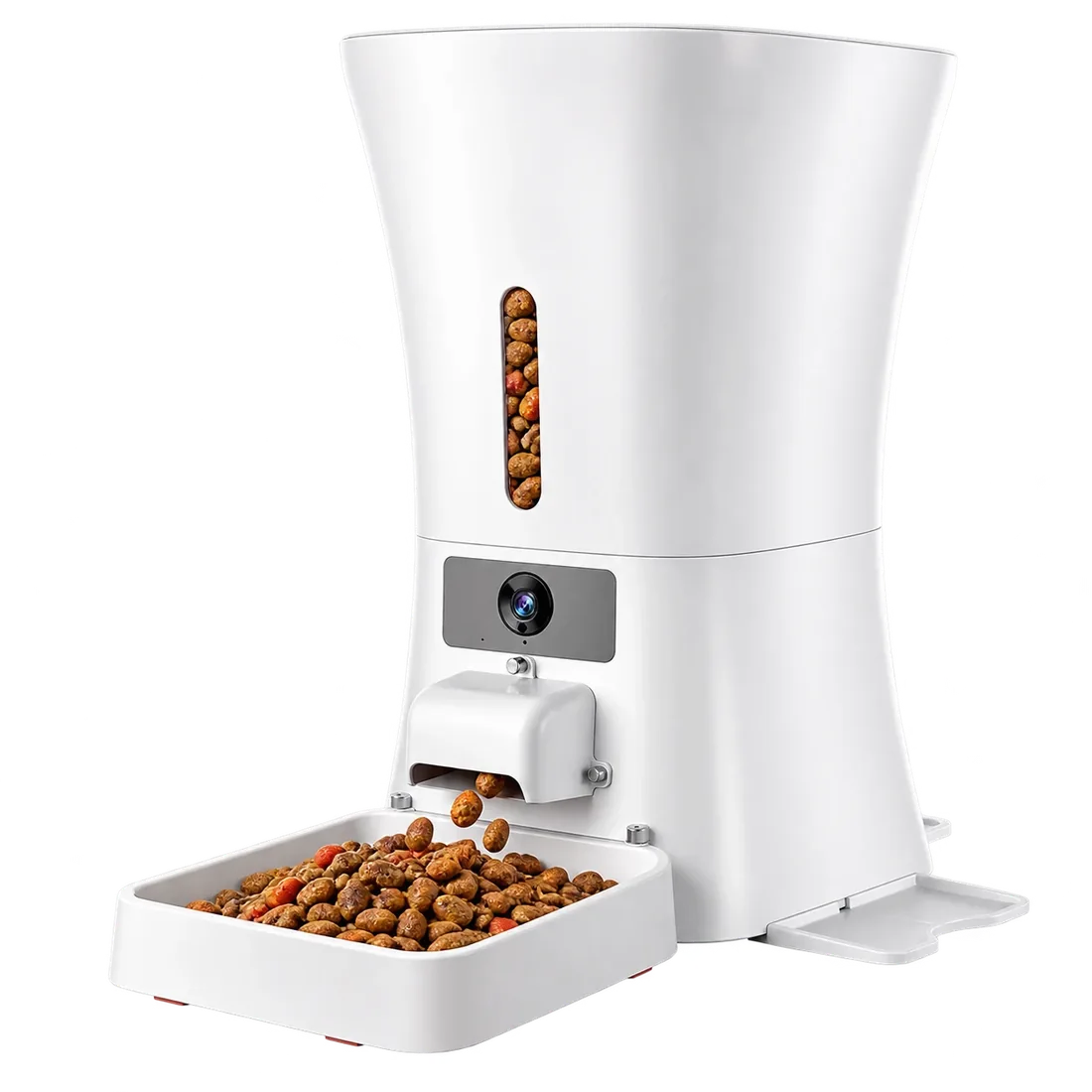 Titan · 12L · $44912L (about 50 cups), two-way audio, motion and low-food alerts, D-battery backup. $449.→
Not sure yet? Compare all four feeders side by side.