Feeding twice a day is the classic routine, but it isn’t the only one, and it isn’t always the best fit. Age, health and lifestyle all change how often a cat should eat. Here’s a simple guide, with example schedules you can adapt with your veterinarian.
The quick answer
Kittens usually eat several small meals a day, while most adult cats do well on at least two meals, and many enjoy smaller, more frequent ones. Senior cats may need adjustments. Keep the total daily amount the same and split it into as many meals as suits your cat, guided by your vet.
Why meal frequency matters
Cats in the wild eat many small meals. At home, splitting the daily amount into regular meals can help with hunger between meals, begging and early-morning wake-up calls. What matters most is the total amount each day, so more meals means smaller portions, not more food.
Kittens
Kittens grow fast and have small stomachs, so they’re commonly fed several small meals spread through the day. Your vet will recommend how often and how much as your kitten grows, and the plan usually changes over the first year.
Adult cats
Most healthy adult cats do well on at least two meals a day. Many owners split the same amount into three or four smaller meals, which can suit cats who get hungry or impatient between breakfast and dinner.
Senior cats
Older cats can have changing appetites and health needs. Some do better with smaller, more frequent meals. Talk to your vet about how much and how often, especially if your cat’s weight or appetite changes.
| Routine | Meal times | Good for |
|---|---|---|
| 2 meals | 7:00 · 18:00 | Simple routines, most adult cats |
| 3 meals | 7:00 · 13:00 · 19:00 | Cats hungry by mid-afternoon |
| 4 meals | 6:30 · 11:30 · 16:30 · 21:30 | Small, steady portions |
Ask your veterinarian before changing how much your cat eats each day.
- Breakfast, a quarter of the day’s food
- Midday meal while you’re at work
- Afternoon meal before you’re home
- Late snack, so breakfast doesn’t start at 5 a.m.
How a feeder makes frequent meals easy
Several small meals are hard to keep up when you work. A scheduled feeder serves them for you, in the same portion each time. Keeper can schedule up to 15 meals a day with custom portions, and Twin up to 8 meals a day with 1–20 portions each.

Signs your cat’s schedule needs a tweak
- Your cat wakes you before breakfast every day: try a small late-evening meal and keep breakfast at a fixed time.
- Your cat gulps food and sometimes brings it back up: smaller, more frequent meals may help; mention it to your vet.
- Food is left in the bowl at most meals: portions may be too big for the number of meals.
- Your cat seems hungry all afternoon: move part of breakfast or dinner into a midday meal.
Make one change at a time and give it a week before judging. Cats often take a few days to adjust to a new rhythm.
Free feeding vs. set meals
Leaving a full bowl out all day is convenient, but it makes it hard to know how much your cat really eats, and some cats overeat. Set meals, even many small ones, give you a clear picture and make it easier to spot changes in appetite early, which is useful information for your vet.
Putting it together
Pick the number of meals that suits your cat and your day, keep the daily total steady, and adjust with your vet. If you have two cats, read our guide to feeding multiple cats.
Which Parveja feeder fits?
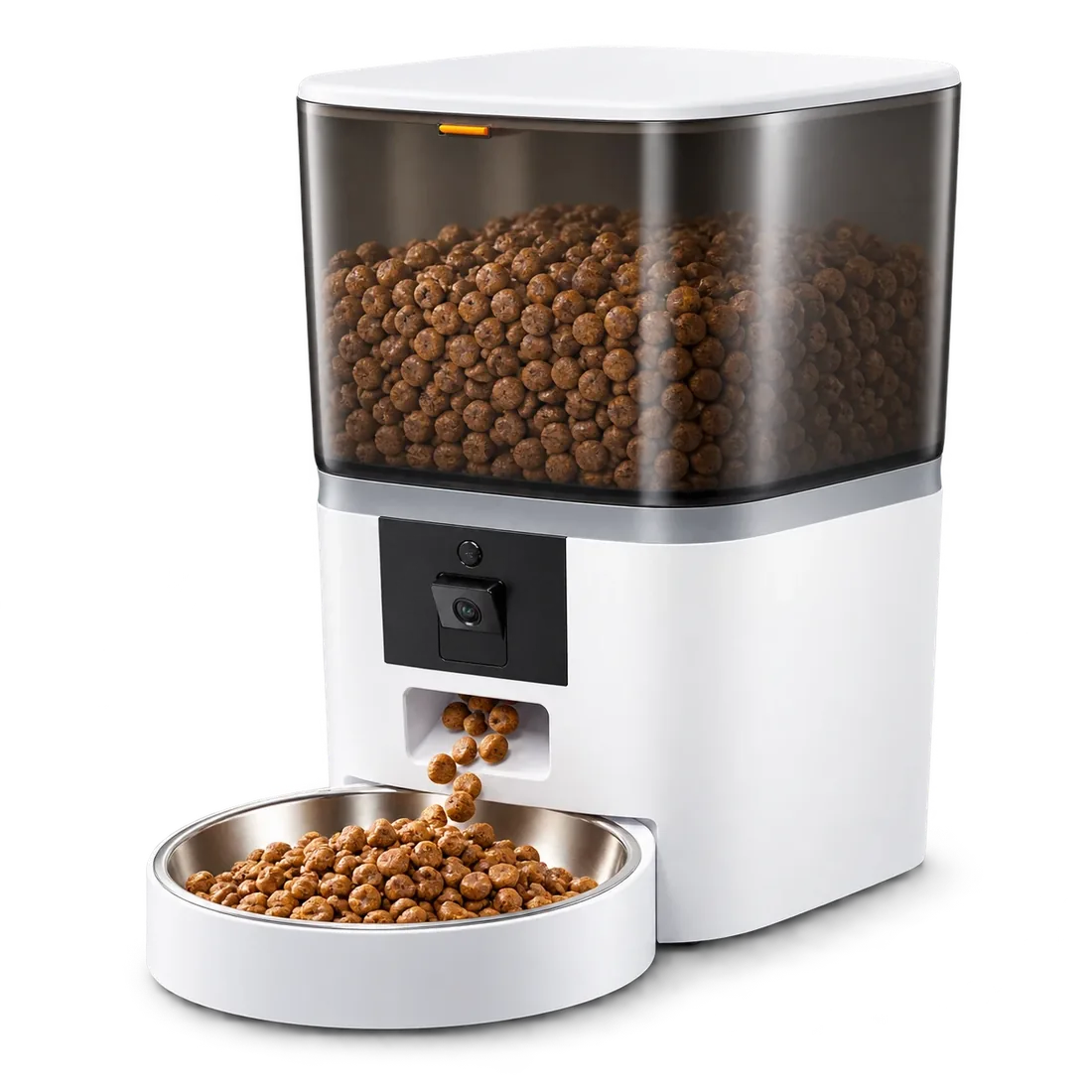 Keeper · 6L · $2796L, up to 15 meals a day, two-way audio, motion alerts and Alexa or Google Home. $279.→
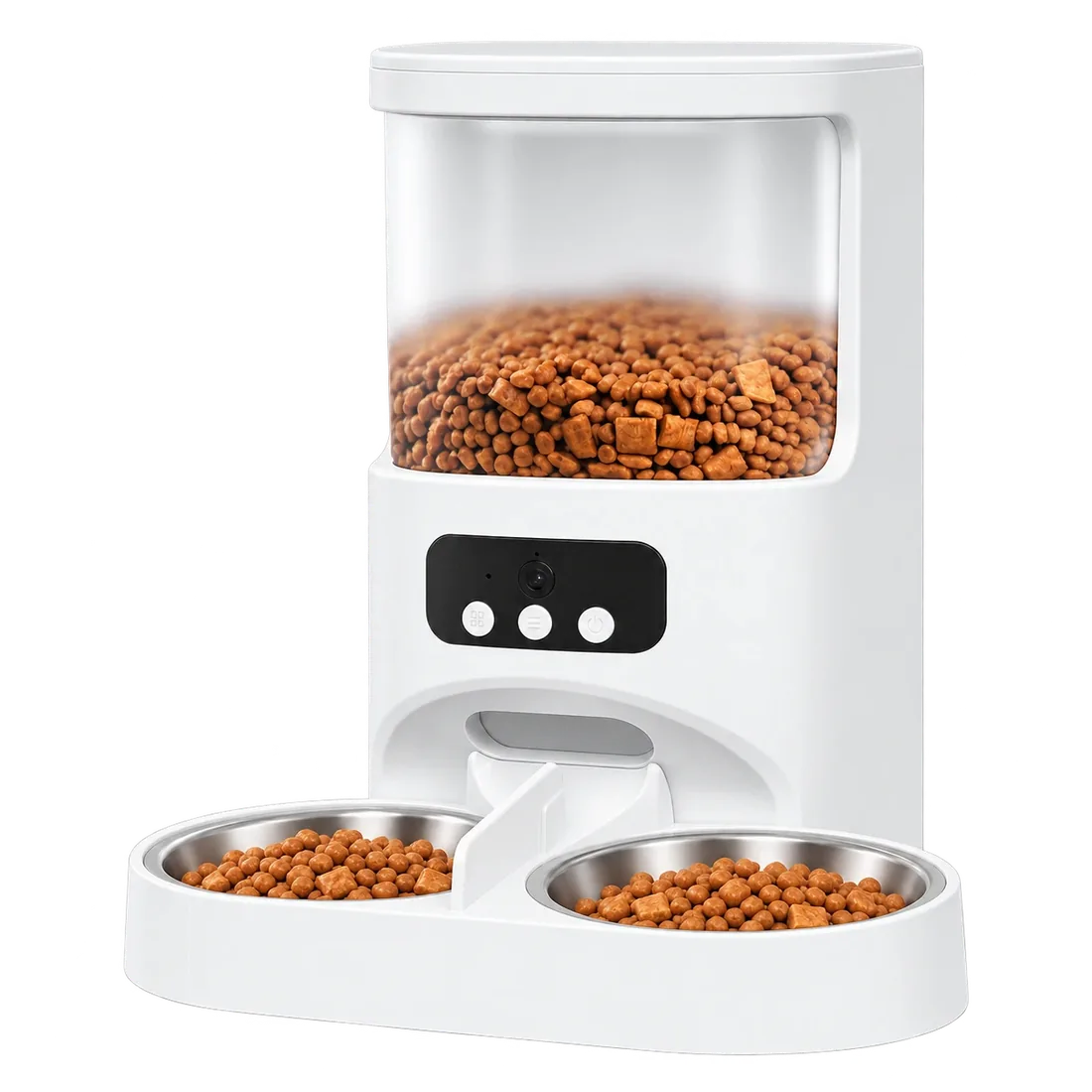 Twin · 4L · $199Two stainless-steel bowls for two cats, up to 8 meals a day and a 1080p night-vision camera. $199.→
Not sure yet? Compare all four feeders side by side.