Some cats have a bowl that never runs empty. Others eat at set times. Both approaches are common, and both have fans. But there are real trade-offs, especially for indoor cats and multi-cat homes. Here’s how they compare and how to make a change if you want one.
The quick answer
Free feeding is convenient but makes it hard to know how much your cat eats, and some cats overeat. Scheduled meals give you portion control and an early warning when appetite changes. If you switch, move gradually, split the daily amount into several meals, and ask your vet about the right amount.
What is free feeding?
Free feeding means leaving dry food available all day, so your cat can graze whenever they like. It suits some cats well, especially those who naturally stop when they’re full. But not every cat self-regulates, and indoor cats with little exercise can gradually gain weight.
What are scheduled meals?
Scheduled feeding means measured portions at set times, from two meals a day up to many small ones. You decide the total daily amount, usually with your vet, and split it into meals.
- Very convenient
- Suits some grazers
- Hard to track how much is eaten
- Some cats overeat
- Food sits out longer
- Measured daily amount
- Easier weight management
- Spot appetite changes early
- Fresher food each meal
- Needs a routine or a feeder
Why appetite tracking matters
A change in appetite is often one of the first signs that something’s wrong. With a bowl that’s always full, you may not notice for days. With set meals, an untouched breakfast stands out right away, and that’s useful information for your vet.
Multi-cat homes
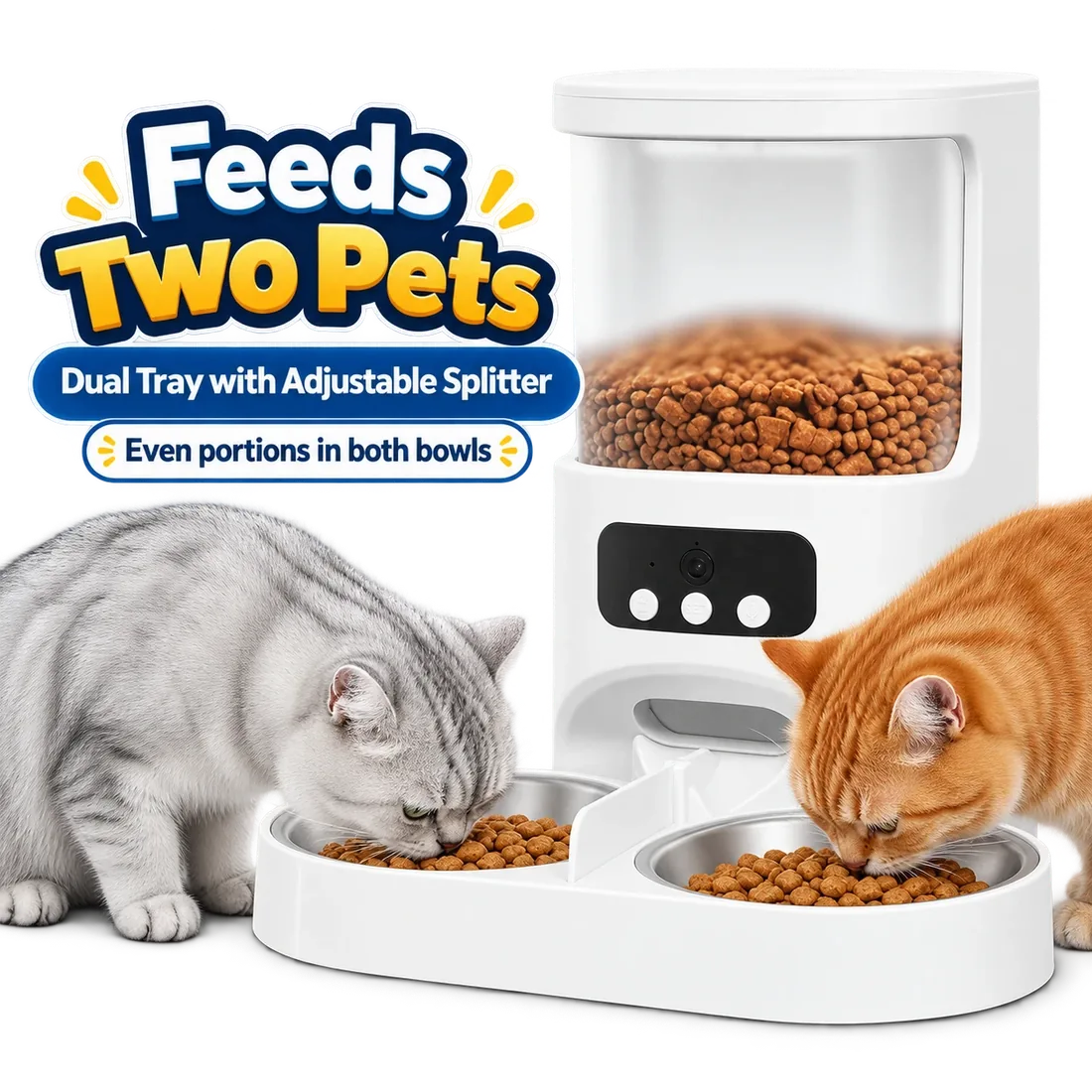
In homes with two or more cats, free feeding often means one cat eats more than its share. Scheduled meals in separate bowls make sure each cat gets its portion. Twin fills two bowls at the same time, and our guide to feeding multiple cats has more ideas.

How to switch from free feeding
- Measure what your cat eats in a day. Keep food available, but note the amount.
- Offer food at four set times; remove the bowl between meals.
- Keep four meals; make portions consistent.
- Settle on the number of meals that suits your cat, with your vet’s guidance on the total amount.
Go slower if your cat seems stressed. Never cut food sharply without your vet’s advice.
Signs the switch is working
Within a couple of weeks, most cats start turning up at meal times and finishing their portions promptly. Begging between meals usually settles once the routine is predictable. If your cat leaves food at every meal, the portions may be larger than they need; if they seem frantic for food, talk to your vet about the daily amount.
A middle ground: many small meals
If your cat likes to graze, a feeder can serve several small meals throughout the day. That keeps the grazing feel while you control the total. Twin can schedule up to 8 meals a day, and Keeper up to 15.
Which Parveja feeder fits?
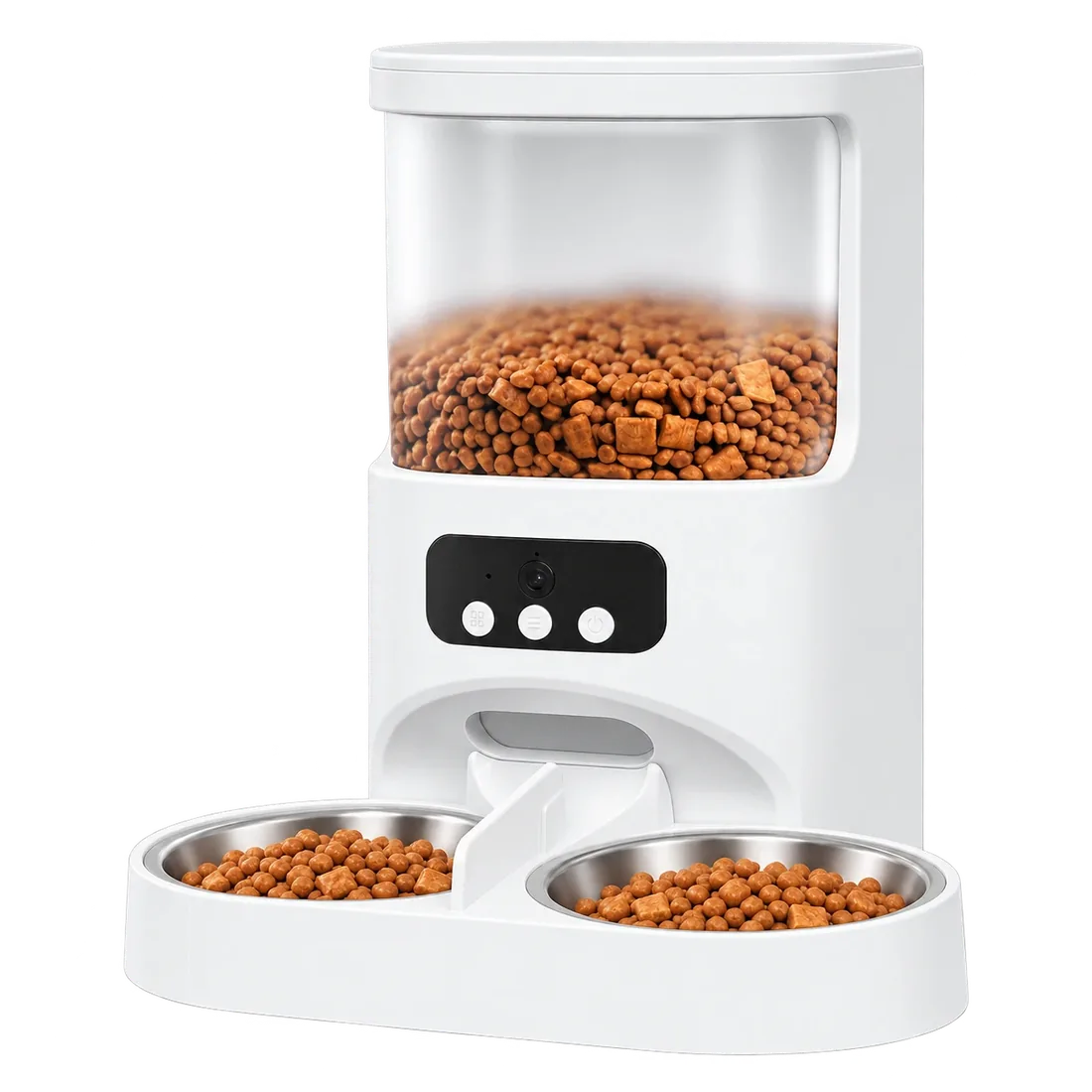 Twin · 4L · $199Two stainless-steel bowls for two cats, up to 8 meals a day and a 1080p night-vision camera. $199.→
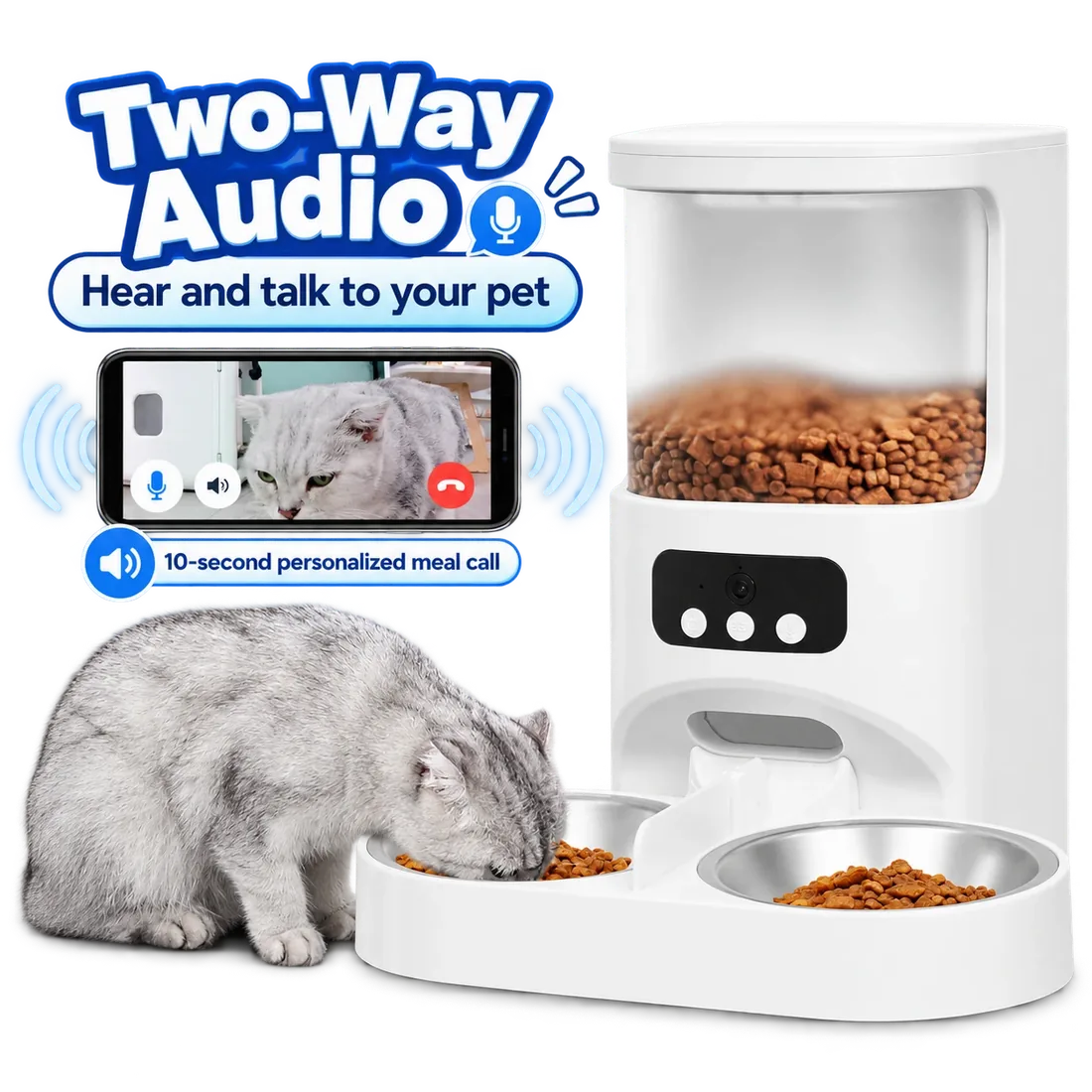
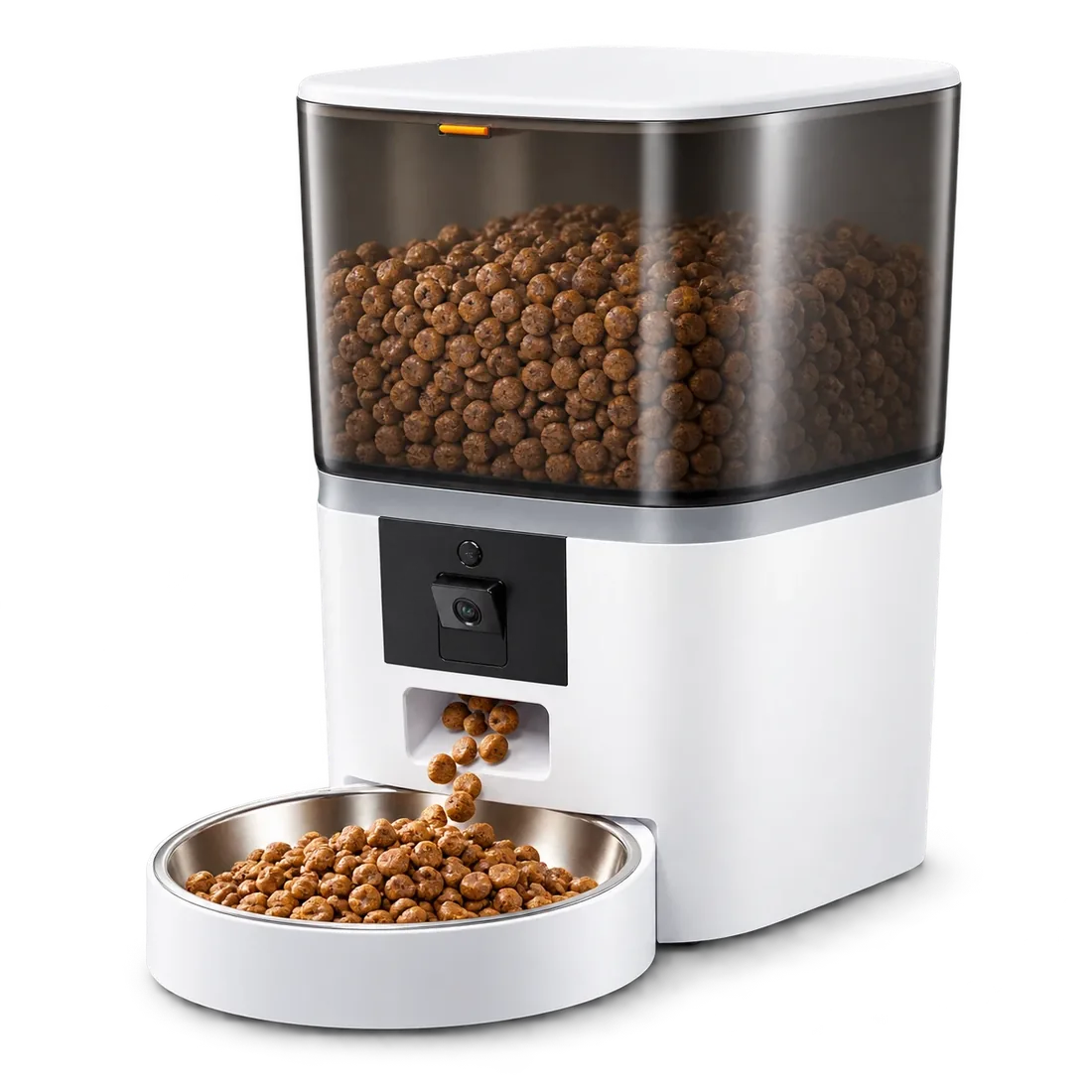 Keeper · 6L · $2796L, up to 15 meals a day, two-way audio, motion alerts and Alexa or Google Home. $279.→
Not sure yet? Compare all four feeders side by side.