On Sunday, November 1, clocks in most of the U.S. fell back an hour. You got an extra hour of sleep. Your cat or dog got a breakfast that suddenly showed up an hour late, at least by their body clock. Pets don’t read clocks, they read routine, so a sudden one-hour jump can mean early-morning wake-up calls, hovering by the bowl and a grumpy evening. The good news: it’s easy to smooth over in a few days.
The quick answer
Move mealtimes in small steps of about 15 minutes every day or two until you reach the new clock time, rather than jumping a full hour at once. If you use an automatic feeder, check that its clock shows the right time after the change and adjust the schedule in the app in the same small steps.
Why the time change matters to pets
Cats and dogs build strong expectations around food. If breakfast has landed at 7:00 every morning for months, their body expects it at that moment, whatever the clock says. When the clocks fall back, 7:00 on the new clock is 8:00 by the old one, so to your pet, breakfast is suddenly an hour late.
Most pets adjust within a few days either way. But some, especially cats on a tight routine, dogs that eat right before a walk, and pets that take medication with food, are happier when the change is gradual. A gradual shift also means fewer 5 a.m. paw-taps on your face.
Two ways to handle it
- Feed at the new clock time from day one
- Simple, and many easygoing pets cope fine
- Expect a few days of early begging or waiting by the bowl
- Less ideal for pets on medication with meals
- Move each meal about 15 minutes per step
- Reach the new time in roughly a week
- Fewer early wake-ups and less hovering
- Easy to do with a scheduled feeder
A gradual schedule you can copy
Here’s an example for a pet whose breakfast was at 7:00 before the change. Because the clock now reads an hour earlier, the same body-clock moment is 6:00. You can start there and walk breakfast forward to 7:00 over a week. Do the same for every meal of the day.
- Breakfast at 6:15 (feels like 7:15 to your pet)
- Breakfast at 6:30
- Breakfast at 6:45
- Breakfast at 7:00, back on your usual clock time
Move dinner and any midday meals by the same amount on the same days, so the gaps between meals stay the same.
Using an automatic feeder through the time change
A scheduled feeder makes a gradual shift almost effortless: instead of remembering new times every morning, you nudge each meal in the app every couple of days. Before you do, check two things.
- Check the feeder’s clock
Open the app and confirm the feeder shows the correct local time after the change. If it doesn’t, follow the time settings in the app or the setup guide in the box.
- Look at the next scheduled meal
Make sure the next meal shows at the time you expect, so nothing is served an hour early or late by mistake.
- Shift meals in small steps
Move each meal about 15 minutes every day or two, keeping portions the same, until you reach your usual times.
- Watch the first meals
If your feeder has a camera, check in at mealtime for the first few days to see your pet eating happily on the new schedule.
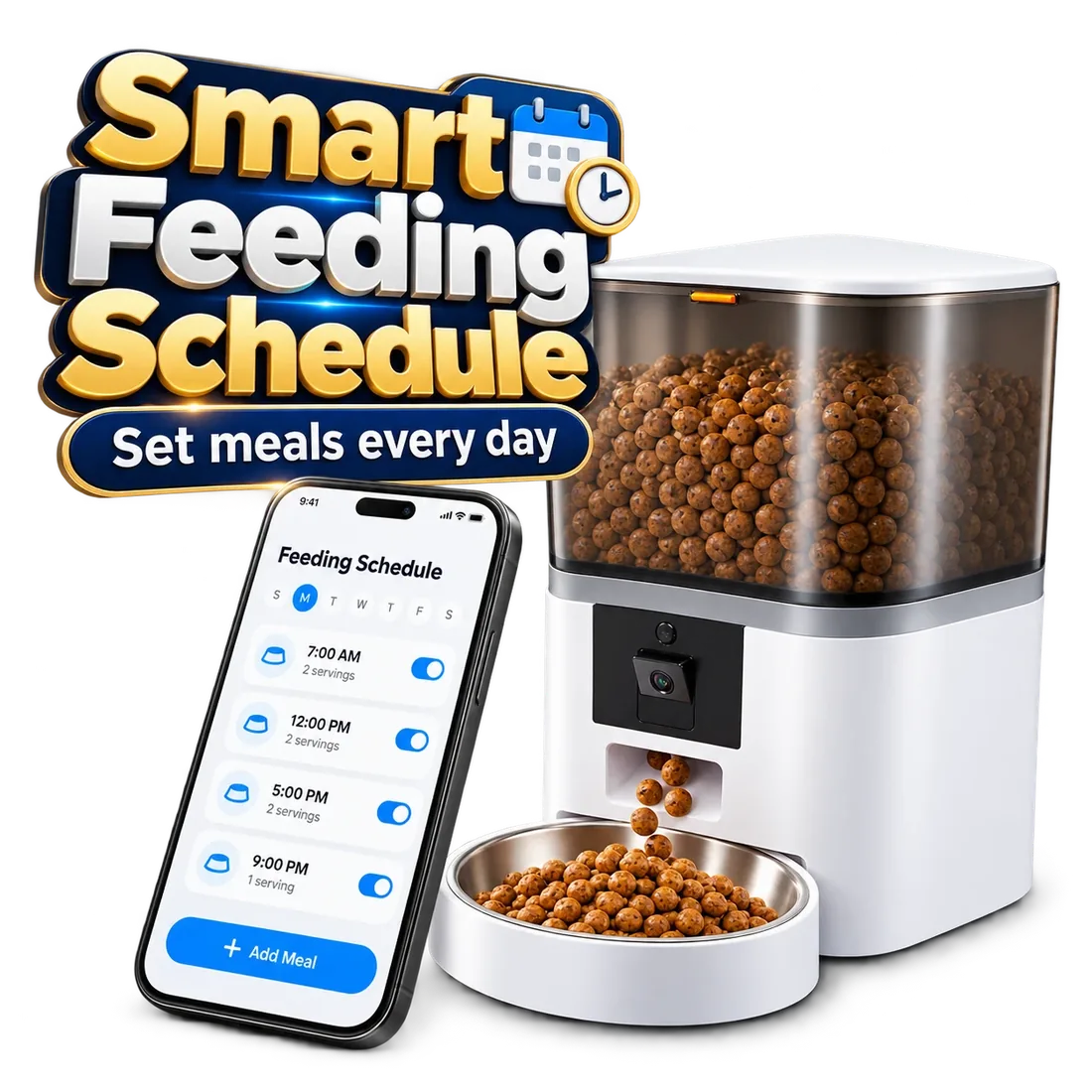
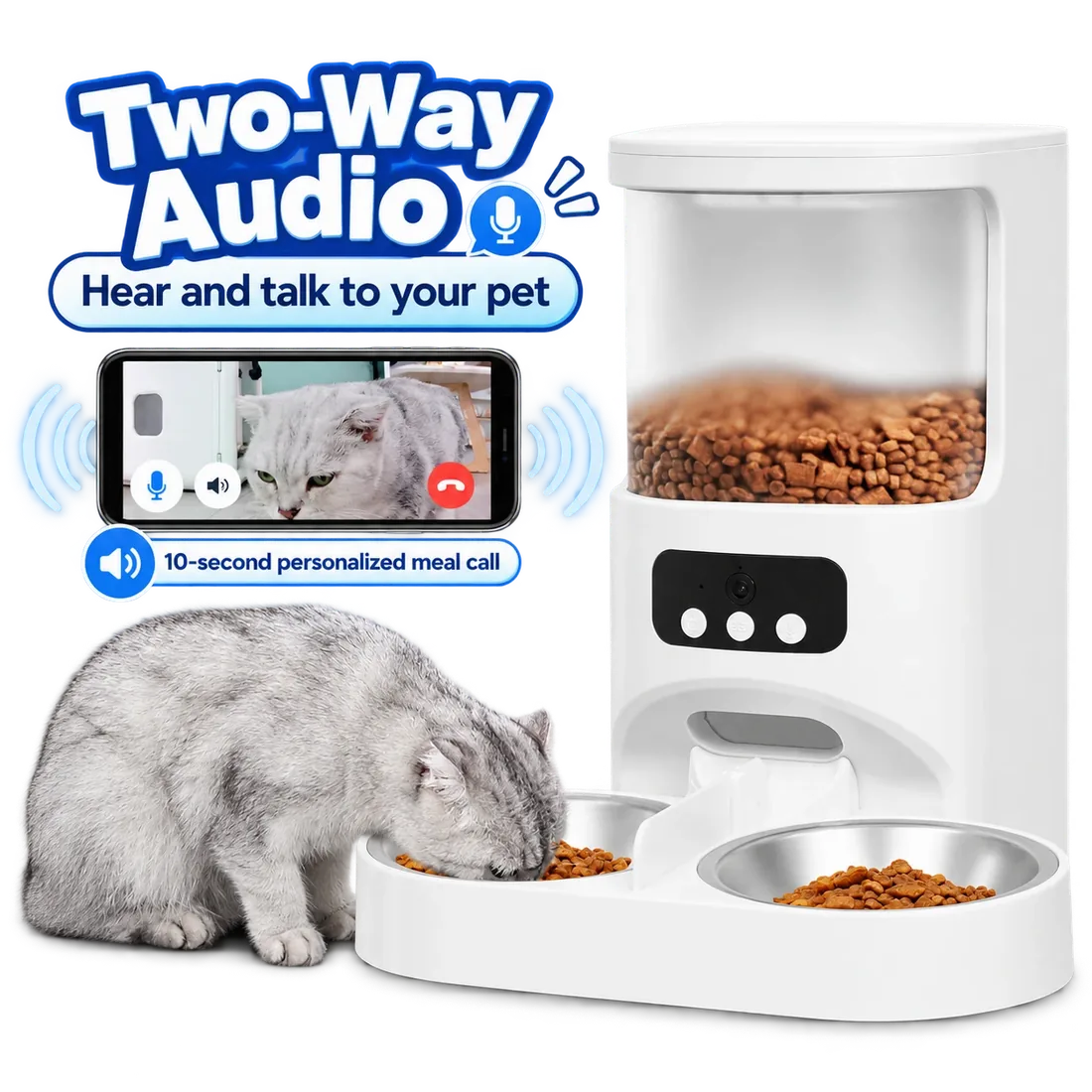
With Parveja Keeper you can schedule up to 15 meals a day with custom portions, and Parveja Twin plans up to 8 meals a day with 1–20 portions each. Both have a 1080p camera with night vision, so you can see breakfast land even on darker mornings.
Cats vs. dogs: what to expect
- Cats often notice first, and early-morning wake-ups are the classic sign. A gradual shift, plus a consistent breakfast time on weekends too, usually settles things fastest.
- Dogs tie meals to walks and bathroom breaks. Shift the walk with the meal so the whole routine moves together.
- Multi-pet homes do best when every pet moves on the same days, so nobody is fed while another waits.
- Pets on medication given with food: ask your veterinarian how to time doses around the change.
Keep the rest of the routine steady
Food is only one part of your pet’s day. Shorter evenings mean walks and play may slide into the dark, so try to keep those at consistent times as well. Keep fresh water available all day, and keep portions the same; the time change isn’t a reason to feed more or less.
Pets read routine, not clocks. Small, steady steps beat one big jump.
If your pet’s appetite or behavior changes in a way that lasts beyond the adjustment period, check in with your veterinarian. And when spring comes around, clocks jump forward on March 14, 2027. The same trick works in reverse: move meals 15 minutes earlier every day or two.
Which Parveja feeder fits?
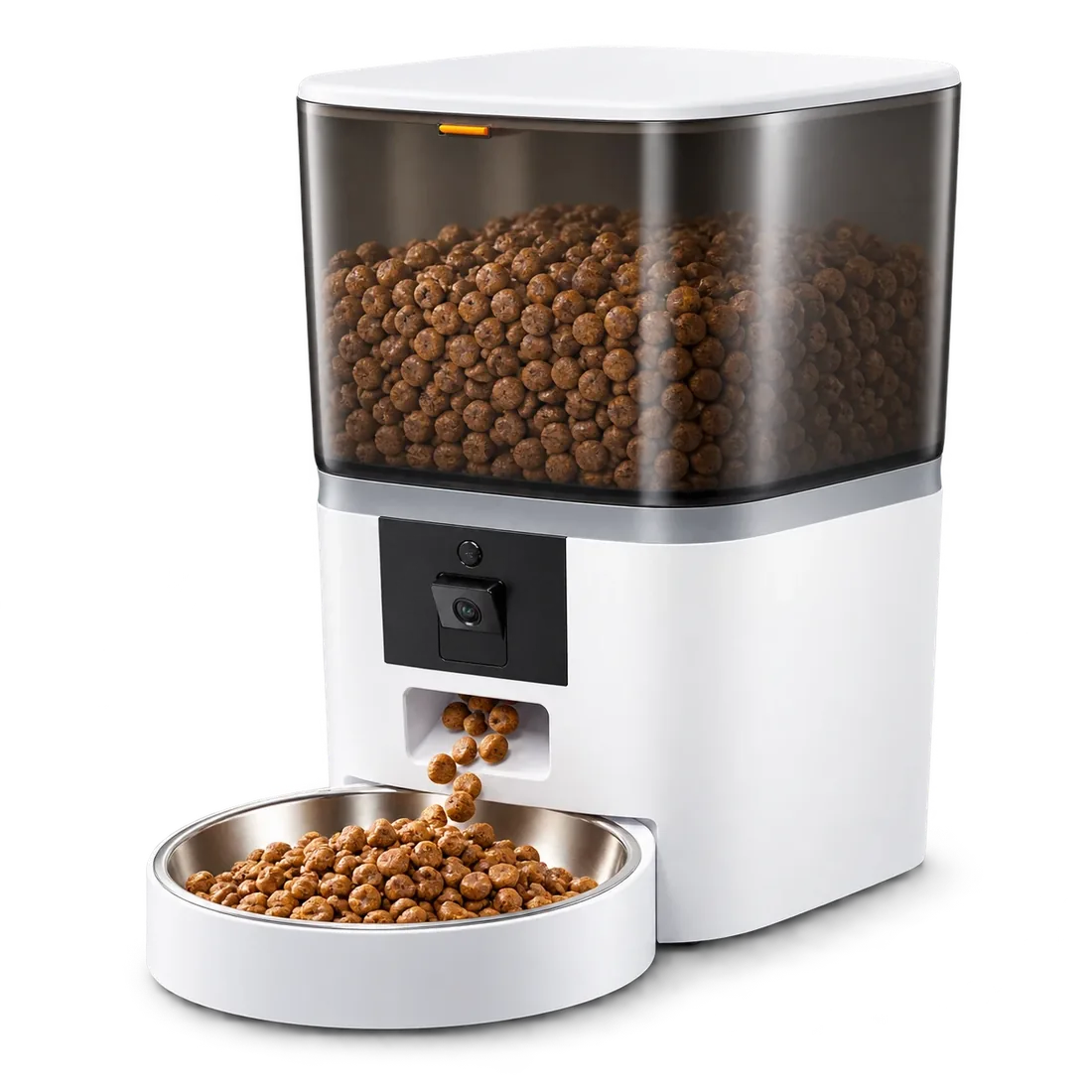 Keeper · 6L · $279Up to 15 meals a day with custom portions and a 1080p night-vision camera.→
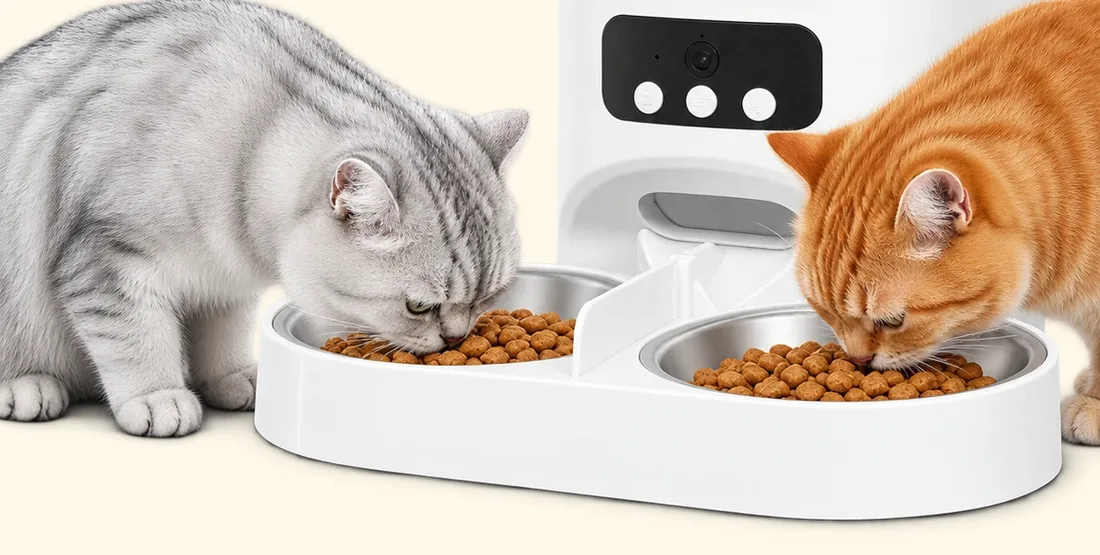
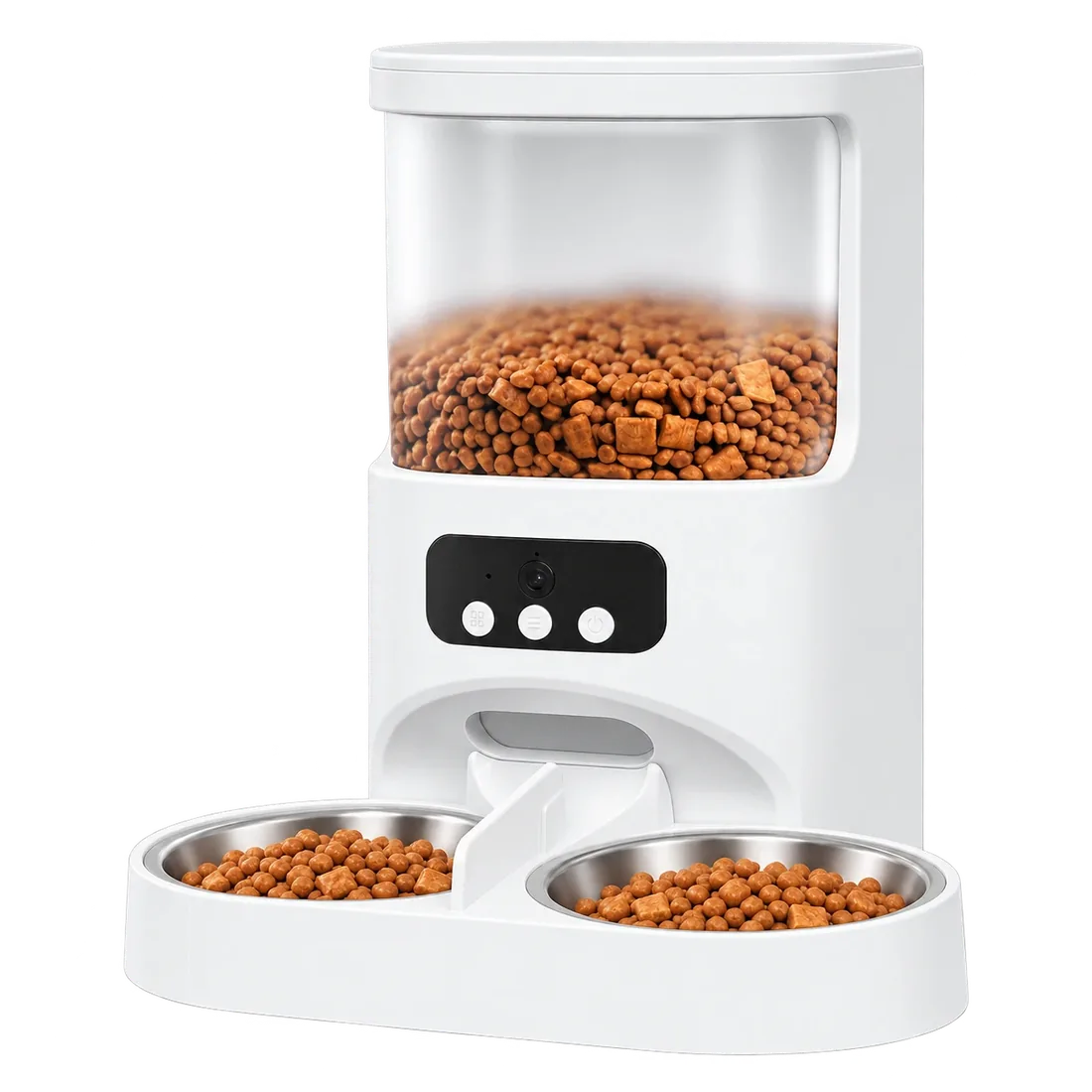 Twin · 4L · $199Two bowls for two cats, up to 8 meals a day with 1–20 portions each.→
Not sure yet? Compare all four feeders side by side.