The quick answer
An automatic feeder can cover a long workday or an overnight trip, but it only handles food. Water, litter, health and safety still need a person. As a rule of thumb, plan for someone to check on your cat at least once every 24 hours, and ask your veterinarian what’s right for your cat.
What an automatic feeder handles
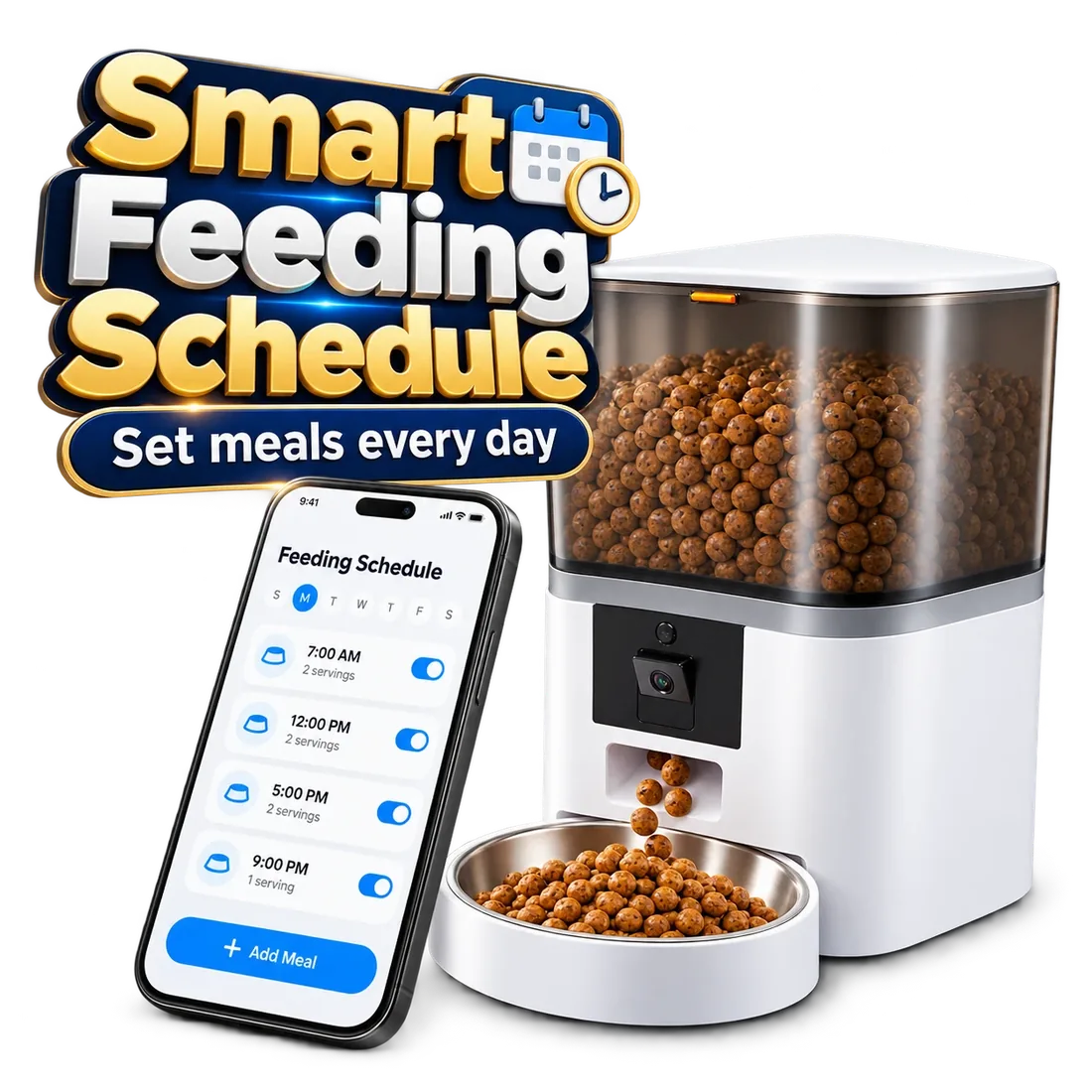
A good feeder serves dry food at the times and portions you set, keeps the stored food sealed, and in many cases logs each meal in an app. With a camera model, you can also see the bowl. That makes it ideal for keeping your cat on routine during long workdays, late evenings and early mornings.
What it can’t do
Food is one need among several. While you’re away, your cat still depends on someone for:
- Fresh water. A bowl can be knocked over or emptied; a fountain can stop.
- A clean litter box. Many cats avoid a dirty box, which can cause stress or accidents.
- Health. A cat that stops eating, vomits or seems unwell needs a person to notice and act quickly.
- Safety. Feeders can jam, Wi-Fi can drop and power can go out.
A practical rule of thumb
For a healthy adult cat, an automatic feeder can comfortably cover a workday or a single night away, provided water and litter are taken care of. For anything longer, arrange for a sitter, neighbor or friend to visit at least once a day. Kittens, seniors and cats with medical conditions need more frequent care. Your veterinarian is the best person to advise on your individual cat.
How a camera helps between check-ins
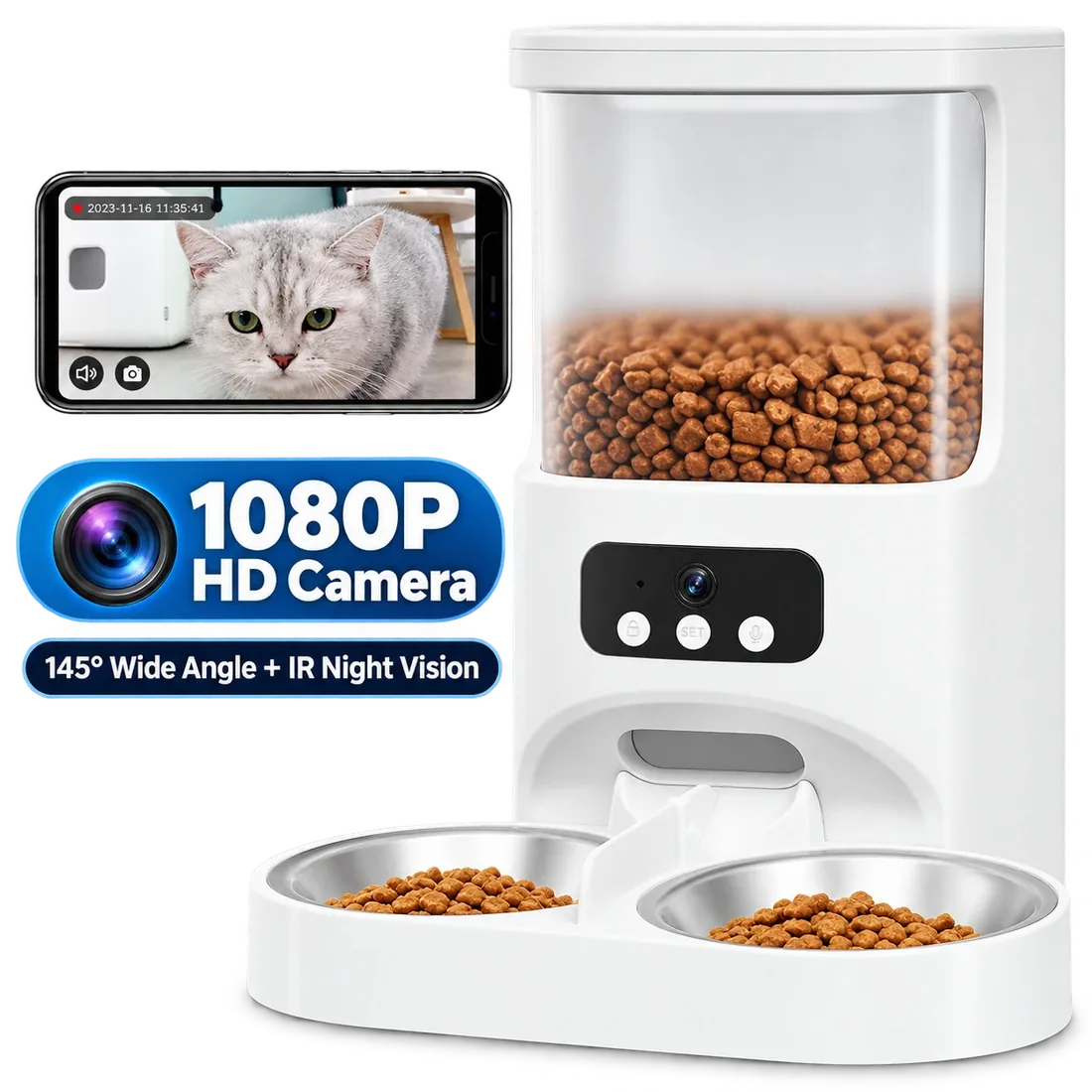
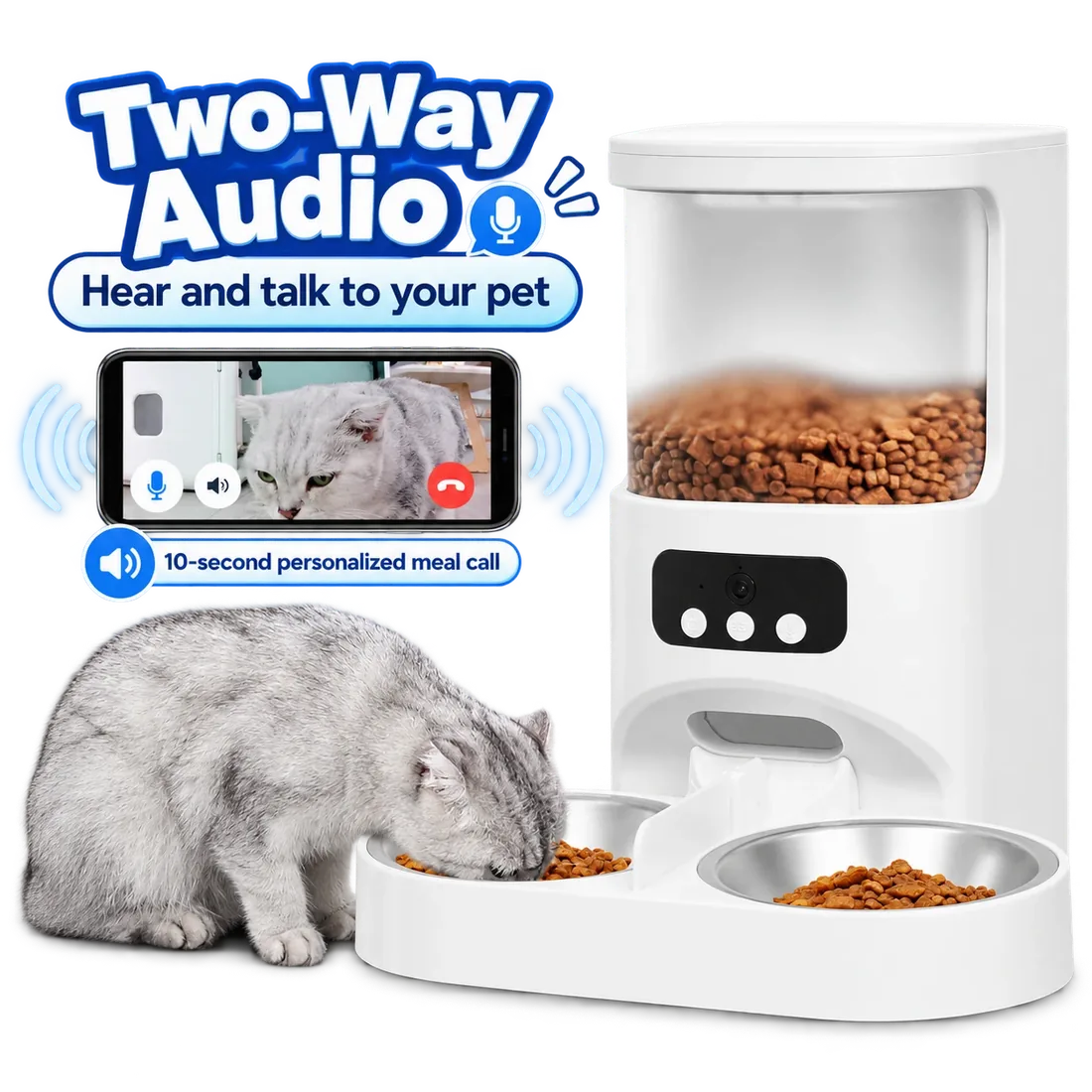
A camera feeder lets you confirm that meals were served and that your cat came to eat. If your cat skips meals, you’ll know early and can ask your sitter to visit sooner. Every Parveja feeder has a 1080p camera with night vision, so you can check evening and early-morning meals too, and Twin, Keeper and Titan send motion alerts when your cat comes to the bowl.
Remember that live video needs power and Wi-Fi. Backup batteries keep meals coming in a power cut, but the camera needs plug-in power.
Before you leave: a short checklist
Run through this before any time away:
- Run the feeder on its real schedule for several days while you’re home.
- Confirm your cat is eating from it confidently.
- Fill the reservoir with fresh food and check the lid is sealed.
- Install backup batteries if your model supports them (batteries are not included with Parveja feeders).
- Set out plenty of fresh water, ideally in more than one place.
- Clean the litter box and arrange a check-in.
- Leave your sitter your vet’s phone number and the feeder app login if needed.
Set portions with your vet’s advice
Don’t increase portions to ‘cover’ a trip. Overfeeding can cause weight gain, and a cat that overeats in one sitting may vomit. Keep the same daily amount and split it into the meals your cat is used to. Keeper, for example, schedules up to 15 meals a day, so you can keep small, regular meals.
Which Parveja feeder fits?
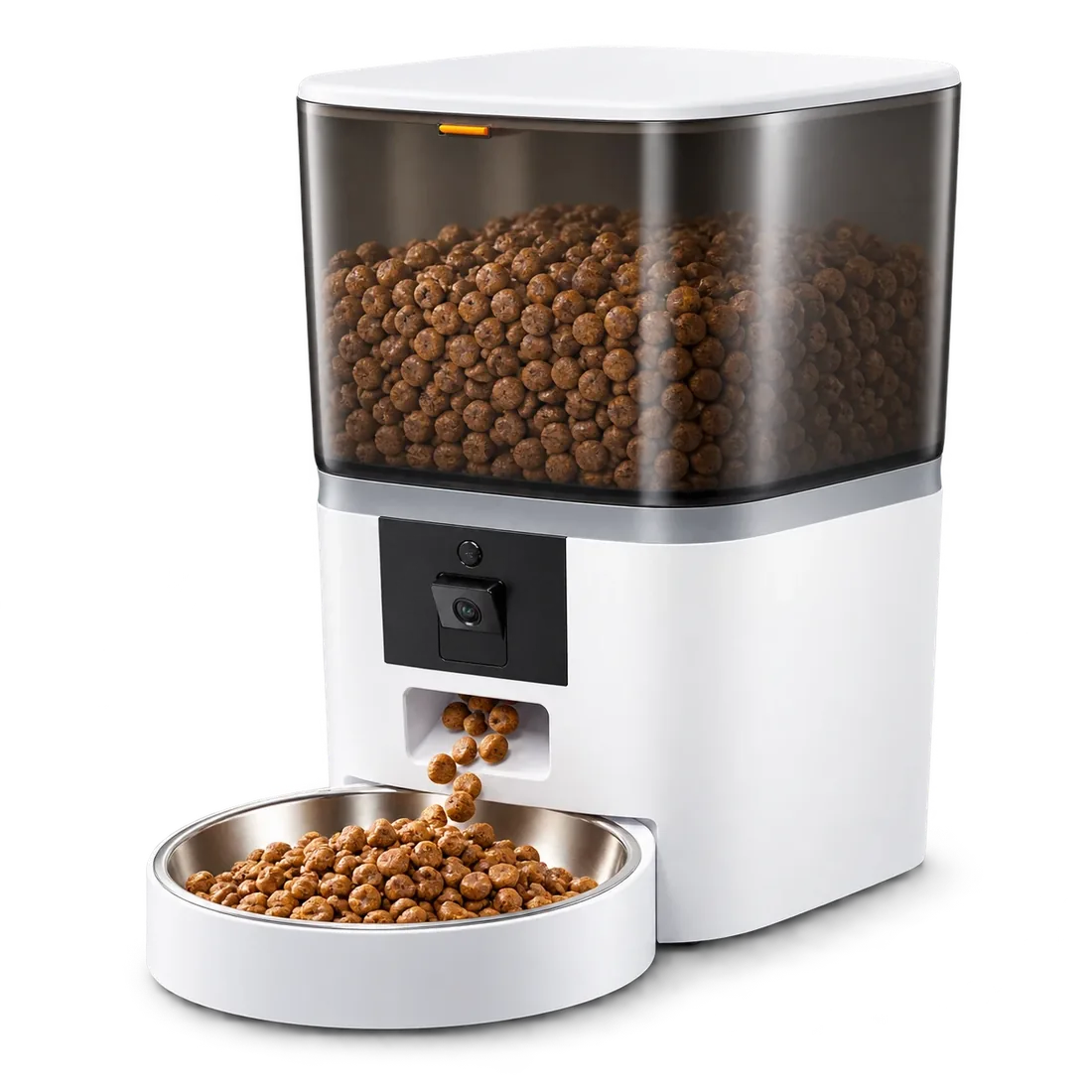 Keeper · 6L · $279See every meal on a 1080p night-vision camera, with motion alerts and two-way audio.→
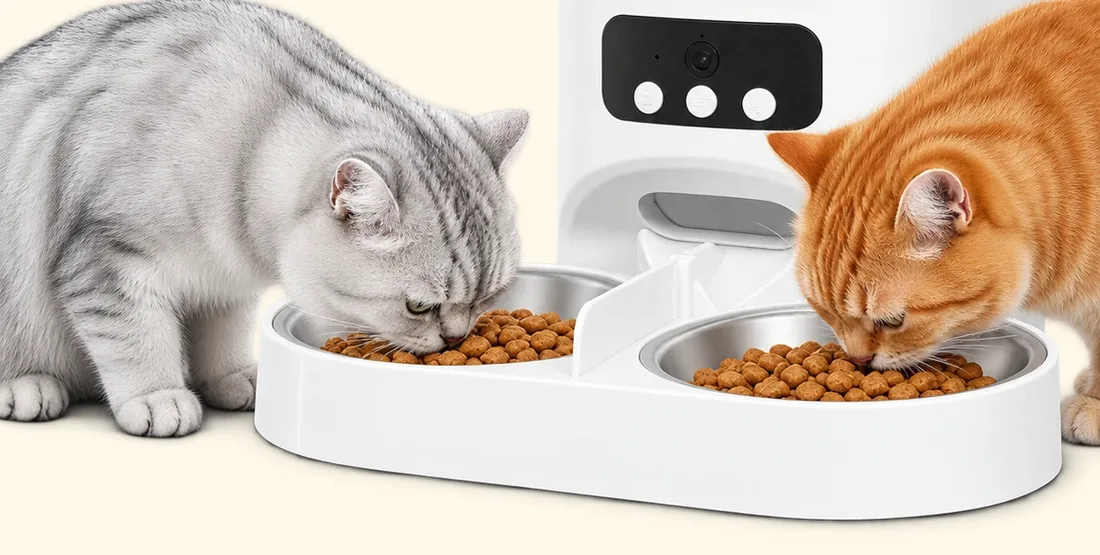
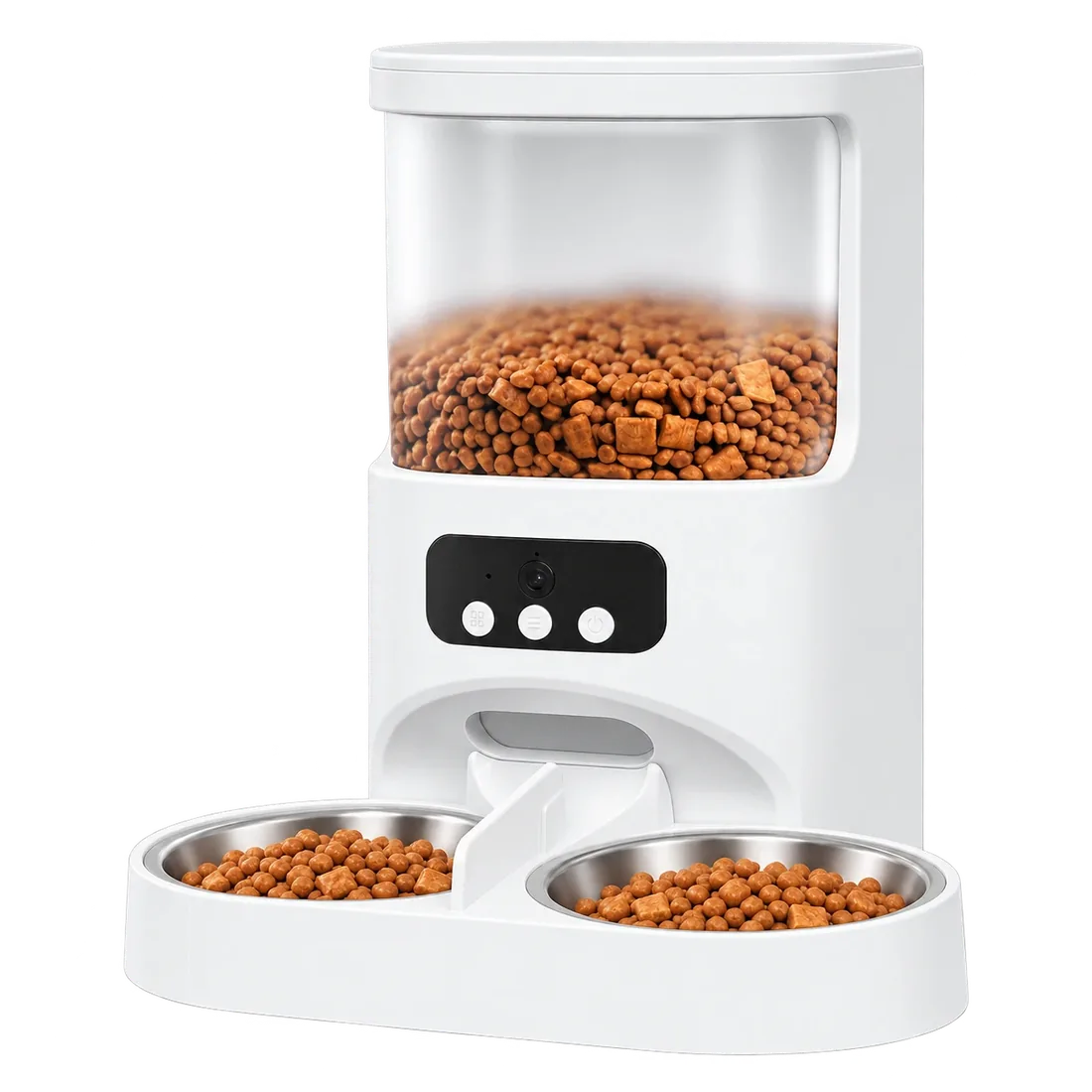 Twin · 4L · $199Two bowls for two cats, a feeding log, and a D-battery backup for power cuts.→
Browse all automatic cat feeders, or compare all four feeders side by side.